 how-to
Maintaining Wood Furniture in Humid Climates
Table of Contents
- Understanding How Humidity Affects Solid Wood
- Signs of Humidity Damage in Wood Furniture
- Step 1: Monitor Relative Humidity Levels
- Step 2: Choose the Best Wood Finish for High Humidity
- Step 3: Preventing Mold on Outdoor Wood Furniture
- Step 4: Maintain Consistent Indoor Temperature and Placement
- Step 5: Repair Existing Humidity Damage
- Protecting Your Investment Year-Round
Last Updated: August 30, 2026
Understanding How Humidity Affects Solid Wood
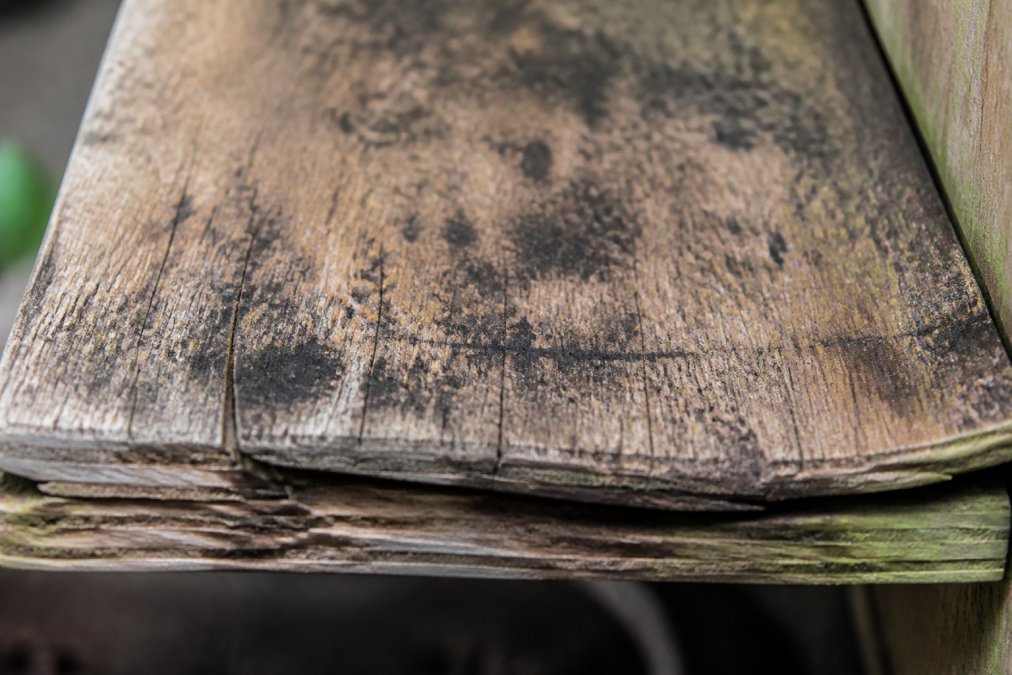
Humidity is the silent enemy of wood furniture. When moisture levels fluctuate, solid wood expands and contracts, destroying finishes, warping joints, and creating conditions where mold thrives. At Backyard Comfort CO, we offer durable, weather-ready outdoor living solutions designed to transform your space into a permanent, comfortable retreat.
Wood is hygroscopic, meaning it absorbs and releases moisture based on its surrounding environment. The problem arises when humidity swings are extreme or when protective barriers aren't in place to moderate moisture absorption.
Moisture Content and Wood Movement
Equilibrium moisture content is the amount of water wood naturally contains when balanced with its environment. In humid climates, that equilibrium point is higher, causing the wood to absorb more moisture and expand. Move that same piece to a dry climate, and it shrinks.
This expansion and contraction happens at different rates across the wood grain. The tangential grain expands more than the radial grain, creating internal stress that manifests as warping, cupping, or checking, visible damage that compromises both appearance and structural integrity.
Regional Climate Nuances
Humidity levels vary dramatically by region. Coastal areas, the Southeast, and the Great Lakes region experience sustained high humidity, often exceeding 65% relative humidity during summer months. Desert regions swing between extremes, high heat with low humidity during the day, then cooler, more humid nights.
Understanding your local climate helps you choose the right wood species and protection method for maintaining wood furniture in humid climates specific to your location.
Signs of Humidity Damage in Wood Furniture
Recognizing damage early lets you intervene before structural problems develop. The visible signs progress from cosmetic to serious, and different wood types show damage in distinct ways.
Warping, Swelling, and Wood Grain Changes
Warping appears as a subtle curvature or twist in flat surfaces, a tabletop that's no longer level, a chair back that bows outward, or a door frame that no longer closes smoothly. Swelling makes drawers stick, doors bind, and joints separate as the wood expands beyond its original dimensions.
The wood grain becomes more pronounced in swollen areas, creating an uneven, rippled appearance. This happens because different parts of the wood absorb moisture at different rates.
Severity matters for repair decisions:
- Minor warping (less than 1/8 inch deviation over 3 feet) can sometimes be managed with careful refinishing and environmental control.
- Moderate warping (1/8 to 1/4 inch deviation) usually requires professional restoration or replacement of affected components.
- Severe warping (greater than 1/4 inch) typically requires replacement of the entire piece or major structural components.
Wood species respond differently to humidity stress. Solid hardwoods like oak and ash are more prone to visible warping because of their grain structure. Softwoods like pine warp more dramatically but sometimes recover partially when humidity stabilizes. Veneered furniture swells differently than solid wood, the veneer may bubble or separate from the substrate as moisture causes uneven expansion, a problem that's nearly impossible to repair without professional intervention.
Mold and Surface Deterioration
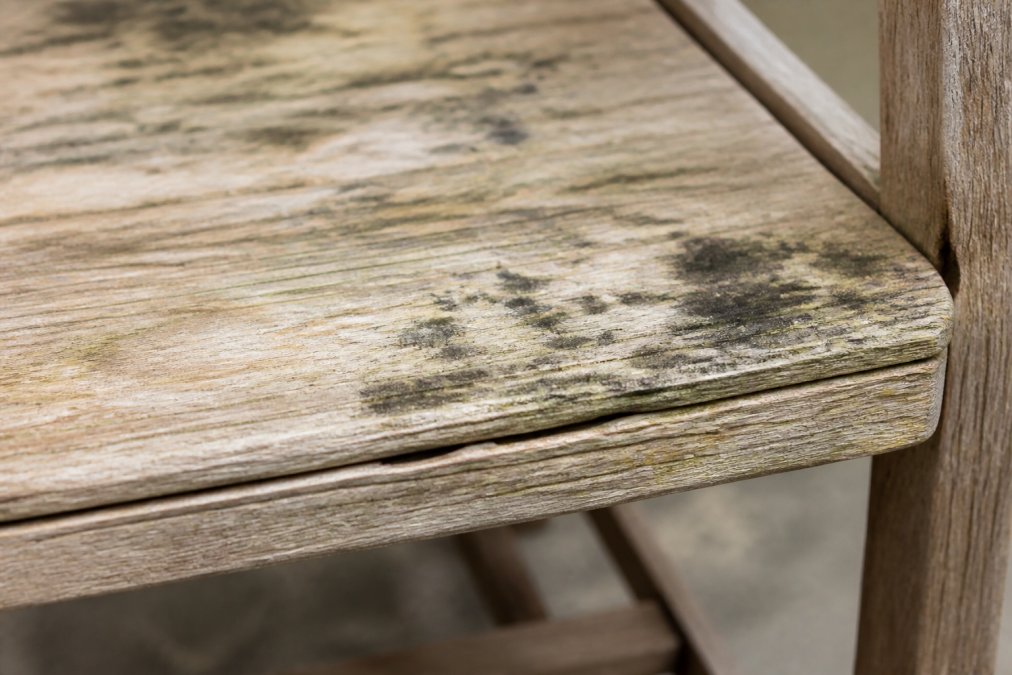
Mold appears as dark spots, streaks, or a fuzzy coating on wood surfaces, typically black, green, or gray in color. It thrives in moisture-rich environments above 65% relative humidity, particularly in areas with poor air circulation (the CDC). Unlike warping, mold is actively harmful; it can spread rapidly and compromise the wood's structural integrity.
Mold vs. mildew: Mildew is a surface fungus that's easier to clean; mold penetrates deeper into the wood fiber. If discoloration returns within weeks of cleaning, you have mold, not mildew, and the problem is more serious.
Surface deterioration includes finish failure, peeling, flaking, or clouding of protective coatings. When the finish fails, moisture penetrates deeper into the wood, accelerating rot and mold growth. Rot softens the wood fiber itself, making it spongy and weak. Test for rot by pressing a screwdriver into the wood; if it sinks easily, structural rot is present.
Wood species and rot resistance: Naturally rot-resistant woods like cedar, teak, and redwood contain oils and compounds that inhibit fungal growth, making them better choices for humid climates. Susceptible woods like pine, maple, and birch require more aggressive protective finishes and maintenance.
Checking and Finish Failure
Checking, small cracks that radiate from the center of a board or follow the grain, develops when the wood's outer surface loses moisture faster than the interior. Finish failure often precedes visible wood damage. Look for:
- Crazing: A network of fine cracks in the finish that resembles alligator skin
- Peeling or flaking: The finish separates from the wood in sheets or chips
- Clouding: A white or hazy appearance, often caused by moisture trapped under the finish
- Soft spots: Areas where the finish feels tacky or doesn't harden properly
Once the finish fails, moisture penetrates rapidly, and the timeline from finish failure to visible mold or rot can be as short as 2-4 weeks in very humid conditions (peer-reviewed research). Regular finish inspection and touch-ups are critical preventative measures.
Step 1: Monitor Relative Humidity Levels
The foundation of protecting wood furniture is understanding your indoor humidity. A hygrometer is an inexpensive tool that measures relative humidity as a percentage. Most wood furniture performs best between 35% and 55% relative humidity. Above 60%, you're entering the danger zone where mold risk increases sharply and wood begins absorbing excess moisture.
Place hygrometers in multiple rooms, particularly near windows and exterior walls where humidity tends to be highest. Check readings daily during humid seasons. If levels consistently exceed 55%, you need active humidity control.
A dehumidifier removes moisture from the air and is the most direct solution for climate control in humid regions. Portable units work well for single rooms or specific furniture areas. Whole-home dehumidification systems provide consistent protection across your entire space.
Air conditioning naturally reduces humidity as it cools. If you're running AC during humid months, monitor humidity levels; they should drop to acceptable ranges.
Step 2: Choose the Best Wood Finish for High Humidity
The protective finish is your primary defense against moisture penetration. Not all finishes perform equally in humid climates.
Polyurethane Coatings and Moisture Barriers
Polyurethane creates a hard, waterproof surface barrier that prevents moisture from penetrating the wood grain. Water-based polyurethane dries quickly (2-4 hours between coats), produces minimal odor, and yellows less over time (the EPA). Oil-based polyurethane offers superior moisture protection and durability but takes 8-24 hours to cure between coats and has stronger fumes.
Performance in humid climates: Polyurethane resists mold growth better than oil finishes because it creates a continuous barrier that fungi cannot penetrate. It maintains its protective properties for 3-5 years with proper maintenance.
Application for high-humidity protection:
- Apply polyurethane in thin, even coats, typically 2-3 coats for adequate protection.
- Sand lightly between coats (120-150 grit) for adhesion.
- Pay special attention to edges, joints, and the underside of furniture, where moisture enters most readily. These areas should receive an extra coat.
- Allow full cure time before exposing furniture to humidity or moisture.
Wood species compatibility: Polyurethane works well on hardwoods like oak, maple, and walnut. On softwoods like pine, apply a wood conditioner first to prevent blotchy appearance. Veneered furniture benefits from polyurethane because the continuous barrier prevents moisture from reaching the substrate and causing the veneer to bubble.
Marine-Grade Wax and Penetrating Oil Finishes
Marine-grade wax penetrates the wood while creating a surface barrier. It's less durable than polyurethane but easier to maintain; you simply reapply periodically as the wax wears. Teak oil, Danish oil, and similar penetrating finishes nourish the wood while providing moderate moisture protection.
Performance in humid climates: These finishes work best for outdoor furniture or pieces that won't experience heavy use. In very humid climates, plan to reapply every 3-6 months rather than annually. They do not provide the same level of mold resistance as polyurethane.
Wood species compatibility: Penetrating oils work well on naturally rot-resistant woods like teak, cedar, and redwood. On susceptible woods, oils provide only moderate protection and are best used in combination with a polyurethane base coat. Veneered furniture is not ideal for oil finishes because the oil can seep into gaps and cause the veneer to separate.
Hybrid Approach for Maximum Protection
Many homeowners combine approaches for superior protection in humid climates: a polyurethane base coat (2-3 coats) for structural moisture protection, topped with marine-grade wax for appearance and easier maintenance. The wax layer can be reapplied annually without stripping the polyurethane underneath.
Finish selection by wood type:
- Solid hardwoods (oak, maple, walnut): Polyurethane provides the best protection. Add wax topcoat for additional moisture resistance.
- Softwoods (pine, fir): Polyurethane is essential; apply wood conditioner first for even coverage.
- Naturally rot-resistant woods (teak, cedar, redwood): Penetrating oil or marine wax is acceptable for outdoor use, but polyurethane provides superior protection in covered areas with high humidity.
- Veneered furniture: Polyurethane only; oils and waxes risk seeping into gaps and causing veneer separation.
Maintenance and Recoating
Inspect finishes quarterly in humid climates. Look for crazing, peeling, soft spots, or areas where the finish appears worn. Touch up damaged areas immediately with the same finish to prevent moisture from penetrating. Plan for full recoating every 3-5 years for polyurethane, or annually for wax and oil finishes.
Step 3: Preventing Mold on Outdoor Wood Furniture
Outdoor wood furniture faces constant moisture exposure, making mold prevention essential.
Ventilation and Air Circulation
Mold requires three conditions: moisture, darkness, and still air. You can't eliminate moisture outdoors, but you can control air movement. Position furniture in areas with natural air circulation, avoid placing pieces directly against walls or under dense tree canopy where air stagnates.
Use furniture covers during off-season storage, but ensure they allow airflow underneath. The Bitubi patio furniture covers available at Backyard Comfort CO feature ventilation design that sheds water while allowing air circulation, protecting your investment without creating a moisture trap.

Space furniture away from the ground if possible. Elevating pieces on feet or blocks allows air to flow underneath, preventing moisture from pooling.
Regular Cleaning and Maintenance Routines
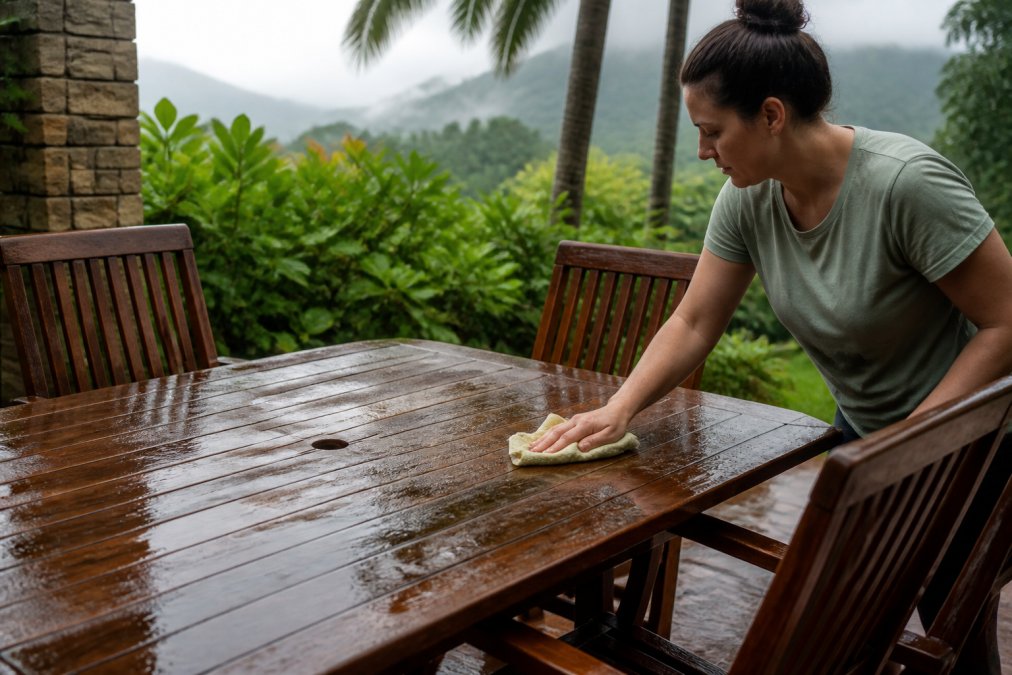
Cleaning prevents mold from establishing a foothold. Wipe furniture with a dry cloth after rain or morning dew. For visible mold or mildew, scrub with a soft brush and a mild soap solution, then dry thoroughly.
Establish a seasonal maintenance routine: inspect finishes for wear, touch up damaged areas immediately, and reapply protective coatings before the humid season begins.
Step 4: Maintain Consistent Indoor Temperature and Placement
Environmental stability protects wood as much as moisture control. Rapid temperature swings cause wood to expand and contract, stressing joints and finishes.
Avoiding Direct Sunlight and Heat Sources
Direct sunlight accelerates finish degradation and creates localized heat that drives moisture out of the wood unevenly, causing warping. Position furniture away from south-facing windows or use sheer curtains to filter harsh light.
Keep furniture away from heat sources like fireplaces, radiators, or air vents. A consistent indoor temperature between 65°F and 75°F, combined with stable humidity, creates the ideal environment for wood furniture longevity.
Smart Home Integration for Climate Control
Modern smart thermostats and humidity monitors allow you to maintain optimal conditions automatically. Set your system to maintain 45-55% relative humidity year-round, with minimal temperature fluctuation. Smart monitoring alerts you when humidity drifts outside the safe range, giving you time to intervene before damage occurs.
Step 5: Repair Existing Humidity Damage
If your furniture already shows signs of humidity damage, action now prevents further deterioration.
Addressing Minor Warping and Swelling
Minor warping can sometimes be corrected. Remove the finish in the affected area, then use clamps to gradually straighten the wood over several days. Once stable, sand smooth and reapply finish. This works only for minor cases; severe warping usually requires professional intervention.
Swelling typically resolves once humidity drops, but the wood may not return to its exact original dimensions. Sand and refinish affected areas once the wood stabilizes.
Treating Rot and Structural Concerns
Soft, spongy wood indicates rot, a serious structural problem. Small rotted areas can be treated with wood hardener products that stabilize the remaining fiber, then filled with epoxy filler and refinished. Extensive rot requires replacement of affected components or the entire piece.
If you're uncertain about the extent of damage, consult a furniture restoration specialist.
Protecting Your Investment Year-Round
Maintaining wood furniture in humid climates requires understanding how moisture affects wood, monitoring your environment, and applying appropriate protective measures. The cost of preventative care is a fraction of what you'll spend replacing damaged pieces.
Backyard Comfort CO designs outdoor furniture with solid wood construction specifically built to withstand humidity challenges. Our pieces are finished with protective coatings and paired with compatible covers like the [4-piece patio furniture(/blogs/news/how-to-protect-patio-furniture-winter) cover set | backyardcomfortco.com] that provide weather protection without trapping moisture. Combined with consistent environmental management, this approach keeps your outdoor living space beautiful and functional for decades.
The real challenge with humid climates isn't wood itself, it's inconsistency. Humidity that swings wildly stresses wood far more than steady high humidity. By monitoring conditions, applying quality protective finishes, and maintaining regular care routines, you create an environment where solid wood furniture thrives. Backyard Comfort CO's durable outdoor furniture, backed by proper maintenance practices, eliminates the need to replace your patio pieces every few years and transforms your backyard into a lasting retreat.
Frequently Asked Questions
Q: How does high humidity affect solid wood furniture?
A: High humidity causes wood to absorb moisture from the air, leading to expansion and contraction. This constant movement stresses the wood grain, resulting in warping, swelling, and cracking. When relative humidity stays above 55%, solid wood furniture becomes especially vulnerable. Maintaining stable humidity levels between 30-50% helps prevent these damaging cycles and protects your investment for years.
Q: What's the best wood finish for high humidity environments?
A: Polyurethane provides the strongest moisture barrier for wood furniture in humid climates, creating a protective coating that resists water absorption. Marine-grade wax and teak oil offer natural alternatives, though they require more frequent reapplication. Polyurethane typically lasts 3-5 years before needing refinishing, while oils and waxes need reapplication every 6-12 months. Choose based on your maintenance commitment and aesthetic preference.
Q: How can I prevent mold growth on outdoor wood furniture?
A: Prevent mold by ensuring proper ventilation around furniture, keeping surfaces dry, and cleaning regularly with a dry cloth. Apply a protective finish like polyurethane or marine-grade wax to create a surface barrier against moisture absorption. Use furniture covers during high-humidity seasons and store pieces in well-ventilated areas. Mold prevention starts with moisture control, keep relative humidity below 55% and address any standing water immediately.
Q: Should I use a dehumidifier for wood furniture protection?
A: Yes, dehumidifiers are effective for climate control in spaces where wood furniture is stored or displayed. They help maintain relative humidity between 30-50%, the ideal range for wood preservation. For outdoor furniture, focus on proper ventilation and protective finishes instead. For indoor storage or covered patios, a dehumidifier prevents moisture buildup and significantly extends the life of your wood pieces.
This article was written using GrandRanker