 how-to
How Do You Prevent Rust on Metal Patio Furniture?
Last Updated: October 24, 2026
Quick Summary
To prevent rust on metal patio furniture, clean the piece thoroughly, remove any existing rust, then apply a protective coating such as rust-inhibiting primer and paint, paste wax, or clear sealant. Cover furniture from rain, dry it completely, and touch up chips immediately so bare metal is never exposed.
- Never use a wire brush on painted iron, because it strips the finish and creates new rust spots.
- Bare metal flash-rusts fast, so apply your coating the same day you remove rust.
- Paste wax on bare wrought iron should be reapplied 2-3 times a year.
- Aluminum does not rust but can pit and oxidize, so rinse it monthly in coastal air.
- Inspect joints, welds, and the bottoms of legs monthly with a flashlight.
Table of Contents
- Why Metal Patio Furniture Rusts and What Speeds It Up
- How to Clean Wrought Iron Patio Furniture Before You Treat It
- How to Remove Rust from Metal Patio Furniture
- The Best Protective Coating for Metal Outdoor Furniture
- How to Protect Metal Patio Furniture from Rain
- Match Your Prevention Plan to Wrought Iron, Steel, Aluminum, and Powder-Coated Pieces
- Build a Season-by-Season Rust Prevention Schedule
- Shop Covers and Weather-Ready Pieces at Backyard Comfort CO
- Frequently Asked Questions
Why Metal Patio Furniture Rusts and What Speeds It Up
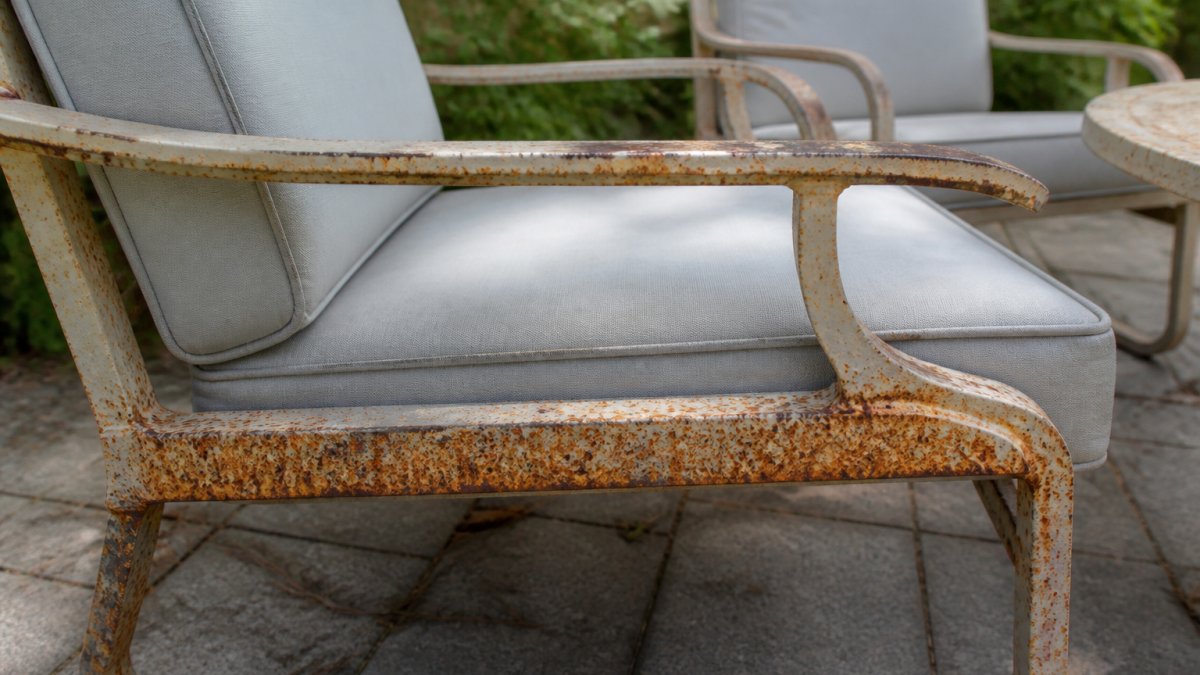
Rust is iron oxide, and it forms when iron meets oxygen and water. On metal patio furniture, that reaction never stops on its own. Every rain shower, humid morning, and splash from the pool feeds it.
Rust is not a cosmetic problem. It eats metal from the inside out. A small orange spot today becomes a flaking, weakened joint next season.
Three things speed up the process:
- Moisture that sits. Water trapped under cushions or in joints does the most damage.
- Salt air. Coastal homes see rust appear far faster than inland ones.
- Chipped paint. One nick in the finish exposes bare metal, and rust starts there.
Heat makes it worse too. Warm metal dries faster on top but holds moisture in crevices longer.
The good news: you can prevent rust. Below, we walk through each step, from cleaning to coating to covering.
How to Clean Wrought Iron Patio Furniture Before You Treat It
Cleaning is the step most people rush, and it is the step that decides whether your coating lasts. A protective coat will not bond to dirt, grease, or loose paint.
Here is how to clean wrought iron patio furniture the right way:
- Rinse first. Use a garden hose to knock off loose dirt and debris.
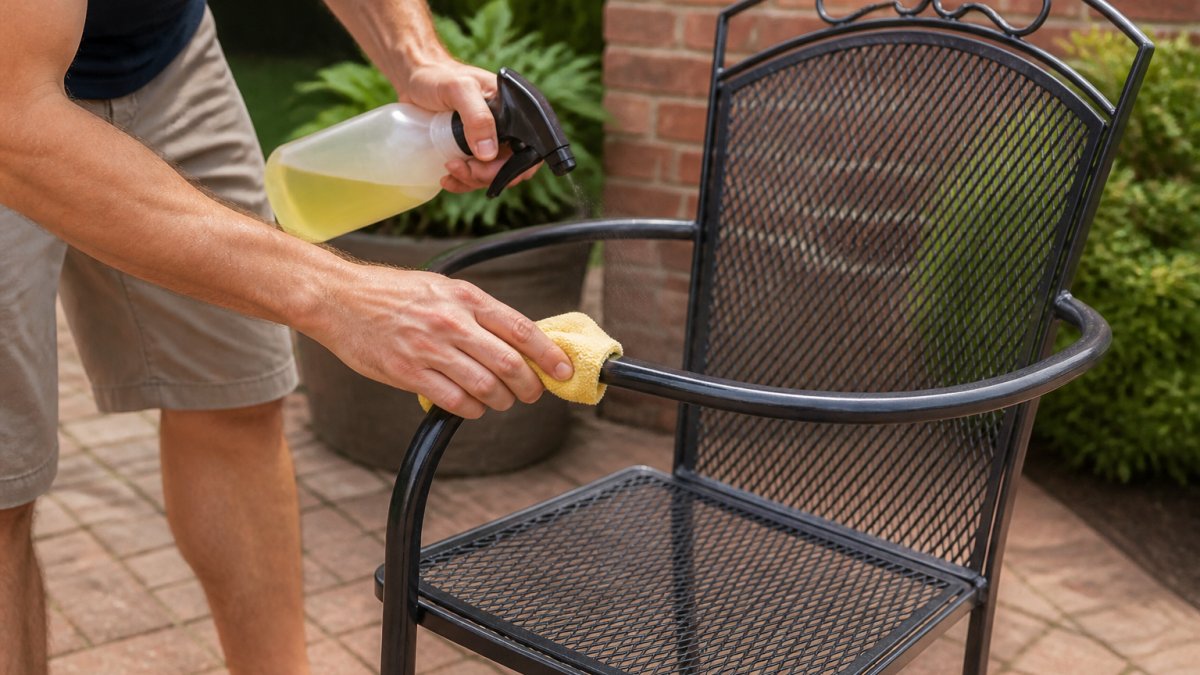
- Wash with mild soap. Mix dish soap and warm water. Scrub with a soft brush or cloth.
- Scrub the joints. Dirt hides in welds and scrollwork. Use an old toothbrush for tight spots.
- Rinse again. Soap residue blocks coatings.
- Dry completely. Wipe with a towel, then let it air dry in the sun.
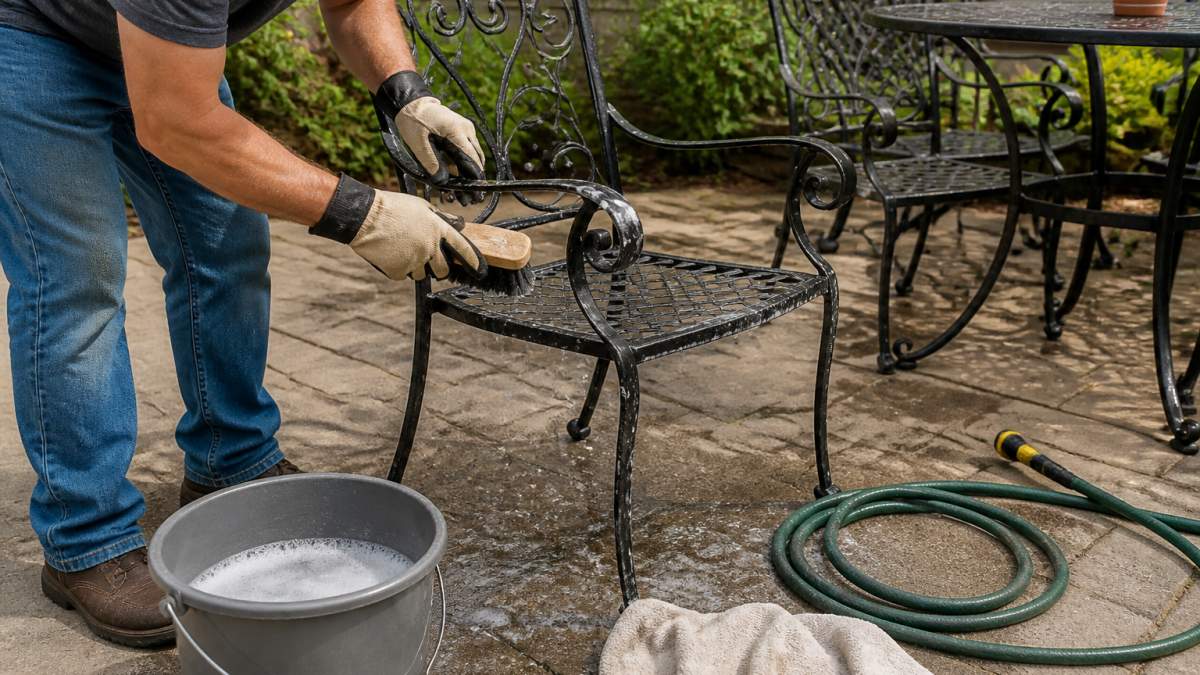
Watch out: never use a wire brush on painted iron. It strips the finish and creates new rust spots.
How to Remove Rust from Metal Patio Furniture
Existing rust has to go before you protect anything. Paint over rust and it keeps spreading underneath.
Start with the gentlest method and work up:
- White vinegar soak. For light surface rust, soak a cloth in vinegar and wrap it around the spot for an hour.
- Baking soda paste. Mix baking soda with water, apply, and scrub with a soft brush.
- Fine sandpaper or steel wool. Use on bare metal only, and always sand with the grain.
- Commercial rust remover. Follow the label, and rinse thoroughly afterward.
After removing rust, wipe the area clean and let it dry. Bare metal flash-rusts fast, so move to the next step the same day.
A common mistake is skipping the rinse. Leftover remover keeps eating the metal and stops your new coating from sticking.
The Best Protective Coating for Metal Outdoor Furniture
The best protective coating for metal outdoor furniture depends on the finish you want and how much upkeep you will accept. There is no single winner.
Here is how the main options compare:
| Coating | Best For | Reapply | Notes |
|---|---|---|---|
| Rust-inhibiting primer + paint | Painted iron and steel | Every few years | Best base layer, needs topcoat |
| Paste wax | Wrought iron with a patina | 2-3 times a year | Easy, invisible, short-lived |
| Clear sealant | Bare or powder-coated metal | Once a year | Keeps the look, needs clean surface |
| Metal protectant spray | Quick touch-ups | Seasonally | Fast, less durable |
For painted pieces, start with a rust-inhibiting primer, then a topcoat made for outdoor metal. For bare wrought iron you want to keep dark, paste wax is hard to beat.
How to Protect Metal Patio Furniture from Rain
Rain is the number one rust trigger, and covers are the simplest defense. A good cover keeps water off and lets air move underneath.
When you shop, look for:
- Waterproof fabric with a tight weave
- Vents to stop condensation
- Drawstrings or straps so wind cannot lift it
- A snug fit with a little room to spare
Our Bitubi rectangular patio table cover checks those boxes. The 600D oxford fabric is waterproof, and the air vents keep moisture from building up under the cover. It fits tables up to 111 by 74 inches. It runs $81.95.

For more on picking the right size and fabric, read our guide to choosing heavy duty patio furniture covers.
One more habit: tilt chairs and tables slightly, or store cushions indoors. Standing water is what starts rust.
Match Your Prevention Plan to Wrought Iron, Steel, Aluminum, and Powder-Coated Pieces
Different metals need different care. Treating them all the same wastes effort and can damage finishes. The table below is the quick-reference version; the notes after it explain the why so you can adapt when your piece does not match a row exactly.
Bitubi Rectangular Patio Table Cover - Heavy Duty 600D Tough Canvas Waterproof →
| Material | Does it rust? | Best prevention | Reapply cadence | Watch-outs |
|---|---|---|---|---|
| Wrought iron | Yes, iron-based | Rust-inhibiting primer + outdoor paint, or paste wax on patina | Paint every 3-5 years; wax 2-3 times a year | Chips spread fast; touch up within days |
| Steel (including stainless) | Yes, steel is iron-based; stainless resists but can still stain | Primer + paint; keep bare spots covered | Paint every 3-5 years | Stainless can develop tea-colored staining, not structural rust |
| Aluminum | No, it oxidizes, it does not rust | Clear sealant or wax; rinse salt and pool chemicals | Sealant once a year; rinse monthly in coastal air | Pitting and white oxidation, not red rust |
| Powder-coated metal | Depends on the core metal | Keep the coating intact; touch-up paint on chips | Inspect monthly; repair chips immediately | Once chipped, the core metal rusts like bare metal |
Wrought iron. Heavy and rust-prone. Wax or paint it, and touch up chips fast.
Steel. Strong but rusts quickly once bare. Primer and paint are essential. Stainless steel is not rust-proof; it is rust-resistant. In salt air or near pool chemicals, stainless can develop tea-colored staining on the surface.
Aluminum. It does not rust the way iron does, but it can pit and oxidize. A clear sealant helps. Aluminum owners often skip protection. That is a mistake.
Powder-coated metal. The coating is tough until it chips. Repair chips with touch-up paint right away. Powder coating is a factory-applied finish, not a rust preventive by itself; once it chips, the core metal underneath rusts like bare metal.
A compatibility note before you buy: rust-inhibiting primers are formulated for ferrous metals (iron and steel). Clear sealants and paste waxes are the safer choice for aluminum and for powder-coated pieces where you want to keep the original look.
If you are still deciding what to buy, our breakdown of the best outdoor furniture materials for extreme weather and the pros and cons of outdoor furniture materials can help you weigh metal against wood and synthetic options.
Build a Season-by-Season Rust Prevention Schedule
A schedule beats guesswork. Habits to prevent rust work better than a one-time project. The calendar below is the baseline; adjust the frequency for your climate using the notes after it.
Monthly (10 minutes)
- Walk the patio with a flashlight and look at joints, welds, the bottoms of legs, and the undersides of tabletops, the spots rain and sprinklers reach first.
- Rinse off pool chemicals, sunscreen, and bird droppings with a garden hose.
- Feel for standing water under cushions and in scrollwork; tip pieces to drain.
- Touch up any chip or scratch the same week you find it. Bare metal flash-rusts fast.
Spring
- Deep clean every piece with mild soap and water, then dry completely.
- Inspect for chips, cracks, and loose paint; sand and spot-prime bare spots.
- Apply a fresh coat of wax or sealant to pieces that need it.
- Check covers for tears and mildew before the rainy season.
Summer
- Rinse off pool chemicals and sunscreen weekly if furniture sits near the pool.
- Reapply wax mid-season on bare wrought iron.
- Recheck powder-coated pieces for chips after heavy use.
Fall
- Deep clean, apply a fresh coat of wax or sealant, and cover pieces.
- Store cushions and small pieces indoors.
- Tighten cover drawstrings and straps before storm season.
Winter
- Check covers after storms; a loose cover that traps water is worse than no cover.
- Clear snow and standing water off covers rather than letting it sit.
- Inspect stored pieces for condensation and mildew.
Climate adjustments
- Coastal salt air. Rinse metal monthly and reapply clear sealant or wax every 6-12 months rather than annually. Salt accelerates corrosion on every metal type, including aluminum.
- Humid climates. Inspect every two weeks during humid stretches; moisture trapped in joints does the most damage.
- Rainy stretches. After any week of steady rain, recheck joints and the undersides of tables for standing water.
- Sprinklers. Redirect sprinkler heads away from furniture, or move pieces out of the spray zone; constant mist is a rust trigger.
- Covered vs. uncovered patios. Covered patios still need monthly inspection because humidity and condensation collect under covers and in joints. Uncovered patios need the full schedule plus covers during storms.
Inspect monthly during rainy or humid stretches. Five minutes with a flashlight saves hours of repair later.
Our guide to protecting patio furniture this winter extends this plan into cold-weather storage.
Shop Covers and Weather-Ready Pieces at Backyard Comfort CO
Rust prevention works best when you start with quality pieces and protect them from day one. That is what we build our business around.
At Backyard Comfort CO, we offer weather-ready outdoor furniture and covers designed to hold up season after season. Every order ships free on most orders within the continental U.S., and our 30-day return policy keeps things simple.
A few things we hear from customers: Honestly wasn't sure about ordering furniture online but this set is fantas
Browse our patio furniture covers to shield the metal pieces you already own, or explore our full collection for furniture built to handle the weather.
Frequently Asked Questions
How do you prevent rust on metal patio furniture?
Start by cleaning the metal and removing any existing rust spots with a wire brush or fine sandpaper. Apply a rust-inhibiting primer and a weather-resistant topcoat, or use a paste wax on wrought iron. Keep the furniture dry, cover it during rain and off-season months, and inspect the frame every few weeks for chipped paint or new rust spots. A quick touch-up on small areas stops corrosion from spreading.
Will WD-40 keep metal from rusting?
WD-40 displaces moisture and can slow surface rust for a short time, but it is not a long-term rust preventive for outdoor furniture. Rain and humidity wash it away within weeks. Use it to loosen rusty bolts or dry a damp frame, then follow with a real protective coating such as a rust-inhibiting primer and topcoat, paste wax, or a metal protectant spray.
What is the best protective coating for metal outdoor furniture?
For painted steel or wrought iron, a rust-inhibiting primer plus an exterior-grade enamel or metal paint gives the longest protection. For bare or powder-coated frames, a paste wax or clear sealant adds a moisture barrier without changing the finish. Aluminum benefits from a clear metal protectant spray. Reapply wax or sealant every few months, and touch up paint chips as soon as you spot them.
Should you cover metal patio furniture when it rains?
Yes, a waterproof cover keeps rain, dew, and dirt off the frame and reduces water exposure between storms. Choose a cover with air vents so condensation can escape, and secure it with drawstrings or buckles so wind does not trap moisture underneath. Remove the cover during dry spells to let the furniture breathe, and store it separately when not in use.
Rust does not have to win. Clean your metal, remove existing spots, coat it well, and cover it when the rain comes. Backyard Comfort CO makes that easier with weather-ready furniture, free shipping on most orders, and a 30-day return policy. Get started with Backyard Comfort CO and keep your patio looking its best year after year.