 how-to
Best Way to Return Outdoor Furniture: A Step-by-Step Guide
Table of Contents
- Start With the Outdoor Furniture Return Policy
- Step 1: Gather Your Receipt and Order Confirmation
- Step 2: Contact Customer Service and Get Return Authorization
- Step 3: Handle a Damaged Outdoor Furniture Return
- Step 4: Prep and Package the Furniture Safely
- Step 5: Sort Out Patio Furniture Return Shipping
- Step 6: Arrange Furniture Return Pickup for Bulky Items
- Step 7: Track Your Refund and Know What Comes Back
- Frequently Asked Questions
Last Updated: October 15, 2026
Start With the Outdoor Furniture Return Policy
The best way to return outdoor furniture is to read the seller's return policy before you touch the phone, because every step after that depends on the window, the condition rules, and what proof you can produce. At Backyard Comfort CO, we keep this simple: most orders ship free within the continental U.S., and our return outdoor furniture window runs a full 30 days.
Most return headaches start with a policy nobody read. Get ahead of that now.
Return Window, Condition, and Proof of Purchase
Three things decide almost every outdoor furniture return policy case: time, condition, and paperwork.
- Return window - how many days you have, counted from delivery, not from when you opened the box
- Condition - unused and undamaged is the standard; assembled furniture is often treated differently
- Proof of purchase - a receipt, order confirmation email, or order number tied to your account
A common mistake is waiting until the box is gone to start the return. Keep the packaging for at least a month.
What Usually Cannot Be Returned
Custom orders, clearance items, and anything cut, stained, or modified to your specs are typically final sale. Replacement cushions and small accessories often follow the same rule once opened.
Step 1: Gather Your Receipt and Order Confirmation
Your order confirmation email is the fastest path to a return authorization, so pull it up before you call anyone. Search your inbox for the order number, then save the email as a PDF or take a screenshot.
Here is what to have ready:
- Order number and order date
- Delivery confirmation or tracking number
- Photos of the item in its current state
No receipt? A bank or card statement showing the charge usually works. A photo of the shipping label on the box helps too.
Step 2: Contact Customer Service and Get Return Authorization
Call or email customer service and ask for a return authorization before you ship anything back. Sending furniture without an authorization number is the single most common reason refunds get delayed or denied.
Say this, in plain terms: "I'd like to return order [number]. Can you send me return instructions and a return label?"
Then confirm four things in writing:
- The return authorization number
- Who pays return shipping
- Whether a restocking fee applies
- The refund method and expected processing time
Keep that email. It is your proof if anything goes sideways later.
Step 3: Handle a Damaged Outdoor Furniture Return
A damaged outdoor furniture return is different from a change-of-mind return, and the clock matters more. Report damage within a few days of delivery, before the packaging goes out with the recycling.
Photograph the Damage and Missing Parts
Photos win these claims. Take clear shots of the damaged item, the shipping box, and the label. If parts are missing, photograph the packing slip next to the open carton.
Most sellers replace damaged parts or the whole item rather than refunding. That is usually faster than a return, so ask which option they prefer.
Step 4: Prep and Package the Furniture Safely
Pack the furniture the way it arrived, or as close as you can get. Wrap cushions in plastic, pad table edges with cardboard, and use the original carton whenever it survived.
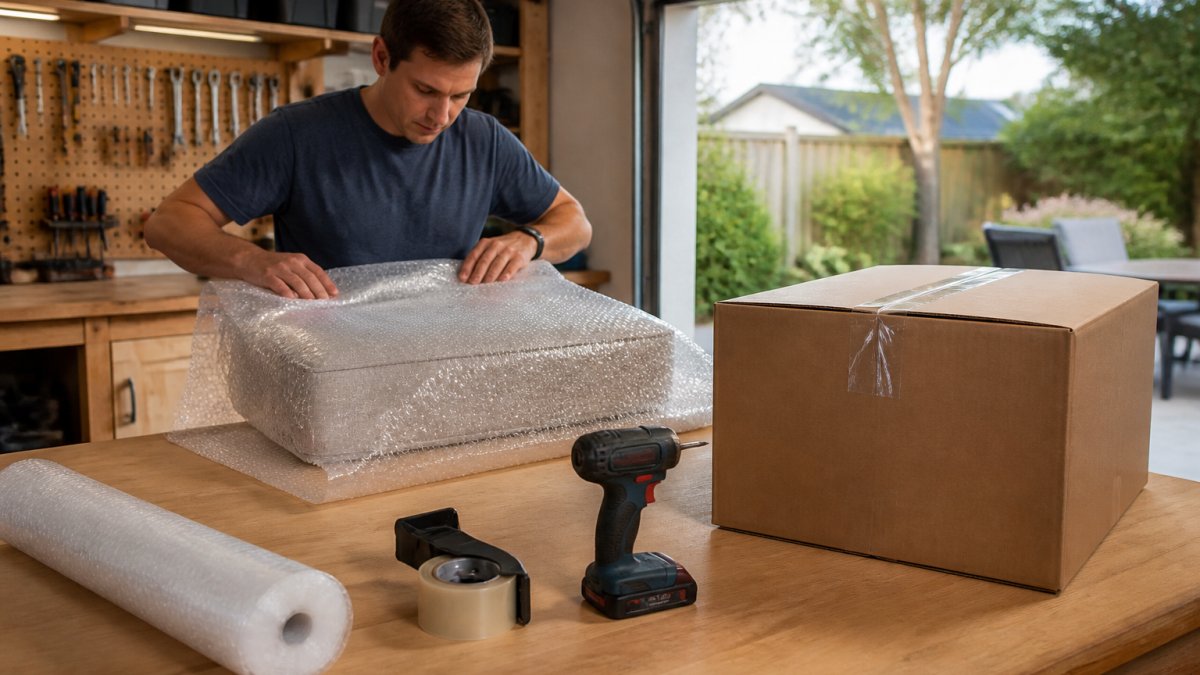
No original box? A moving box or a furniture blanket plus stretch wrap works. Label the box with the return authorization number on two sides, in marker, large enough to read from a few feet away.
A patio furniture cover can double as protection in transit. Our Bitubi rectangular patio table cover is 600D oxford fabric with padded handles, and it keeps a table and chairs clean and dry while you wait for pickup.


Step 5: Sort Out Patio Furniture Return Shipping
Patio furniture return shipping is where costs appear, and the rules vary by seller and by reason for return. If the item arrived damaged or wrong, the seller normally covers shipping.
Bitubi Rectangular Patio Table Cover - Heavy Duty 600D Tough Canvas Waterproof →
Start by asking the seller one question: "Will you provide a prepaid return label or a freight bill of lading, or do I arrange shipping myself?" The answer determines everything that follows.
- Small items and accessories - standard parcel carriers (UPS, FedEx, USPS) handle cushions, covers, and hardware. The seller usually emails a prepaid label you print at home.
- Large items under parcel limits - some chairs and small tables ship by parcel even when assembled. Watch the dimensional weight, because carriers bill on size, not just scale weight.
- Oversized and assembled furniture - this moves by freight (LTL, or less-than-truckload). The seller may book it, or you may need a freight broker. Freight quotes depend on pallet size, weight, origin, destination, and whether the item is crated.
Who Books the Freight, and Why It Matters
If the seller books freight, they control the carrier, the pickup window, and the paperwork. That is usually easier for you, but it also means you may not see the actual cost until it is deducted from your refund.
A common pattern is that sellers provide a return label for parcel-sized items but require you to request a freight quote for anything oversized.
How to Estimate Return Shipping Before You Commit
You do not need an exact number to make a good decision. You need a range. Here is how to build one:
- Measure and weigh the box. Length, width, height, and weight. Freight and parcel both price on these.
- Note the freight class. Furniture often falls into a class that carriers price higher than general goods. The seller or broker can tell you the class.
- Ask for the dimensional weight. For parcel, carriers compare actual weight to dimensional weight and bill the higher one.
- Ask whether liftgate service is needed. If you do not have a loading dock, a liftgate is often required, and it adds a surcharge.
- Ask about residential delivery. Freight to a home address usually costs more than to a business.
Packing for Freight Without the Original Crate
Freight carriers handle boxes differently than parcel carriers. They stack, forklift, and move pallets, so a flimsy carton will not survive. If the original crate is gone, wrap the item in moving blankets, then stretch wrap, then strap it to a pallet if you can get one.
For guidance on what sellers must disclose about return terms, the FTC rules on mail, internet, and telephone order merchandise explain your rights when goods arrive damaged or late.
Step 6: Arrange Furniture Return Pickup for Bulky Items
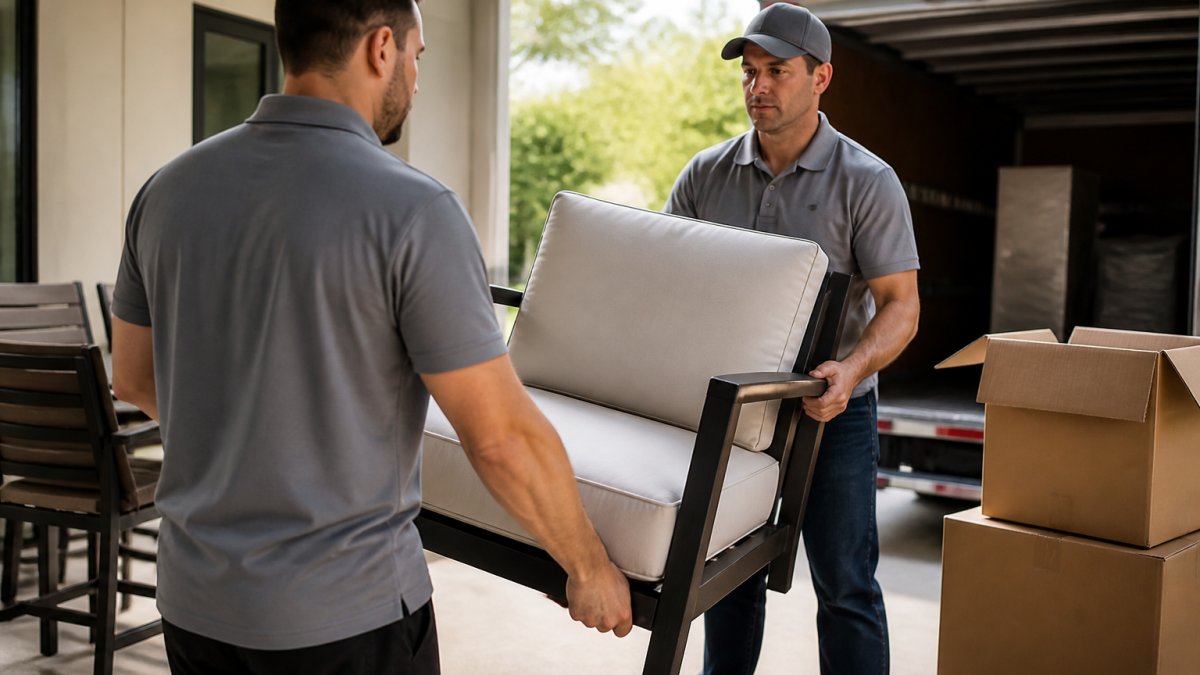
Furniture return pickup is the step that saves your back. A full patio set will not fit in most cars, so ask customer service to schedule a freight pickup at your address.
What to Expect on Pickup Day
- A pickup window, usually a half day, not an exact hour
- A driver who needs the box at the curb or in the driveway
- A signature and a copy of the pickup receipt
Clear a path to the box the night before. Move vehicles out of the driveway.
A pickup fee may apply on change-of-mind returns, and it is often quoted as a flat charge. Get the amount in writing before you agree. Our 4-piece patio furniture cover set fits a loveseat, two chairs, and a coffee table, and it keeps everything dry on the driveway while you wait.
Step 7: Track Your Refund and Know What Comes Back
Refund processing time starts when the seller receives and inspects the item, not when the truck leaves your driveway. Ask for the inspection timeline up front, and ask whether inspection happens at the returns warehouse or at the manufacturer, because that adds transit time.
What typically comes back:
| Cost Item | Usually Refunded? | Notes |
|---|---|---|
| Item price | Yes | Full amount on approved returns |
| Original delivery charges | Sometimes | Often kept on change-of-mind returns |
| Return shipping | Rarely | Seller pays only for damage or error |
| Restocking fee | No | Deducted from the refund |
| Pickup fee | No | Deducted from the refund |
How to Estimate Your Net Refund Before You Ship
Most articles stop at the table. The useful part is the math. Build a simple estimate before the truck arrives:
- Start with the item price. That is your ceiling.
- Subtract any restocking fee. It is usually a percentage of the item price, so a higher-priced set loses more.
- Subtract return shipping or pickup. If the seller quotes a flat pickup charge, use that. If you are arranging freight, use the quote you received.
- Decide whether original delivery charges come back. On change-of-mind returns, many sellers keep them. On damaged or defective returns, they usually refund them.
- Compare the net number to the value of keeping the item. Sometimes the refund after fees is small enough that a repair, a replacement part, or a resale is the better move.
What Happens to Delivery Charges
Delivery charges are the most misunderstood line. If the item arrived damaged, defective, or wrong, the seller normally refunds the delivery charge along with the item price. If you simply changed your mind, the seller often keeps the delivery charge because the delivery was already performed. Ask this question in writing before you ship, because it can swing the refund by a meaningful amount on a large order.
Tracking the Return and Escalating a Late Refund
Track the return with the label or freight number the seller gave you. Save the pickup receipt and any photos of the packed item. If the refund is late, reply to the authorization email and ask for a status update in writing.
For large purchases, the FTC guidance on refunds and cancellation policies is worth a read before you escalate.
Frequently Asked Questions
Can I return outdoor furniture after assembling it?
It depends on the retailer's policy. Many stores accept assembled returns within the return window if the item is still in sellable condition, but some treat assembly as a final sale. Disassembling the piece and repacking every screw, bolt, and cushion helps your case. Before you start, call customer service and ask directly whether an assembled outdoor furniture return is allowed, and get the answer in writing by email so you have a record if the request is questioned later.
How do I return a large patio furniture set?
Large sets usually move through freight rather than a standard parcel service. Contact customer service for a return authorization, then confirm whether the retailer arranges furniture return pickup or expects you to book a freight carrier yourself. Keep the original packaging if you still have it, since freight carriers often refuse loose or poorly wrapped items. If the set arrived damaged, photograph everything before repacking. Pickup windows can run several hours, so plan to be home for the full window rather than a scheduled appointment slot.
What should I do if outdoor furniture arrives damaged or incomplete?
Report it fast. Open every box within a day or two of delivery and inspect each piece before the delivery crew leaves if possible. Photograph the damage, the shipping carton, and the packing slip, then email customer service with the order number and photos attached. A damaged outdoor furniture return is usually handled as the retailer's responsibility, so you should not pay return shipping or a restocking fee. If parts are missing, ask for a replacement part first, since that is often faster than returning the whole set.
Who pays for patio furniture return shipping?
It depends on why you are returning the item. If the furniture arrived damaged, defective, or was shipped in error, the retailer normally covers patio furniture return shipping and any pickup fee. If you simply changed your mind, the return shipping cost or a restocking fee often comes out of your refund. Before you ship anything back, ask for the exact amount in writing so you can decide whether the return is worth it or whether reselling locally makes more sense.