 comparison
Yardistry Alternatives for Backyard Structures: 2026 Guide
Table of Contents
- What to Compare in Yardistry Alternatives for Backyard Structures
- Cedar vs. Douglas Fir Pergola: Which Wood Holds Up Better
- Pergola Roofing Options: Louvered, Hardtop, and Convertible Canopy
- Attached Pergola Kit for Deck: What Fits Your Space
- Build a Pergola or Buy a Kit: Cost, Time, and Skill
- Top Yardistry Alternatives for Backyard Structures
- Installation, Anchoring, and Realistic Labor Requirements
- Frequently Asked Questions
Last Updated: October 9, 2026
What to Compare in Yardistry Alternatives for Backyard Structures
Shoppers searching for Yardistry alternatives for backyard structures want three things: a structure that survives real weather, a sensible price, and assembly that doesn't require a contractor. This guide compares materials, roofing, footprint, and total cost.
The market splits into categories like pergolas, gazebos, pavilions, and shade sails. Each handles sun, rain, and wind differently, with its own price tag and maintenance load.
Start by ranking what matters most to you:
- Weather exposure: Does the structure face open wind, heavy snow, or intense afternoon sun?
- Roof style: Open beams, louvered panels, hardtop, or a convertible canopy?
- Footprint: How much level, usable ground do you actually have?
Cedar vs. Douglas Fir Pergola: Which Wood Holds Up Better
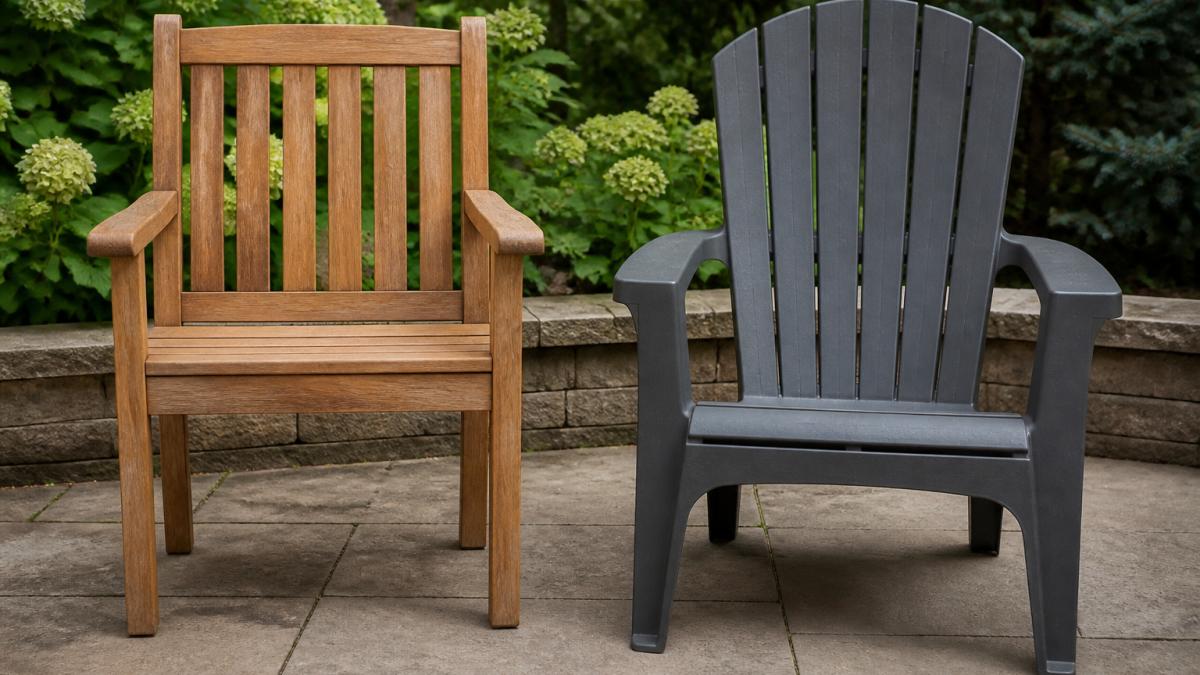
Cedar's natural oils resist rot, insects, and moisture, making it a durable choice in humid or rainy regions. Douglas fir is denser and stiffer, so it spans longer distances with less sagging, but needs more consistent sealing in wet winters.
Practical differences matter more than marketing claims:
- Rot resistance: Cedar naturally resists decay; Douglas fir needs treatment or regular sealing.
- Dimensional stability: Douglas fir holds its shape under load; cedar moves slightly with moisture.
- Color and grain: Cedar ages to a soft silver-gray; fir stays warmer brown longer.
In intense sun and humidity, cedar is a safer long-term bet. For a long clear span with annual sealing, Douglas fir performs well.
Other Wood Species Worth Considering
- Pressure-treated pine: The budget pick. Chemically treated to resist rot and insects, it's widely available and affordable, but it's prone to warping, cracking, and checking as it dries. It also needs sealing every one to two years. Best for tight budgets and short-term installations.
- Redwood: Naturally resistant to rot, insects, and moisture, similar to cedar but often more expensive. It's softer than fir, so it dents more easily, and clear-grade redwood is increasingly hard to find. Best for homeowners who want a premium natural look and live in a humid climate.
- Ipe (Brazilian walnut): The premium hardwood. Extremely dense, naturally resistant to rot and insects, and it can last decades with minimal maintenance. It's also the most expensive option, very heavy, and requires pre-drilling for fasteners. Best for high-end builds where longevity justifies the cost.
Climate and Treatment Considerations
Let your climate drive your choice:
- Humid or rainy climates: Cedar, redwood, or ipe. Avoid untreated pine.
- Dry, sunny climates: Douglas fir or cedar. Both handle UV well if sealed.
- Freeze-thaw cycles: Cedar and fir are more dimensionally stable than pine, which cracks faster.
A water-repellent finish extends lifespan. Reapply every two to three years for cedar.
Pergola Roofing Options: Louvered, Hardtop, and Convertible Canopy
Roofing decides your shade, rain handling, and maintenance load. The three main options are louvered, hardtop, and convertible canopy.
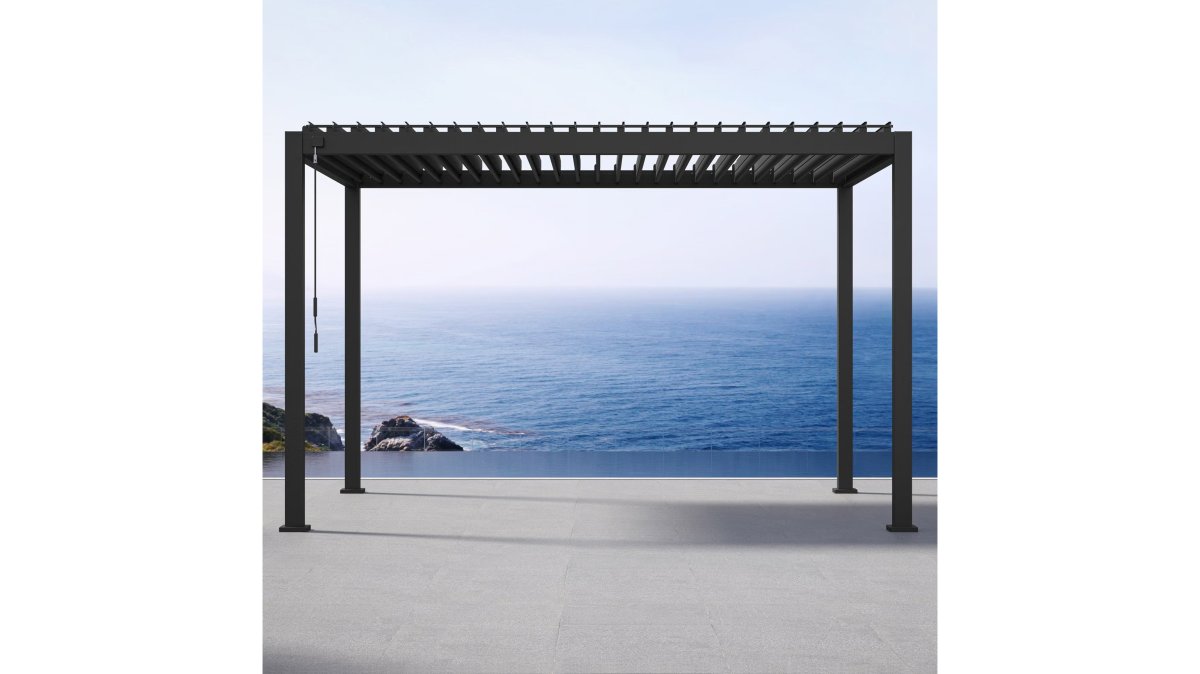
Louvered roofs use adjustable slats that rotate from open to closed. On our 10' x 12' Louvered Pergola, the louvers adjust from 0° to 90° and block up to 99% of UV rays, with an integrated gutter system that moves water away from the frame.
Hardtop roofs are fixed metal or polycarbonate panels offering full shade and strong rain protection, but you lose the flexibility of opening the roof on mild days.
Convertible canopies slide or fold open, letting you switch between sun and shade, though the mechanism needs occasional care.
| Roof Type | Shade Control | Rain Handling | Maintenance |
|---|---|---|---|
| Louvered | Adjustable 0°-90° | Integrated drainage | Low |
| Hardtop | Fixed full shade | Direct runoff | Low |
| Convertible canopy | Slide or fold open | Partial coverage | Moderate |
Attached Pergola Kit for Deck: What Fits Your Space
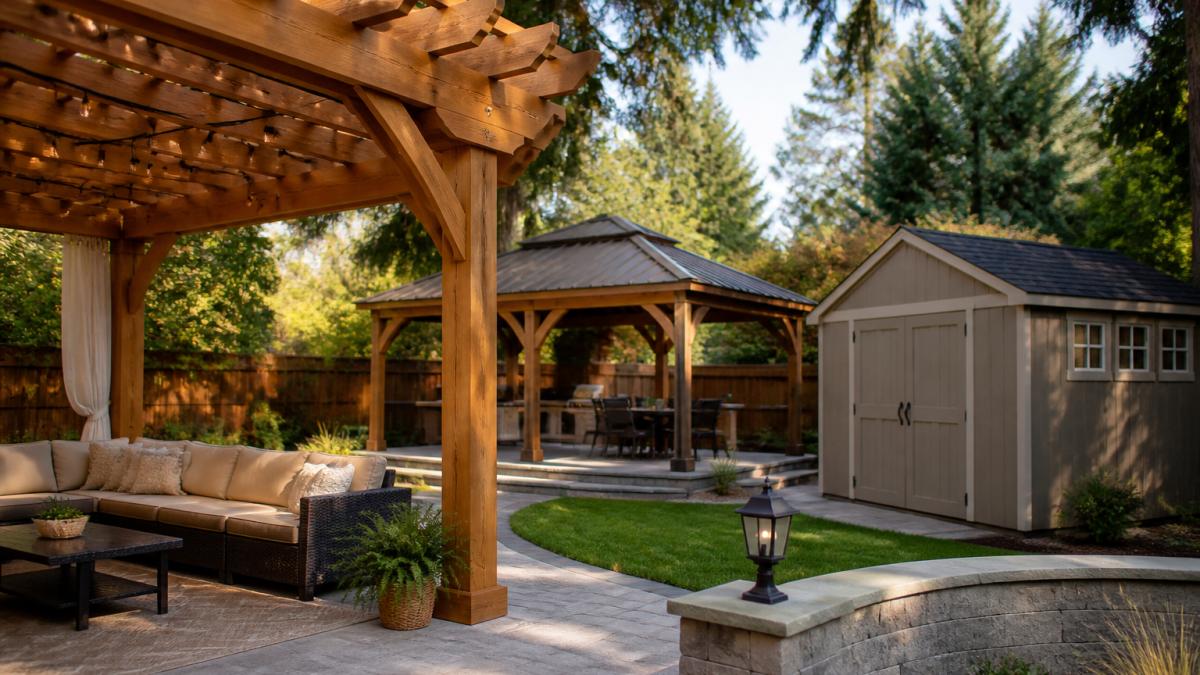
An attached pergola kit mounts to the house and extends over a deck or patio, saving two support posts and creating a natural indoor-to-outdoor transition. The trade-off: attachment limits placement and usually requires flashing and proper ledger-board anchoring to prevent water intrusion.
Measure these before ordering:
- Available wall length: The pergola's width can't exceed the flat, unobstructed wall section.
- Deck joist direction: Attachment points need to land on solid framing, not just decking boards.
- Height clearance: Leave enough headroom for doors and windows to swing freely.
If windows, doors, or utility lines are in the way, a freestanding structure is often better, it also lets you reposition shade as your yard changes.
Build a Pergola or Buy a Kit: Cost, Time, and Skill
Buying a kit usually beats building from scratch on time and predictability; custom building wins on exact fit. A kit arrives pre-cut, pre-drilled, and labeled, so assembly is mostly following instructions.
Here's how the two compare in practice:
| Factor | Kit | Custom Build |
|---|---|---|
| Time to assemble | Weekend project | Several weekends |
| Skill needed | Basic DIY | Intermediate carpentry |
| Fit to space | Standard sizes | Exact dimensions |
| Upfront cost | Predictable | Varies with lumber prices |
| Hardware | Included | Sourced separately |
For most homeowners, a kit is the smarter first structure: engineered stability, matched hardware, and a clear parts list. Custom builds make sense for irregular spaces or a specific look.
Top Yardistry Alternatives for Backyard Structures
Aluminum louvered pergolas combine weather resistance with adjustable shade and low upkeep. Aluminum won't rust, warp, or need annual sealing, and the louvered roof gives control fixed wood beams can't match.
Here's how the leading options stack up on materials, weather performance, installation, maintenance, and total cost of ownership.
10' X 12' Louvered Pergola, Aluminum Frame Outdoor Pergola with Adjustable →
How We Compared These Alternatives
We evaluated each option on six criteria:

- Material and construction: Wood, aluminum, or composite; joinery and hardware quality.
- Weather performance: Wind rating, snow load, rain handling, and UV resistance.
- Installation: Assembly time, crew size, tools required, and anchoring method.
- Maintenance: Sealing, painting, part replacement, and hardware availability.
- Customization: Size options, finish choices, and add-ons.
- Total cost of ownership: Purchase price plus delivery, foundation, assembly, and five-year upkeep.
Brand-Level Alternatives to Yardistry
Yardistry is known for cedar and aluminum gazebos and pergolas sold through major retailers. These brands and product types are most often mentioned alongside it:
- Backyard Comfort Co aluminum louvered pergolas: Our own line, featured below. Best for shoppers who want adjustable shade, low maintenance, and a range of sizes and finishes.
- Big-box retailer house brands: Many national chains sell their own cedar and aluminum gazebos and pergolas. They compete on price and availability, but hardware and replacement parts can be harder to source long-term.
- Specialty pergola manufacturers: Companies that focus only on pergolas often offer more sizes, finishes, and engineering documentation than general retailers. They typically cost more but provide better support.
Product-Level Comparison: Five Options Worth Considering
Here are five options from our catalog:
1. 10' x 12' Louvered Pergola, Dark Gray ($1,435.35), Our top pick for most backyards. The high-strength aluminum frame and powder-coated finish resist rust, moisture, and UV. Expansion-bolt anchoring handles winds up to 72 mph, and the canopy supports up to 6 inches of snow. Louvers adjust from 0° to 90° with integrated drainage down the columns. Assembly: 4-6 hours, two people. Maintenance: rinse and inspect annually.

2. Louvered Pergola 10' x 10', Wood Grain ($1,466.62), The same reinforced aluminum build in a wood-grain finish that mimics timber without the upkeep.
3. Adjustable Louvered Aluminum Pergola, 10' x 13' ($2,721.95), The largest footprint here, ideal for a full patio or dining area.
4. 11' x 11' Aluminum Pergola with Convertible Canopy, White ($1,113.71), Best for shoppers who want the look of wood with zero maintenance.
5. 10' x 10' Cedar Wood Patio Pergola ($931.86), The budget-friendly wood option.
| Model | Size | Price | Material | Wind Rating | Snow Load | Assembly Time | Maintenance | Best For |
|---|---|---|---|---|---|---|---|---|
| Louvered Pergola, Dark Gray | 10' x 12' | $1,435.35 | Aluminum | 72 mph | 6 in. | 4-6 hrs | Rinse annually | Most backyards |
| Louvered Pergola, Wood Grain | 10' x 10' | $1,466.62 | Aluminum | 72+ mph | Not stated | 4-6 hrs | Rinse annually | Low-maintenance look |
| Adjustable Louvered Pergola | 10' x 13' | $2,721.95 | Aluminum | Not stated | Not stated | 6-8 hrs | Rinse annually | Large patios |
| Convertible Canopy Pergola | 11' x 11' | $1,113.71 | Aluminum | Not stated | Not stated | 4-6 hrs | Lubricate track annually | Wood look, no upkeep |
| Cedar Wood Pergola | 10' x 10' | $931.86 | Cedar | 80 mph | Not stated | 6-8 hrs | Seal every 1-2 yrs | Tight budgets |
Total Cost of Ownership: Beyond the Sticker Price
The purchase price is only the beginning. Budget for these over five years:
- Delivery: Often included or a flat fee; confirm before ordering.
- Foundation: Concrete pad, pavers, or deck framing. Costs vary widely by region and site.
- Assembly: DIY saves labor but costs a weekend. Professional installation runs several hundred to over a thousand dollars depending on size and complexity.
For an aluminum louvered pergola, five-year total cost of ownership is typically lower than a comparably sized cedar structure once sealing and repairs are factored in.
Installation, Anchoring, and Realistic Labor Requirements
Aluminum louvered pergolas typically take 4-6 hours for two people to assemble; larger units and custom builds run longer. The kit is the easy part, anchoring and site prep slow most projects down.
Plan for these steps:
- Prepare a level surface. Concrete, pavers, or a properly framed deck. Uneven ground means shimming and instability.
- Check local requirements. Some structures need a permit, so confirm with your city or HOA first.
- Assemble the frame. Two people minimum, more for larger spans.
- Anchor the base. Expansion bolts for concrete, corrosion-proof hardware for wood decks.
- Install the roof panels or louvers. Follow the included instructions exactly.
Most homeowners can handle a kit with one helper and a free weekend. Hire a pro for second-story decks, electrical lines, or structures over 12 feet.
Frequently Asked Questions
What should I compare when choosing a Yardistry alternative?
Focus on frame material, roof style, wind and snow ratings, and assembly time. Aluminum pergolas resist rust and need less upkeep than wood, while cedar offers natural charm but requires periodic sealing. Check whether the louvered or hardtop roof blocks rain and UV rays, and confirm the wind speed the frame handles. Also review the footprint against your patio size and whether the kit includes anchoring hardware for concrete, deck, or lawn.
Is it cheaper to build a pergola or buy a kit?
A kit usually costs less overall once you factor in lumber, hardware, finishes, and the tools you would need to buy or rent. Prefabricated kits arrive with pre-drilled parts and step-by-step instructions, cutting assembly to a few hours for two people. Building from scratch gives you custom dimensions but adds design time, material sourcing, and a higher risk of measurement errors. For most homeowners, a kit delivers a predictable result at a lower total cost.
Are wood pergola kits difficult to assemble?
Most wood kits take two people four to eight hours to assemble, depending on size and roof style. The work involves laying out posts, securing beams, and attaching the canopy or louver system. You need basic tools like a drill, level, and ladder. A flat, level surface and a helper make the job much easier. If you are not comfortable working at height or anchoring into concrete, hiring a professional installer is a reasonable option.
How do cedar and Douglas fir compare for a solid-roof pergola?
Cedar contains natural oils that resist rot, insects, and moisture, so it holds up well in humid or rainy climates with minimal treatment. Douglas fir is stronger and more affordable but absorbs water more readily and needs regular sealing to prevent warping. For a solid-roof pergola that stays outside year-round, cedar generally lasts longer with less maintenance. Both woods accept stains and paints, but cedar's natural color and grain often need only a clear protective coat.
Can a pergola kit be attached to a deck?
Yes, many kits include mounting hardware for wooden decks, but you must anchor into the deck's framing, not just the surface boards. Use lag bolts or structural screws long enough to reach the joists or rim board. Some kits also offer ground stakes or concrete bolts for lawn and slab installations. Always check local building codes and HOA rules before attaching a structure, since some areas require a permit for deck-mounted pergolas.
Every backyard upgrade comes down to one question: do you want to replace it in a few seasons, or build something that lasts? At Backyard Comfort CO, we stock solid wood and weather-ready aluminum pergolas designed to hold up through every season, with free shipping on most orders within the continental U.S. and a straightforward 30-day return policy. Compare sizes, pick your roof style, and get started with Backyard Comfort CO to turn your patio into a permanent retreat.