
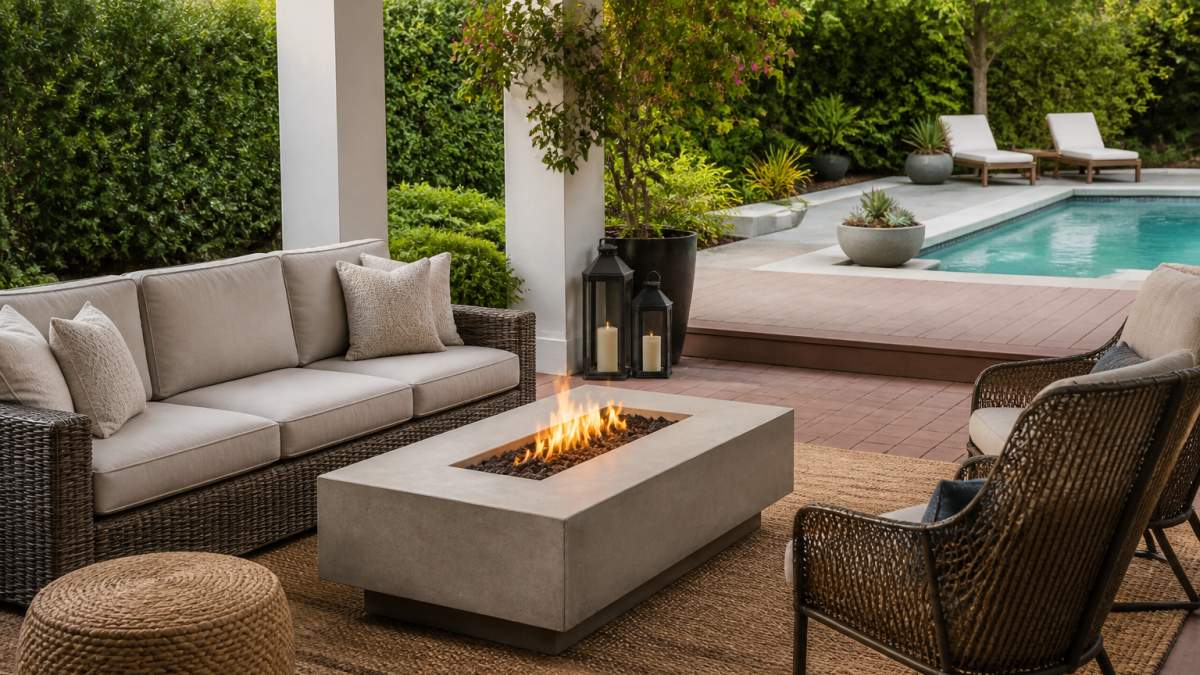
 comparison
Buy Outdoor Lounge Furniture: 5 Top Picks for 2026
Table of Contents
- Quick Comparison: 5 Outdoor Lounge Furniture Sets
- How We Evaluated These Sets
- 1. 7-Piece Rattan Conversation Set: Best for Large Gatherings
- 2. 6-Piece Wicker Swivel Rocker Set: Best for Conversation and Movement
- 3. 7-Piece Sectional with Storage Table: Best Budget-Friendly Pick
- 4. Modern Metal Set with Extra-Thick Cushions: Best for Heavy Use
- Best Weather-Resistant Outdoor Materials
- Solid Wood vs Plastic Outdoor Furniture
- Frequently Asked Questions
Last Updated: September 29, 2026
Quick Comparison: 5 Outdoor Lounge Furniture Sets
If you want outdoor lounge furniture that survives more than a season or two, frame material and cushion fabric matter more than styling. This guide from Backyard Comfort CO compares five sets we carry, from a 7-piece rattan conversation set built for large gatherings to a modern metal set rated for heavy daily use. Every pick ships with weather-resistant cushions and rust-resistant framing.

| Set | Pieces | Price | Frame | Best For |
|---|---|---|---|---|
| 7-Piece Rattan Conversation Set | 7 | $1,004.91 | Rust-proof steel + commercial-grade wicker | Large gatherings |
| 6-Piece Wicker Swivel Rocker Set | 6 | $1,100.35 | PE resin wicker over powder-coated frame | Conversation and movement |
| 7-Piece Sectional with Storage Table | 7 | $816.79 | Anti-rust steel + HDPE wicker | Budget-friendly layouts |
| Modern Metal Set with Extra-Thick Cushions | 6 | $1,144.68 | Wrought iron, dual rust prevention | Heavy use |
How We Evaluated These Sets
We scored each set on frame construction, cushion performance, configuration flexibility, and assembly effort. Frame construction carried the most weight: a rustproof aluminum or powder-coated steel frame outlasts a thin tube frame, and coating quality decides whether rust starts at the first scratch.
1. 7-Piece Rattan Conversation Set: Best for Large Gatherings
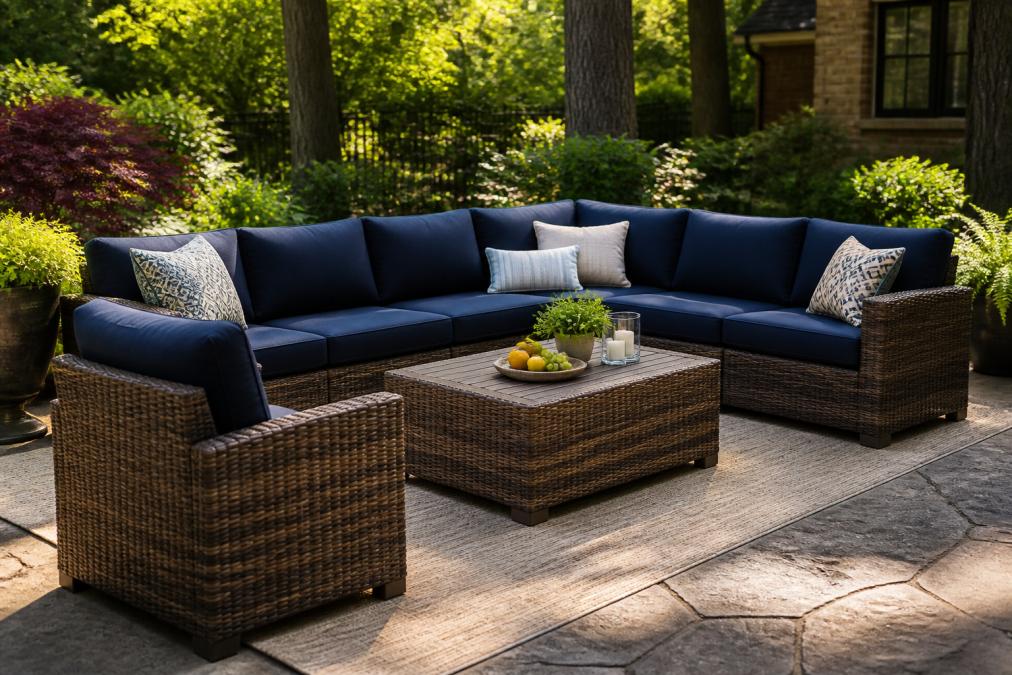
The 7-piece rattan conversation set is the best pick if you regularly host a crowd. It seats seven to nine people across four armless chairs, two corner loveseats, and a tempered-glass coffee table, and rearranges into L-shaped or U-shaped layouts.
2. 6-Piece Wicker Swivel Rocker Set: Best for Conversation and Movement
Swivel rocker chairs change how a patio conversation set gets used. Each of the two chairs rotates a full 360 degrees and glides back and forth, so people turn toward whoever is talking instead of shifting their whole chair.

3. 7-Piece Sectional with Storage Table: Best Budget-Friendly Pick
The storage table sets this sectional apart. Instead of a plain coffee table, you get a compartment that holds cushions, throws, or grill tools out of the rain, which matters if you don't have a shed nearby.

4. Modern Metal Set with Extra-Thick Cushions: Best for Heavy Use
Cushion collapse is the most common complaint about outdoor lounge furniture, and this set attacks it directly. Seat cushions measure 5.75 inches thick and use 28D density sponge, which holds shape far longer than the thin 2-inch pads on most budget sets.
Best Weather-Resistant Outdoor Materials
Weather resistance comes down to three components: the frame, the weave, and the cushion fabric. Get all three right and the set survives years of sun, rain, and freeze-thaw cycles. Get one wrong and you replace that component every couple of seasons.
Match the material to your climate
Most guides treat weather resistance as one problem. It is really four, and the right material depends on where the furniture lives.
- Humid and coastal climates. Salt air accelerates corrosion on ferrous metal, and constant moisture feeds mildew in cushions. Aluminum frames with stainless-steel hardware are safest. Avoid wrought iron near the coast unless hot-dip galvanized. Choose solution-dyed acrylic or olefin cushions, and store them or use a breathable cover, a non-breathable tarp traps moisture and worsens mildew.
- Arid and high-UV climates. The enemy is sun, not water. UV breaks down plasticizers in low-grade wicker and fades dyed fabrics. Solution-dyed fabrics keep color because pigment runs through the fiber, not just on the surface. Powder-coated aluminum and HDPE wicker hold up best; natural wood needs more frequent resealing because low humidity pulls moisture out and causes checking.
- Freeze-thaw climates. Water that gets into a frame, cushion, or joint expands when it freezes and splits the material from inside. Look for sealed tube ends, drainage grommets in cushions, and covers that keep snow off. Bring cushions indoors for winter, freeze-thaw kills them, not the cold itself.
- Rainy, mild climates. Constant wet-dry cycling is the test. Quick-dry foam and mesh-bottom cushion cores let water drain instead of pooling. Frames with open weaves dry faster than solid wraps.
Sustainability: what to look for
Recycled content is a real differentiator worth asking about before you buy.
- Recycled HDPE wicker is often made from post-consumer plastic, including milk jugs and bottle caps. It performs the same as virgin HDPE and keeps plastic out of landfills.
- FSC-certified wood (Forest Stewardship Council) confirms the timber came from responsibly managed forests. Ask for the certification number, not just the logo.
- Solution-dyed fabrics use less water and energy to produce than piece-dyed fabrics, and they last longer, which reduces replacement waste.
- Aluminum is highly recyclable and holds value at end of life. Steel is recyclable too, but the powder coating has to be stripped first.
The weave and the cushion fabric fail before the frame does. A rustproof aluminum frame with cheap cushions still leaves you replacing cushions every couple of years, and in a coastal or freeze-thaw climate, that timeline shrinks to one.
7 Pieces Outdoor Patio Furniture Sets →
Solid Wood vs Plastic Outdoor Furniture
Solid wood and plastic sit at opposite ends of the outdoor furniture market. The right choice depends on how much upkeep you will accept, how much weight you can move, and how the piece will be used.
Solid wood: warmth with a maintenance calendar
Teak, acacia, and eucalyptus are the three species most commonly used in outdoor lounge furniture, and they behave differently.
- Teak is the gold standard. Its natural oils make it rot- and insect-resistant, and it weathers to a silver-grey patina if left untreated. Clean it once or twice a year and reseal every one to two years to keep the original honey color. Teak is heavy, a single lounge chair can weigh 40-60 pounds, so it stays put in wind but is hard to rearrange alone.
- Acacia is more affordable and widely available. It is harder and denser than many expect, but has less natural oil than teak, so it needs sealing more often, typically once a year, twice in high-UV or freeze-thaw areas. Without sealing, acacia greys and can develop surface cracks.
- Eucalyptus sits between the two on price and durability. It resists rot well but benefits from the same annual sealing routine as acacia.
Plastic and polymer: zero maintenance, with trade-offs
Plastic and recycled polymer furniture skips nearly all maintenance. Rain, sun, and spills wipe off; it needs no sealing, staining, or covering, and one person can rearrange a seating group.
- HDPE (high-density polyethylene) is behind most high-quality recycled plastic furniture. It is UV-stabilized, so it will not chalk or fade like cheaper plastics, and it is often made from post-consumer recycled content.
- Polypropylene and cheaper plastics are lighter and less expensive, but they can become brittle after several seasons of UV exposure and may crack at stress points like armrests and leg joints.
- The look is the main trade-off. Polymer furniture reads as utilitarian next to wood, and it does not develop a patina. It stays the same until it eventually fades or fails.
How to choose
- If you want zero maintenance and light weight: polymer or HDPE.
- If you want warmth, weight, and a piece that ages well: teak, then acacia, then eucalyptus in descending order of durability and price.
- If you live in a high-UV or freeze-thaw climate: polymer is the lower-risk choice; wood needs a stricter sealing schedule.
- If you have a small space or balcony: polymer wins on weight and maneuverability. A wood lounge chair is hard to reposition alone on a narrow balcony.
A note on comfort
Comfort is not a material property, it is a geometry problem. Seat height, seat depth, back angle, and armrest height determine whether a piece is comfortable for a 30-minute sit or a three-hour one. A seat height of 17-18 inches works for the widest range of adults, while deep low-slung seats (13-15 inches) look stylish but are harder to get out of, especially for older guests.
Neither material is wrong. Wood is a commitment to seasonal care in exchange for warmth and longevity. Polymer is a commitment to a uniform look in exchange for zero upkeep. Match the material to the climate and to how much work you actually want to do.
Frequently Asked Questions
What is the most durable material for outdoor lounge furniture?
PE resin wicker over a rust-resistant powder-coated steel frame holds up best in most climates. The wicker resists fading and cracking, while the powder coating prevents rust. For cushions, look for olefin or performance fabrics with quick-dry foam. Aluminum frames also last decades if the powder coat stays intact. Avoid untreated steel and low-density foam, which break down within a few seasons. Backyard Comfort CO sets use rust-proof steel and commercial-grade wicker built for year-round exposure.
Is solid wood or plastic better for outdoor furniture?
Solid wood like teak or acacia offers natural beauty and can last decades with annual sealing, but it requires more upkeep. Plastic and resin furniture needs almost no maintenance and resists moisture, yet it can fade or crack under intense UV over time. The right choice depends on your climate and how much maintenance you will do. In humid or rainy areas, resin wicker over a metal frame often delivers the best balance of looks and low upkeep.
How do I choose comfortable outdoor lounge furniture?
Seat height and cushion density matter most. Look for seat cushions at least 4 inches thick with high-resilience foam, and consider seat heights that suit your comfort for easy sitting and standing. Deep seats with wide armrests and high backrests support longer lounging. Ergonomic design in the frame, including proper lumbar angles, reduces fatigue. If you plan to rearrange seating often, swivel or glider chairs add flexibility. Always check weight capacity ratings before buying.
Does outdoor lounge furniture need to be covered in winter?
Yes, covering furniture in winter extends its life even if the materials are weather-resistant. Snow, ice, and freeze-thaw cycles stress frames and cushions. Use breathable furniture covers so moisture escapes and mildew does not form. If you cannot cover everything, at minimum store cushions indoors and cover metal or wicker frames. Backyard Comfort CO sets ship with furniture covers to make off-season protection straightforward.
How long does high-quality outdoor lounge furniture last?
The biggest factors are frame rust prevention, cushion fabric quality, and whether you cover or store pieces during harsh months.