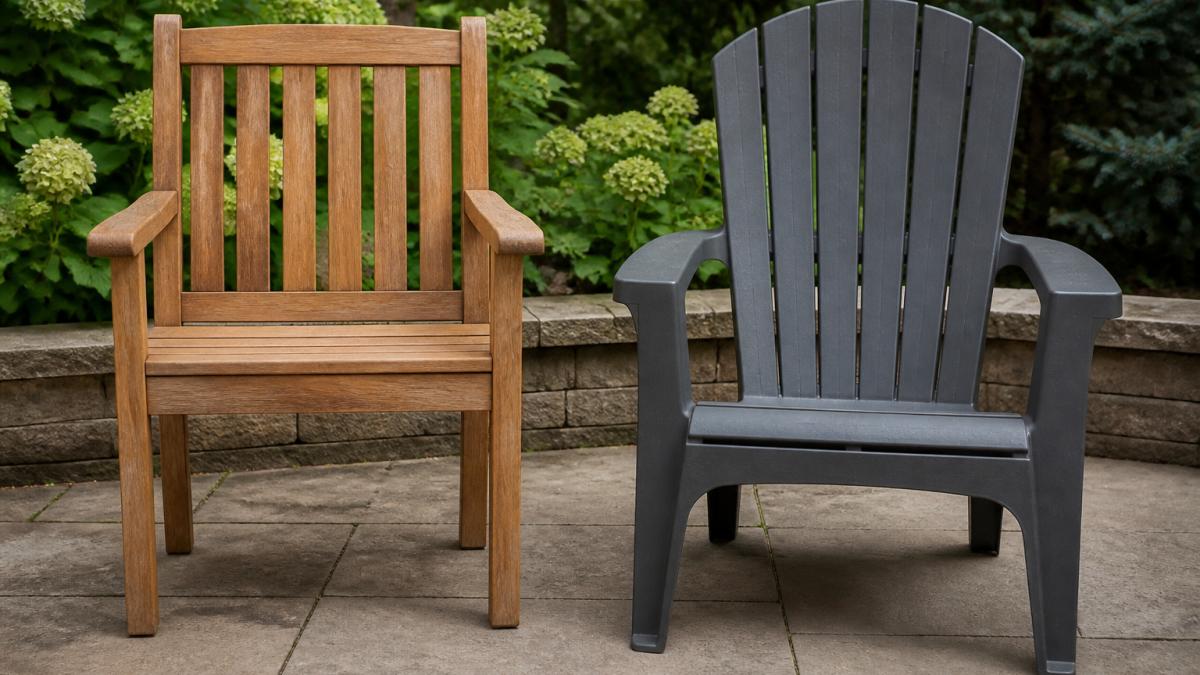
 comparison
Wood vs Plastic Patio Furniture Longevity: 2026 Guide
Table of Contents
- Wood vs Plastic Patio Furniture Longevity: The Short Answer
- The Average Lifespan of Outdoor Furniture, by Material
- Best Weather-Resistant Patio Furniture Materials
- Plastic Rattan Furniture Lifespan: What Actually Fails First
- Lifecycle Cost Per Year: Wood vs Plastic
- How to Protect Patio Furniture in Winter
- Repair, Refinish, or Replace: End-of-Life Options
- Conclusion
- Frequently Asked Questions
Last Updated: October 7, 2026
Wood vs Plastic Patio Furniture Longevity: The Short Answer
Wood vs plastic patio furniture longevity comes down to one number: years of service per dollar spent.
That math changes how you shop. A high-quality HDPE dining set with a 20-year frame warranty offers excellent value over time compared to budget resin sets that need frequent replacement.

Below, we break down realistic lifespans by material, what fails first, and how to choose between wood and plastic.
The Average Lifespan of Outdoor Furniture, by Material
The average lifespan of outdoor furniture varies significantly depending on material, construction, and climate. Most homeowners get years of service from quality pieces, assuming normal residential use, four-season exposure with basic seasonal care, and good construction.
Here's the honest breakdown by material:
| Material | Realistic Lifespan | Main Threat | Care Level |
|---|---|---|---|
| Grade A teak | 30-50+ years | Surface graying if unsealed | Low |
| Cedar | 15-25 years | Moisture, cracking | Low to moderate |
| Acacia | 5-10 years | Rot, insect damage | Moderate |
| Eucalyptus | 10-15 years | UV fading, drying | Moderate |
| HDPE / poly lumber | 20-30 years | Color fade, hardware | Very low |
| PVC | 15-25 years | Brittleness over time | Very low |
| Budget resin | 3-5 years | Cracking, fading | None |
Wood: Teak, Acacia, Cedar, and Eucalyptus
Teak leads the wood category thanks to its natural oils and tight grain, resisting rot, moisture, and insects without chemical treatment. Other woods like cedar, eucalyptus, and acacia offer varying levels of resistance and price points.
Grade matters as much as species. Grade A teak is heartwood from mature trees; lower grades mix in sapwood, which has less natural oil and can be less durable.
Plastic: HDPE, Poly Lumber, PVC, and Resin
HDPE and poly lumber are the same family: high-density polyethylene, often made with recycled content. These boards resist moisture, rot, mold, and insects entirely. PVC behaves similarly but can grow brittle with age.
Formulation matters too. HDPE with UV stabilizers and colorants molded through the full thickness holds color well. The formulation of the material is key to its performance.
What Actually Fails First
Lifespan tables tell you how long a piece lasts, not what breaks. The failure order is consistent across both wood and plastic:
- Hardware. Bolts, screws, and brackets loosen, strip, or rust before the primary material gives out. Stainless steel hardware can add years to any frame.
- Joints and joinery. Mortise-and-tenon and through-bolted joints outlast stapled or glued-only joints by a wide margin. This is often the single biggest predictor of service life.
- Fastener anchoring points. Where a screw bites into soft wood or thin plastic, it wallows out over time. Reinforced or threaded inserts solve this.
- Surface finish. UV fading, graying, and chalking are cosmetic at first, but they expose the material underneath to faster breakdown.
- Structural members. Legs, arms, and stretchers fail last, unless the piece was cheaply built, in which case they fail first.
How Climate Shifts the Numbers
A teak set in a mild, dry climate may hit the top of its range with minimal care, while the same set in a coastal, salt-spray environment with freeze-thaw winters may land mid-range even with good maintenance. HDPE barely notices salt and moisture, but intense UV shortens its color and eventually its structural life. Adjust any lifespan table down for harsh climates and up for sheltered patios.
Best Weather-Resistant Patio Furniture Materials
The best weather-resistant patio furniture materials are HDPE poly lumber and Grade A teak, with cedar and PVC close behind. Teak relies on natural oils and dense grain; HDPE relies on the fact that plastic doesn't absorb water.

Weather resistance isn't one property, it's several separate stresses, each punishing materials differently. Match the material to the stress your patio actually sees, and you'll get years more service from the same budget.
Freeze-Thaw Cycles
Water that seeps into a joint, crack, or wood grain and then freezes expands with enough force to split boards and pop fasteners. Wood is vulnerable at end grain and unchecked cracks; plastic is vulnerable at hollow extrusions and anywhere water pools inside a frame.
- Teak and cedar: naturally dense, but end grain still needs sealing before the first freeze.
- HDPE and PVC: won't absorb water, but hollow legs and arms can trap it. Look for sealed or capped ends.
- Budget resin: thin walls crack fast when trapped water freezes. This is a leading cause of the 3-to-5-year failure pattern.
Coastal Salt
Salt spray accelerates corrosion on every metal component and dries out wood faster than inland air. The material that survives a coastal patio usually has the best hardware, not the best boards.
- Teak: handles salt well; rinse occasionally to prevent salt buildup in the grain.
- HDPE: unaffected by salt; the frame and fasteners are the weak point.
- Avoid: untreated steel frames, standard zinc-plated hardware, and any wood with exposed end grain facing the prevailing wind.
Intense Sun and UV
UV breaks down the surface of both wood and plastic. Wood grays and needs occasional sealing to hold color, but can be sanded back to fresh color; plastic chalks and lightens, and no amount of oiling brings it back.
- Teak: grays gracefully; a protectant slows the shift if you want to keep the honey tone.
- Cedar: grays faster than teak and benefits from annual sealing.
- HDPE with UV stabilizers: holds color far longer than budget resin, but even good poly lumber fades over a decade or more.
High Humidity and Mold
Humidity is the quiet killer. It feeds mold on cushions, accelerates rot in untreated wood, and rusts hardware from the inside out.
- Teak, cedar, eucalyptus: naturally rot-resistant, but mold can still grow on dirt and pollen films. A mild soap wash once a season prevents it.
- HDPE and PVC: won't rot or grow mold on the material itself, but trapped moisture between cushions and frames will.
- Cushions: the real humidity problem. Store them dry, and never leave them stacked against a frame in a humid climate.
Snow Load
Snow weight is a structural test, not a material test. A cheap frame fails under snow regardless of the boards.
- Wood frames with mortise-and-tenon or through-bolted joinery: handle snow load well.
- HDPE frames with reinforced aluminum or stainless subframes: handle snow load well.
- Hollow plastic frames and thin-wall resin: the first to crack under a heavy snowpack.
The Rule That Cuts Across All Five
Weather resistance and longevity aren't identical. A material can resist rain and still fade badly in sun, or shrug off salt and still fail at a rusted bolt. Compare the specific grade, hardware, and joinery, not the category label.
7-Piece Outdoor HDPE Dining Set, Teak →
Plastic Rattan Furniture Lifespan: What Actually Fails First
Plastic rattan furniture lifespan varies. The weave itself is rarely the problem, failure usually starts underneath it, in this order:
- The frame. Steel or aluminum frames rust or corrode at weld points and joints, especially in coastal or humid climates.
- The weave. UV exposure makes the strands brittle, and they crack or snap where the chair flexes.
- The hardware. Bolts and screws loosen, strip, or rust, and the chair starts to wobble.
- The cushions. Foam breaks down and fabric fades or mildews long before the frame gives out.
The pattern tells you what to inspect. Check the frame material and hardware quality before the weave. A rattan set with a solid aluminum frame and stainless hardware will outlast a prettier set with a thin steel frame every time.
Lifecycle Cost Per Year: Wood vs Plastic
Lifecycle cost per year is purchase price plus maintenance and replacement costs, divided by years of service. This is where the cheap set loses badly, despite winning on sticker price.
Run the numbers on two realistic scenarios:
| Cost Factor | Budget Resin Set | HDPE Set (20-yr warranty) |
|---|---|---|
| Purchase price | $400 | $1,218.87 |
| Replacements over 20 years | 4 sets | 0 |
| Total purchase cost | $1,600 | $1,218.87 |
| Annual maintenance | $0 | $0 (soap and water) |
| Cost per year | $80 | ~$61 |
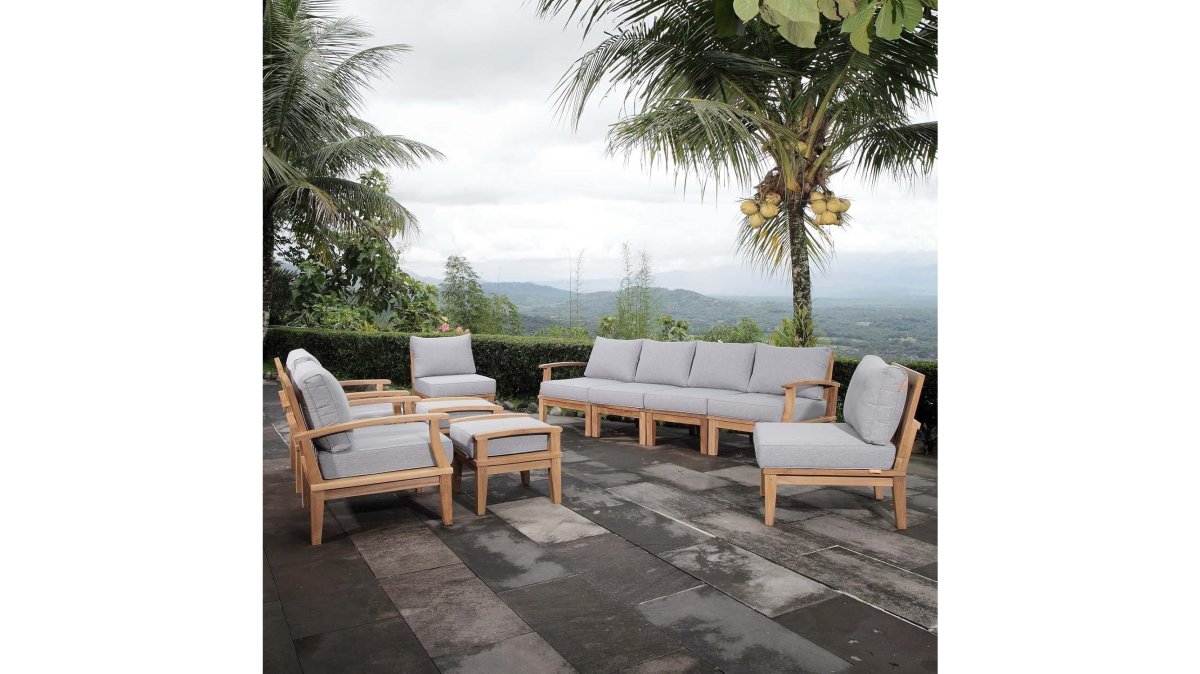
The budget set often costs more over time due to frequent replacement. Our 10-Piece Teak Patio Furniture Set costs more upfront, but Grade A teak with occasional cleaning and protectant can serve a household for decades.
How to Protect Patio Furniture in Winter
How to protect patio furniture in winter comes down to three things: keep water out, keep weight off, and keep UV and ice off surfaces. Most winter damage happens when moisture gets trapped and freezes inside joints and cushions.
A simple winter routine:
- Clean every piece with mild soap and water, then let it dry completely
- Apply a protectant to wood surfaces before the first freeze
- Remove and store cushions indoors
HDPE and PVC need the least attention here. Wood needs the most, but the work is seasonal, not constant.
Repair, Refinish, or Replace: End-of-Life Options
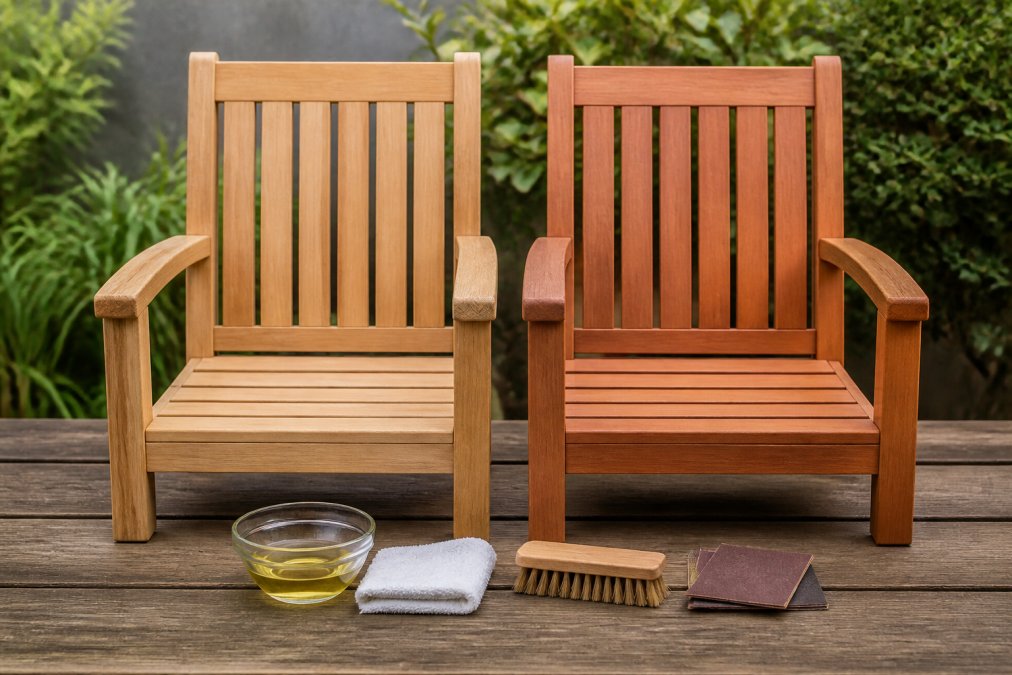
Repairability is the biggest difference between wood and plastic. Wood can be sanded, refinished, and re-sealed; individual boards can be replaced; a wobbly joint can be re-glued and re-bolted. HDPE boards can sometimes be swapped if the manufacturer stocks the part, but a cracked resin frame is landfill material. The decision tree:
- Surface damage, wood: sand lightly and reapply protectant. The piece keeps going.
- Loose or wobbly, either material: tighten or replace hardware first. This is the cheapest fix and often the only one needed.
- Cracked resin frame: replace the piece. There is no structural repair.
End-of-life matters too. HDPE is recyclable, and many poly lumber products are made from recycled plastic. Wood can be composted or repurposed. Resin typically goes to the landfill.
Conclusion
The real challenge with patio furniture isn't choosing between wood and plastic. It's avoiding the trap of buying cheap and replacing often, which costs more over time and never gives you a space you enjoy.
At Backyard Comfort CO, we build for the long haul. Our HDPE sets carry a 20-year frame warranty and resist cracking, peeling, and fading with nothing more than soap and water.
Get started with Backyard Comfort CO and build a patio you won't have to rebuild.
Frequently Asked Questions
Does wood or plastic patio furniture last longer?
It depends on the material grade. Quality teak offers significant longevity, and high-density polyethylene (HDPE) poly lumber carries 20-year frame warranties. Material quality matters more than the wood-versus-plastic label.
What is the average lifespan of outdoor furniture?
Across all materials, the lifespan of patio furniture varies. Premium teak and HDPE poly lumber offer long-lasting durability, with HDPE frames carrying 20-year warranties.
How long does plastic rattan furniture last?
Plastic rattan furniture lifespan varies. The weave itself holds up reasonably well, but the failure point is almost always the metal frame underneath. Once moisture gets in and rusts the steel, the weave can sag and the chair may become unstable. Storing resin rattan under a cover or in a garage during winter can help extend its life.
How can you make plastic patio furniture last longer?
Wash HDPE and poly lumber with mild soap and water two or three times a season to remove pollen and grime that bake into the surface. Keep pieces out of standing water, since freeze-thaw cycles stress hollow legs and joints. Cover or store resin rattan and PVC in winter so moisture does not reach the steel frame. Tighten hardware each spring, and touch up any scratches on painted metal before rust spreads.
Does leaving patio furniture outside in winter shorten its lifespan?
Yes, especially for wood and resin rattan. Freeze-thaw cycles push moisture into wood grain, causing cracks and raised grain, and they can split plastic joints. UV exposure is lower in winter, but snow load and ice are not. Teak handles cold better than most woods because of its natural oils, but a cover or indoor storage still adds years. Poly lumber is the most forgiving if you leave it out, though covers are still worth the effort.