 ultimate-guide
Signs of High Quality Outdoor Furniture: A Buyer's Guide
Table of Contents
- What Makes Outdoor Furniture High Quality
- Best Materials for Outdoor Furniture
- Solid Wood vs Plastic Outdoor Furniture
- Inspecting Frame Construction and Joinery
- Hardware and Fastener Quality
- How to Maintain Patio Furniture for Longevity
- Red Flags: Signs of Low Quality Outdoor Furniture
- Frequently Asked Questions
Last Updated: September 1, 2026
What Makes Outdoor Furniture High Quality
High quality outdoor furniture combines durable materials, solid construction, and weather-resistant design to create pieces that last decades rather than seasons. The difference between furniture that survives five years and furniture that survives twenty years comes down to specific, measurable details: the grade of wood, the gauge of metal frames, the type of hardware, and how joints are assembled.
Most people buy outdoor furniture based on appearance or price, then watch it deteriorate within a few seasons as cushions fade, frames rust, wood splits, and fasteners corrode. That's not inevitable, it's a choice made at the purchasing stage. At Backyard Comfort CO, we offer homeowners durable, weather-ready outdoor living solutions designed to transform your space into a permanent, comfortable retreat. The difference isn't luck. It's knowing what to look for before you buy.
This guide covers the specific markers that separate genuine high quality outdoor furniture from the disposable kind. You'll learn which materials withstand weather, how to inspect construction quality, what hardware matters, and how to maintain pieces so they age well instead of deteriorating.
Best Materials for Outdoor Furniture
Material choice is the foundation of durability. Not all wood is the same, not all metal frames are equal, and not all cushion fabrics perform identically outdoors.
Grade-A Teak and Solid Wood
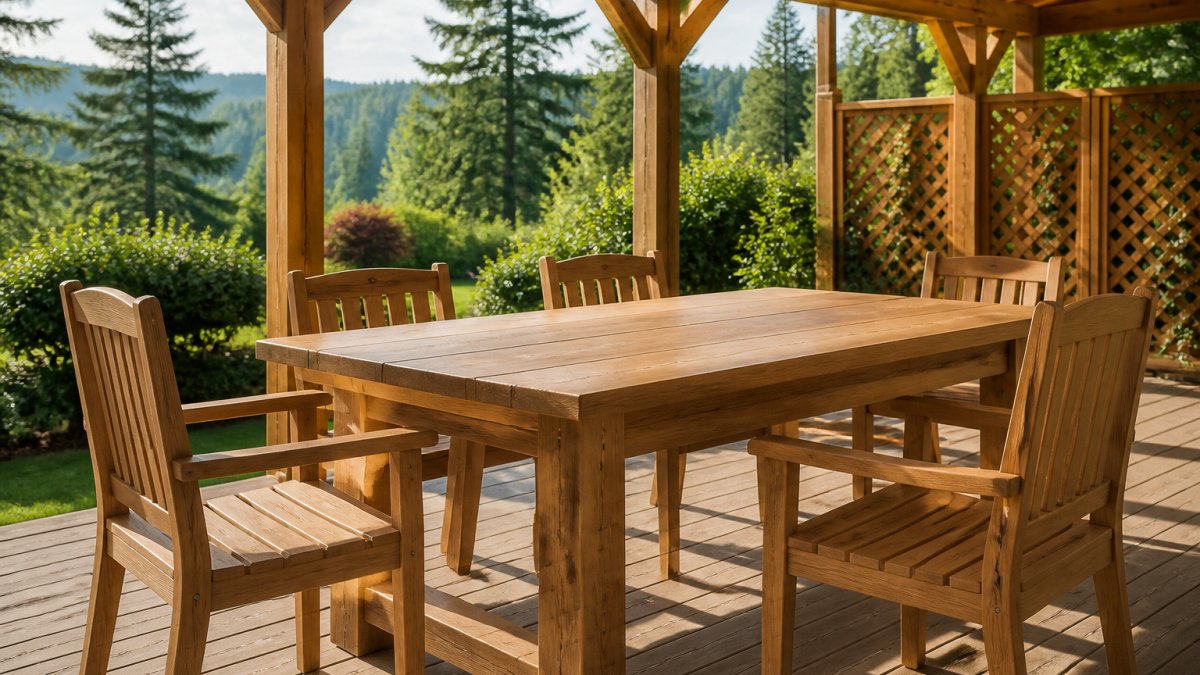
Grade-A teak is the gold standard for outdoor wood furniture because it contains natural oils that resist rot, insects, and weathering. When teak weathers, it develops a silver-gray patina but maintains structural integrity for decades, fundamentally different from pressure-treated pine or cedar, which deteriorate visibly and require regular refinishing.
The key distinction is density and oil content. Grade-A teak has a tight grain structure and high silica content, making it naturally resistant to decay (peer-reviewed research). Lower grades of teak or teak blended with other woods lose these protective properties. If a set is described simply as "teak" without specifying grade, it's likely a blend that won't perform as well.
Other solid woods like ipe, cumaru, and shorea also perform well outdoors because of their natural density and oil content. These hardwoods are significantly denser than domestic softwoods, resisting moisture penetration and weathering better. The trade-off is cost: genuine hardwood furniture commands a premium because the material itself is expensive and construction takes longer.
Even grade-A teak requires some maintenance. It won't stay bright and new-looking without occasional cleaning and oiling. You're choosing between furniture that ages gracefully with minimal care and furniture that deteriorates noticeably without regular refinishing.
Powder-Coated Aluminum and Steel
Powder coating is a process where dry powder is electrostatically applied to metal, then cured with heat to create a hard, durable finish that prevents rust and corrosion far more effectively than paint.
Aluminum frames are lighter and naturally corrosion-resistant, ideal for high-movement furniture like dining chairs. Steel frames are heavier and stronger, better for large sectional pieces. Frame gauge matters significantly: thicker gauge metal (lower gauge number) is stronger and less likely to bend over time. Look for 16-gauge or thicker for quality furniture (astm.org).
High-quality powder coating is applied in multiple layers and cured at high temperatures, creating a finish that resists UV fading, chipping, and corrosion. If rust develops quickly around fasteners or joints, the coating was applied poorly or the underlying metal wasn't properly prepared.
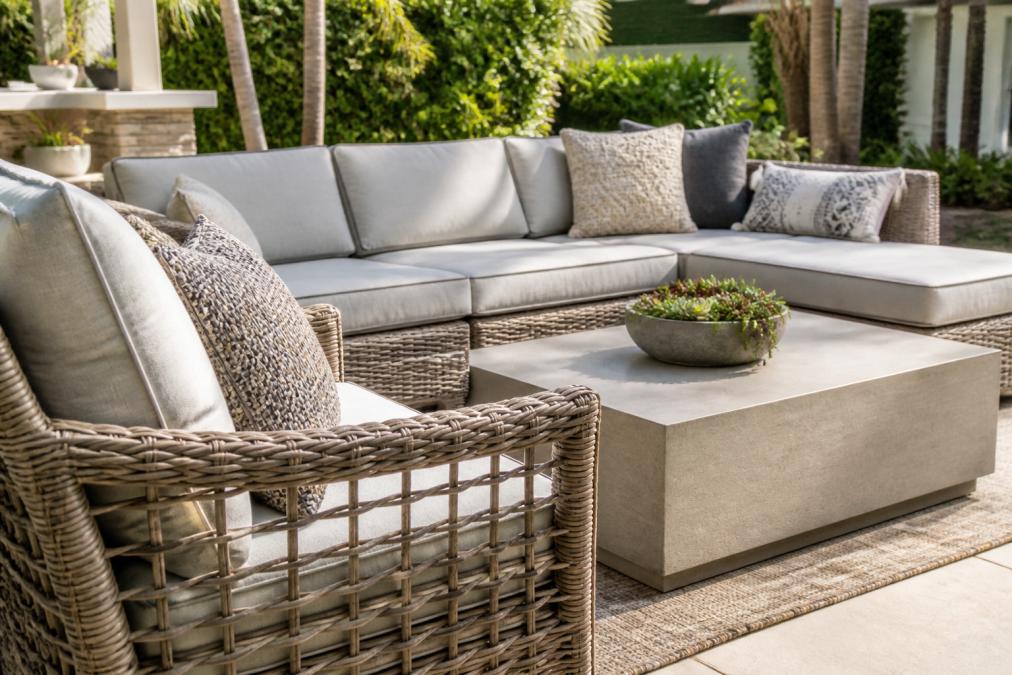
All-weather wicker (synthetic resin wicker) wrapped around aluminum or steel frames represents a hybrid approach. The wicker is UV-stabilized to resist fading and won't absorb water like natural rattan, while the frame underneath provides structural support.
Solution-Dyed Acrylic and All-Weather Wicker
Solution-dyed acrylic is a fabric where color is added during fiber production, not applied to the surface afterward. This means color goes all the way through the fiber, so fading happens slowly without exposing a different color underneath. Sunbrella and similar premium brands use solution-dyed acrylic for this reason.
All-weather wicker is synthetic resin, typically high-density polyethylene (HDPE), that mimics natural rattan but doesn't absorb water or rot. Quality all-weather wicker has consistent texture and color with no brittleness or cracking after years of sun exposure. Cheap synthetic wicker becomes brittle and discolors unevenly.
A cushion made from solution-dyed acrylic will still look acceptable after five years of outdoor use. A cushion made from cheap polyester will fade noticeably within one or two seasons. The wicker on a quality frame remains flexible and intact; cheap wicker becomes stiff and cracks.
Solid Wood vs Plastic Outdoor Furniture
Solid wood furniture, especially high quality outdoor furniture made from grade-A teak or similar hardwoods, ages beautifully. It develops character over time, with deepening color and more pronounced grain. This appeals to homeowners who view their outdoor space as a long-term investment.
Plastic and composite materials like high-density polyethylene (HDPE) or recycled plastic lumber require virtually no maintenance. They don't rot, don't need refinishing, don't absorb water. For busy families or people who prioritize convenience, this is a legitimate advantage.
The catch: plastic furniture looks plastic. It doesn't develop patina or character. After ten years, plastic furniture still looks like plastic furniture from ten years ago. It doesn't improve with age the way wood does.
While plastic doesn't rot, it can crack under stress, especially in cold climates where freeze-thaw cycles occur. Seams can separate and color can fade or become chalky. Plastic furniture often feels lighter and less substantial than wood, affecting both durability and the feeling of quality.
For high quality outdoor furniture you plan to keep for decades, solid wood generally outperforms plastic in longevity and aesthetic appeal. For people who want zero maintenance and don't care about aging character, plastic is the practical choice.
Inspecting Frame Construction and Joinery
Frame construction determines whether furniture will remain structurally sound or gradually develop wobbles, creaks, and loose joints.
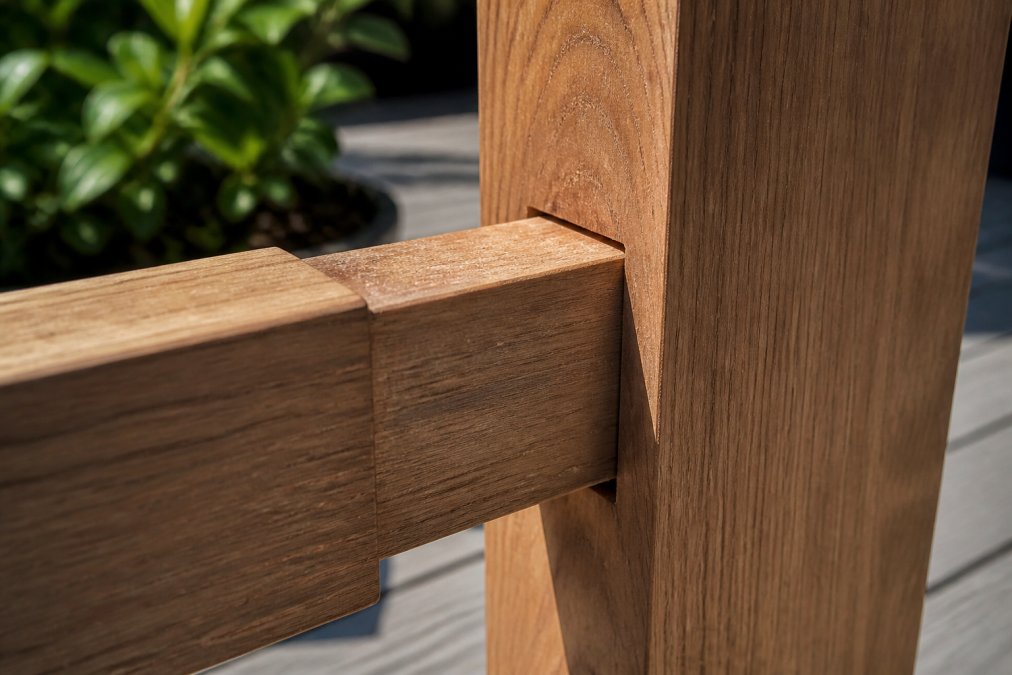
Mortise and tenon joinery is the gold standard for wood furniture. A mortise is a rectangular hole cut into one piece of wood; a tenon is a protruding piece that fits into the mortise. When done correctly, this joint is stronger than the wood itself because load is distributed across a large glued surface area. High quality outdoor furniture uses mortise and tenon joints at every major connection point.
Dowel joinery is cheaper to produce but weaker. Dowels are wooden pegs that connect two boards, relying primarily on glue. Over time, especially outdoors where wood expands and contracts with humidity changes, dowel joints can loosen and fail.
For metal frames, welding quality matters enormously. A well-welded joint is stronger than the metal around it. You can infer weld quality from the brand's reputation and overall construction quality. Furniture from established manufacturers typically has quality welds; cheap furniture often has welds that fail within a few years.
Frame gauge, the thickness of the metal, is measurable and important. Aluminum or steel frames should be 16-gauge or thicker for durability. Thinner gauge metal bends more easily and is more prone to fatigue failure. If a manufacturer doesn't specify frame gauge, that's a red flag.
Bracing, additional support pieces that connect main frame members, increases rigidity and longevity. High quality outdoor furniture has multiple bracing points, especially in the seat and back areas where stress concentrates.
Hardware and Fastener Quality
Hardware is easy to overlook, but it's often the first thing to fail on outdoor furniture.
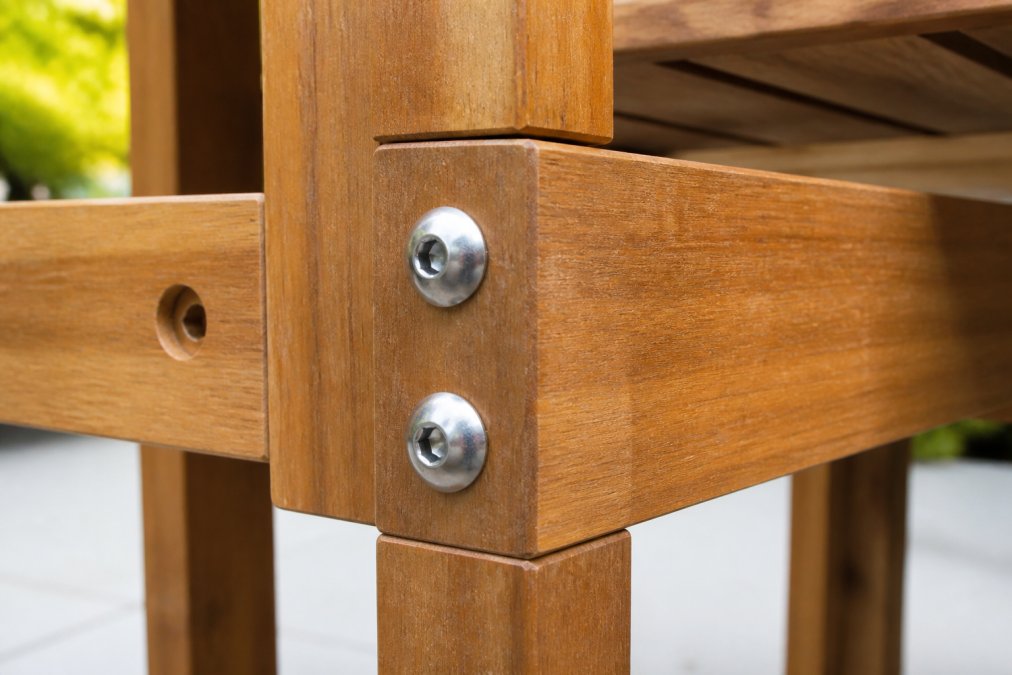
Stainless steel is the minimum acceptable standard for outdoor hardware. Stainless steel resists corrosion because it forms a protective oxide layer on its surface. Galvanized or zinc-plated fasteners corrode much faster, especially in humid climates or near salt water.
Within stainless steel, there are grades. 304 stainless steel is adequate for most outdoor applications (astm.org). 316 stainless steel is superior because it contains molybdenum, providing extra corrosion resistance in harsh environments like coastal areas. If you live near the ocean or in a very humid climate, 316 stainless hardware makes a measurable difference.
The number and placement of fasteners matters. Furniture held together by a few bolts is more likely to develop movement and loosening than furniture with multiple fasteners distributed across the structure. Bolts with washers are better than bolts without because washers distribute load and prevent the bolt head from sinking into the material. Lock washers or thread-locking compounds prevent bolts from vibrating loose over time.
Brass hardware is sometimes used on teak furniture because it complements the wood aesthetically and resists corrosion. However, brass is softer than stainless steel and can bend or strip more easily. For structural fasteners that carry load, stainless steel is more durable.
How to Maintain Patio Furniture for Longevity
Maintenance determines whether high quality outdoor furniture stays in good condition or deteriorates prematurely. The good news is that genuine high quality outdoor furniture requires less maintenance than cheap furniture, and the maintenance is straightforward.
For wood furniture, the primary goal is to protect the surface and prevent moisture penetration. Grade-A teak can be left unfinished and will weather to a silver-gray color. If you prefer the original color, apply a teak oil or exterior sealant annually. Pressure-treated or softwood furniture requires more frequent refinishing.
For metal frames, inspect bolts and fasteners twice a year, especially after winter. Tighten any that have loosened. If you see rust forming, sand it off and apply a thin coat of oil or rust inhibitor.
For cushions and fabrics, solution-dyed acrylic and all-weather wicker are low-maintenance by design. Rinse them occasionally with fresh water to remove salt spray or dust. Store cushions indoors during winter if you live in a harsh climate, though quality cushions can survive outdoor storage.
Avoid harsh chemicals or pressure washers, which can damage finishes and loosen joints. Use mild soap and water, or specialty cleaners designed for outdoor furniture. Storing furniture during winter extends its life significantly, especially in climates with freeze-thaw cycles.
Red Flags: Signs of Low Quality Outdoor Furniture
Certain characteristics almost always indicate furniture that won't last long.
Furniture that feels flimsy or wobbles when you sit on it is built with insufficient bracing or thin frame gauge. This wobbling will worsen over time as joints loosen and materials fatigue. High quality outdoor furniture feels solid and stable from the first use.
Visible gaps between frame pieces or cushions indicate poor manufacturing tolerances and allow water to penetrate, accelerating rot and corrosion. Tight, precise construction keeps moisture out.
Fasteners that are visibly corroding or discolored suggest the hardware isn't stainless steel. If fasteners are already showing rust at the showroom, they'll continue deteriorating outdoors.
Cushions that feel thin or use cheap polyester fabric will fade and deteriorate quickly. Quality cushions have density and resistance, not complete compression.
Plastic or wicker that feels brittle or has a chalky appearance indicates UV degradation has already begun. Quality all-weather wicker feels flexible and has consistent color.
Joints that are glued but not mechanically fastened are weaker than joints combining glue with fasteners. Furniture assembled with staples instead of screws or bolts is built cheaply and works loose easily.
Warranty length correlates with manufacturer confidence. A five-year warranty suggests the maker believes the furniture will last at least that long. A one-year warranty or no warranty suggests the manufacturer expects earlier failure.
Choosing high quality outdoor furniture means investing upfront in materials and construction that will serve your family for years. The pieces you select now can become part of your outdoor living space for decades. Backyard Comfort CO offers homeowners durable, weather-ready outdoor living solutions, from solid wood pergolas to patio furniture, all designed to transform your space into a permanent, comfortable retreat. We eliminate the hassle of frequent replacements by providing high-quality pieces built to withstand every season, ensuring your backyard remains an inviting haven year after year. Our 5-Piece Wicker Patio Furniture Set with Ottomans combines all-weather wicker, powder-coated steel frames, and water-resistant cushions designed to age gracefully. With free shipping on most orders within the continental U.S. and a straightforward 30-day return policy, investing in lasting comfort has never been easier. Start with pieces built to last, and your backyard becomes a retreat you'll actually use for years to come.

Frequently Asked Questions
How can you tell if outdoor furniture is high quality?
High quality outdoor furniture shows solid construction through sturdy joinery, corrosion-resistant hardware, and weather-resistant materials like grade-A teak or powder-coated aluminum. Inspect joints for mortise and tenon construction rather than glued connections, check that fasteners are stainless steel, and verify the frame gauge is substantial. Quality pieces often carry warranty coverage and come from manufacturers who provide detailed material specifications.
What's the difference between solid wood and plastic outdoor furniture?
Solid wood outdoor furniture, especially grade-A teak, develops character over time and can last for many years with proper maintenance. Plastic and synthetic resin furniture requires no refinishing but may fade faster and lack the structural stability of wood. Solid wood offers superior aesthetics and load-bearing capacity, while plastic excels in low-maintenance climates. Your choice depends on climate, aesthetic preference, and willingness to maintain finishes.
How often should you maintain outdoor patio furniture?
Maintenance frequency depends on your climate and materials. Wood furniture needs seasonal inspection and may require refinishing every 2-3 years in harsh climates. Metal pieces should be checked for corrosion annually. All-weather wicker and solution-dyed acrylic require minimal maintenance, typically just rinsing with water and occasional cleaning. Cushions should be stored or treated with water-repellent products during off-season. Regular maintenance extends furniture longevity significantly.
Is expensive outdoor furniture worth the investment?
Quality outdoor furniture costs more upfront but eliminates replacement cycles every few years. A high-quality set with proper construction, UV-stabilized materials, and stainless steel hardware can last for many years, while budget alternatives may fail in 2-3 seasons. Lifecycle cost analysis shows premium pieces deliver better value over time. Consider your climate intensity, usage frequency, and aesthetic goals when evaluating whether the investment aligns with your outdoor living plans.
This article was written using GrandRanker