
 ultimate-guide
Patio Furniture Return Policy: What to Expect in 2026
Table of Contents
- What Standard Patio Furniture Return Policy Expectations Look Like
- Outdoor Furniture Restocking Fees: When They Apply and How Much
- How to Return Large Furniture Items: Freight and Parcel Logistics
- Damaged Outdoor Furniture Return Process: Inspection to Resolution
- Buyer's Remorse vs. Manufacturer Defects: How the Return Path Differs
- Refund Methods, Timelines, and What You Get Back
- Protecting Your Furniture Before and After Purchase
- Conclusion
- Frequently Asked Questions
Last Updated: September 10, 2026
What Standard Patio Furniture Return Policy Expectations Look Like
Most homeowners don't think about patio furniture return policy expectations until something goes wrong, and by then the fine print matters more than the sales page. This guide breaks down what a fair return policy looks like before you click buy.
A return policy is the written set of rules a retailer uses to determine whether, when, and how a customer can send an item back for a refund or exchange. For large outdoor pieces, those rules cover the return window, condition requirements, who pays return shipping, and refund timing.
Here's the part most shoppers miss: outdoor furniture returns are not handled like a pair of shoes. A patio set can weigh over a hundred pounds, arrive by freight truck, and require a return authorization before it moves an inch.
Typical Return Window Lengths
Return windows for patio furniture generally run between 14 and 90 days from delivery, with 30 days being the most common industry standard (the FTC). Backyard Comfort CO, for example, offers a straightforward 30-day return policy on its furniture.
The clock usually starts on the delivery date, not the order date, a distinction that matters because freight shipments can take weeks to arrive. Keep your order confirmation and delivery receipt together as proof of purchase.
Some retailers shorten the window for clearance items or extend it during holiday promotions. Always check the specific terms attached to the item you bought, not the general policy page.
Condition Requirements: Resalable and Unused
The core condition requirement across nearly every return policy is resalable condition, meaning the item can go back on the shelf or into another customer's home without repair. For patio furniture, that usually means unused, unassembled where possible, and in the original packaging.
Assembly is the silent dealbreaker. Once you've bolted a table together or attached cushions to a frame, many retailers consider the item used and refuse a full refund. If you're unsure whether a piece will work in your space, keep it boxed until you've confirmed the dimensions.
Cushions, hardware bags, and manuals all need to come back too. Missing hardware is one of the most common reasons a return gets downgraded to a partial refund.
Outdoor Furniture Restocking Fees: When They Apply and How Much
Restocking fees are charges a retailer deducts from your refund to cover processing, inspecting, and reshelving a returned item. They typically apply to large furniture, special orders, and items returned without original packaging.
Not every retailer charges them. Some absorb the cost, while others apply a flat percentage of the purchase price. A common approach is to waive the fee for manufacturer defects and apply it only when the customer changed their mind.
How Restocking Fees Are Calculated
There are three common structures, and knowing which one you're dealing with changes your refund math:
- Flat percentage of purchase price. The most common approach. A retailer might deduct a set percentage of what you paid, regardless of the item's size or condition.
- Flat dollar amount per item. More common on smaller accessories like cushions or covers, where a percentage would be trivial.
- Tiered by condition. Some retailers charge nothing if the item is unopened, a modest fee if it's opened but resalable, and a larger fee if packaging is damaged or hardware is missing.
A common pattern is for the fee to scale with how far the item has moved from "sellable as new": an unopened box often triggers no fee, while an assembled item with missing hardware may trigger the maximum.
When Fees Are Typically Waived
Most retailers waive restocking fees in these situations:
- The item arrived damaged in transit and you documented it on the delivery receipt
- The item has a verified manufacturer defect
- The retailer shipped the wrong item or the wrong color
- The return falls within a satisfaction-guarantee window the retailer advertises
If your situation fits any of these, ask specifically for the fee to be waived. It's rarely automatic, but it's frequently granted when the customer names the reason.
Special Orders and Clearance Items
Special orders, custom cushions, made-to-order table sizes, non-stock finishes, are the category most likely to carry the steepest restocking fees, and some retailers mark them non-returnable entirely. Clearance and final-sale items often fall into the same bucket. Before you commit, ask two questions in writing: what is the restocking fee, and is the item returnable at all?
The fee should always be disclosed before you complete the return, not sprung on you after the item ships back. Get written confirmation by email before you authorize anything, it's your leverage if the deducted amount doesn't match what you were told.
How to Return Large Furniture Items: Freight and Parcel Logistics
Returning large furniture items is a logistics exercise, not a simple drop-off. The process depends entirely on how the item arrived.
Freight Delivery Returns vs. Parcel Carrier Drop-Off
Freight delivery is how most full patio sets and large structures ship, palletized, often with a scheduled window and signature required. Returning one means scheduling a pickup, not driving to a store.
Parcel carrier drop-off covers smaller items like replacement cushions, covers, or single chairs, which can usually be handed off at a drop-off location or scheduled for curbside pickup.
| Return Method | Best For | Typical Steps | Who Schedules Pickup |
|---|---|---|---|
| Freight pickup | Full sets, palletized shipments | Request return authorization, repack on pallet, schedule carrier | Retailer or customer, per policy |
| Parcel drop-off | Cushions, covers, single chairs | Print return label, repack, drop at carrier location | Customer |
| Curbside pickup | Oversized items near a local hub | Request pickup window, stage item outside | Carrier |
The number one mistake is discarding the pallet and packaging before you're sure you're keeping the item. Without them, a freight return becomes far more expensive and sometimes impossible.
Damaged Outdoor Furniture Return Process: Inspection to Resolution
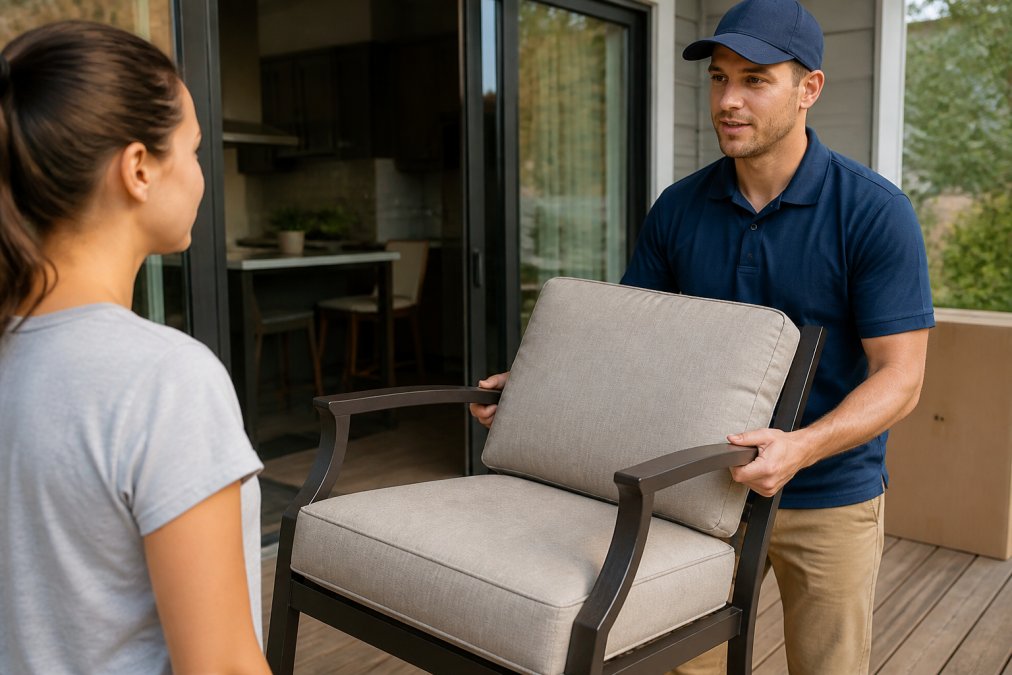
The damaged outdoor furniture return process starts the moment the truck pulls up, not after you've unpacked everything in the garage. Catching damage on delivery day is the difference between a clean replacement and a lengthy warranty claim.
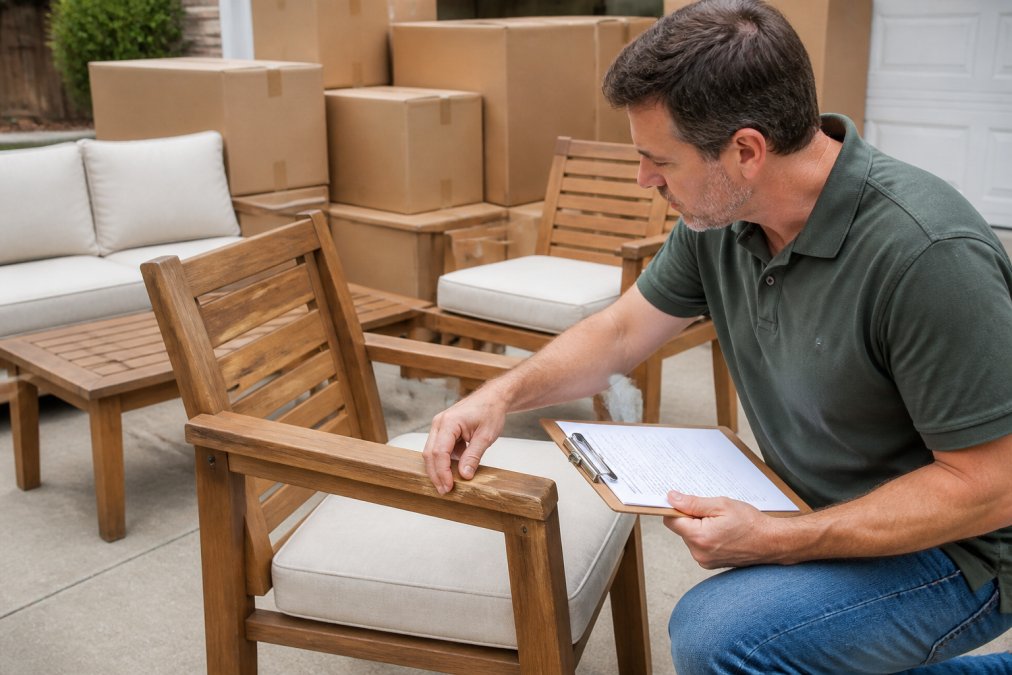
Manufacturer defects and shipping damage follow different paths than a standard return. Defects are covered under warranty and typically don't carry restocking fees. Shipping damage must be documented before the carrier leaves, once the receipt is signed without notation, proving transit damage gets much harder (dot.gov).
Inspection Checklist for Delivery Day
Use this checklist before you sign anything:
- Confirm the number of boxes matches the delivery receipt
- Photograph each box and pallet from multiple angles
- Open and inspect every piece for cracks, dents, or scratches
- Check hardware bags and cushion sets for completeness
- Note any damage directly on the delivery receipt before signing
- Report damage to customer service within 24 to 48 hours
- Keep all packaging until you've confirmed the item is sound
If you find damage, request a return authorization number immediately, it ties your claim to the shipment and speeds up resolution. Most retailers offer a replacement part, partial refund, or full replacement depending on severity.
Buyer's Remorse vs. Manufacturer Defects: How the Return Path Differs
These two situations feel similar but follow completely different rules. A manufacturer defect is a flaw in materials or workmanship that existed before you opened the box. Buyer's remorse is simply deciding the item isn't right for you.
Defect claims are usually covered regardless of the return window, because the product failed to perform as promised. Many retailers waive return shipping and restocking fees for verified defects; you'll typically need photos and a description of how the item failed.
Buyer's remorse returns are governed by the standard return window and condition requirements. You'll likely pay return shipping, and a restocking fee may apply, this is where the resalable condition rule bites hardest.
Refund Methods, Timelines, and What You Get Back
Refund eligibility depends on how you paid and what the retailer's policy allows. Most refunds go back to the original payment method, though some retailers default to store credit for returns without a receipt or outside the standard window.
How the Refund Method Changes Your Outcome
The payment method you used determines both how fast you get money back and whether you have any recourse if the retailer stalls:
- Credit card. Refunds post back to the card, typically within one to two billing cycles after the retailer processes the return. If the retailer refuses a legitimate refund, you can dispute the charge with your card issuer under the Fair Credit Billing Act, which gives you a window to challenge billing errors (consumerfinance.gov).
- Debit card. Refunds post back to your checking account, but the money is gone from your account in the meantime. Dispute rights are weaker than with credit cards because the funds left your account directly.
- Store credit or gift card. Some retailers default to store credit for returns without a receipt. This limits you to that retailer and often has no expiration but also no cash-out option.
- Financing or buy-now-pay-later. Refunds can be the messiest here. The retailer refunds the financing company, not you, and you may still owe payments until the credit posts. Confirm with both the retailer and the financing provider how the refund flows.
Why Freight Returns Take Longer
A parcel return moves through a standard carrier network and often gets processed within days of drop-off. A freight return is different: the item must be scheduled for pickup, travel back on a pallet, arrive at a returns facility, and pass inspection before any refund is authorized. That inspection step is where most of the delay lives.
A realistic expectation for a freight return is several weeks from pickup to refund, not several days. If a retailer quotes you a shorter window, ask whether that's the processing time or the total time including transit and inspection.
Partial Refunds and Deductions
A partial refund is common when hardware is missing, packaging is damaged, or the item shows signs of use. The deduction usually reflects a restocking fee, return shipping cost, or a condition downgrade because the item can no longer be sold as new.
Ask for an itemized breakdown of any deduction before you agree to the return. "Partial refund" without a line-item explanation is not a number you can verify.
Refund vs. Exchange
Watch for the difference between a refund and an exchange. Some policies push exchanges for sizing issues, which can be faster but limits you to the same product line. If you want your money back, say so explicitly when you open the return, some retailers default to exchange unless the customer requests a refund.
Protecting Your Furniture Before and After Purchase
The best way to avoid a return headache is to protect the furniture so you never need one. Proper care extends the life of outdoor pieces and keeps them out of the return pipeline.
Start with a cover that fits. The Bitubi rectangular patio table cover uses heavy-duty 600D canvas with an elastic hem for a snug fit, which keeps rain and sun off the surface between uses. For a full seating group, the 5-piece cover set protects a seven-person arrangement with water-repellent, UV-resistant material.


Measure your space before you order, not after. Buying based on the product photo rather than the actual footprint leads to returns that a tape measure and five minutes could have avoided.
Set a calendar reminder to inspect your furniture after the first hard storm of each season. Small cracks and loose joints caught early are warranty claims; caught late, they're replacement costs.
Conclusion
Patio furniture returns are manageable when you know the rules before you buy: check the return window, keep the packaging, inspect on delivery day, and understand the difference between a defect claim and a change of mind. Backyard Comfort CO builds furniture designed to stay out of the return process entirely, with solid wood construction, weather-ready materials, and a 30-day return policy backed by free shipping on most orders within the continental U.S.
If you're ready to invest in pieces built for every season, explore the Backyard Comfort CO collection and start with furniture you won't need to send back.
Frequently Asked Questions
What is the standard return window for patio furniture?
Most retailers offer a 30-day return window from the delivery date, though some extend it to 45 or 60 days. Backyard Comfort CO provides a straightforward 30-day return policy. The clock typically starts when the item is delivered, not when you place the order, so keep your delivery receipt. If you miss the window, you may still qualify for a warranty claim if the issue is a manufacturer defect rather than buyer's remorse.
Do online retailers charge restocking fees for patio furniture returns?
Some do, especially for large items shipped via freight. Restocking fees often apply when the return is due to buyer's remorse rather than a defect. Returns caused by manufacturer defects or shipping damage usually skip the restocking fee entirely. Always check the return authorization terms before shipping anything back to avoid a partial refund surprise.
Can I return patio furniture if I no longer have the original packaging?
It depends on the retailer. Many require original packaging for a full refund, while others accept returns without it but may charge a fee or offer store credit instead. For large freight-shipped items, missing packaging can complicate the return shipping process significantly. If you no longer have the original boxes, contact customer service before initiating the return to confirm whether they will accept the item and what condition it must be in.
How does the return process work for large freight-shipped items?
Freight returns require a return authorization number before anything moves. The retailer typically arranges a pickup from your home, often on a palletized shipment, rather than asking you to drop it at a parcel carrier location. You will need to repack or wrap the item securely. Refund processing usually begins after the item arrives back at the warehouse and passes inspection, which can add one to two weeks to the timeline.