 ultimate-guide
Best Weather Resistant Wood for Pergolas
Table of Contents
- Why Wood Species Matters for Pergola Durability
- Cedar vs Pressure Treated Wood for Pergolas
- Hardwood vs Softwood for Outdoor Structures
- Pergola Lifespan by Wood Type
- How to Seal a Wooden Pergola
- Regional Climate Considerations and Wood Selection
- Cost-Benefit Analysis: Initial Investment vs Long-Term Durability
- Conclusion
Last Updated: August 29, 2026
Why Wood Species Matters for Pergola Durability
Choosing the right wood species for your pergola is the difference between a structure that lasts decades and one that deteriorates within five years. The wood you select determines how well your pergola resists rot, insect damage, weathering, and the constant cycle of moisture absorption and drying that breaks down outdoor structures. At Backyard Comfort CO, we help homeowners understand that the best weather resistant wood for pergolas isn't always the cheapest option, it's the one matched to your climate, budget, and maintenance tolerance.
Wood species vary dramatically in their natural decay resistance, structural integrity, and dimensional stability. Some woods contain natural oils and tannins that protect against fungal decay and termite infestation, while others require chemical treatment or frequent maintenance. The heartwood of certain species resists rot far better than sapwood, and softwoods behave differently under UV exposure than hardwoods. Understanding these differences helps you avoid costly mistakes and ensures your outdoor structure remains an inviting retreat year after year.
Cedar vs Pressure Treated Wood for Pergolas
When evaluating the best weather resistant wood for pergolas, you'll encounter two dominant options: Western Red Cedar and pressure-treated pine. These represent opposite approaches to durability, one relies on natural properties, the other on chemical protection. Understanding their distinct advantages and limitations helps you make an informed choice.
Cedar: Natural Rot and Insect Resistance
Western Red Cedar contains natural oils and tannins that provide genuine decay resistance without chemical treatment (peer-reviewed research). These compounds actively repel fungi and insects, making cedar an excellent choice for pergolas in humid or wet climates where fungal decay poses the greatest threat. The wood's natural properties mean it resists rot from the inside out, not just at the surface.
Cedar's grain pattern is tight and relatively uniform, which contributes to dimensional stability, the wood warps and checks less than many alternatives when exposed to the sun and moisture cycles. This stability translates to fewer structural problems over time. A cedar pergola from Backyard Comfort CO, like our 10 ft. x 10 ft. Traditional All Cedar Wood Outdoor Patio Pergola, demonstrates this durability. Built from 100% cedar and pre-stained, it's engineered to withstand up to 100 mph winds while maintaining its structural integrity through decades of seasonal exposure.

The trade-off with cedar is cost and maintenance. Cedar commands a premium price compared to pressure-treated softwoods. Additionally, while the wood resists decay naturally, it still weathers under UV exposure. Without regular sealing, cedar's color fades from warm reddish-brown to silvery gray within 18-24 months. Homeowners who want to preserve the original appearance must commit to a maintenance cycle, typically resealing every 2-3 years depending on climate intensity.
Pressure-Treated Pine: Affordability and Structural Strength
Pressure-treated Southern Yellow Pine achieves decay resistance through chemical infusion rather than natural properties. The wood is impregnated with preservatives that prevent fungal decay and insect damage. This treatment extends the wood's lifespan significantly compared to untreated softwood, making it an economical choice for budget-conscious homeowners.
Pressure-treated lumber costs roughly 40-50% less than cedar, which makes it attractive for larger structures or homeowners building multiple outdoor pieces (usda.gov). The structural strength of Southern Yellow Pine is comparable to cedar, both are softwoods with similar load-bearing capacity. Our 12 Ft. W x 10 Ft. D Solid Wood Pergola uses treated Southern Yellow Pine with decorative post skirts and notched joints that lock together to resist warping, demonstrating that pressure-treated wood can deliver reliable performance when properly engineered.

The limitations of pressure-treated wood center on maintenance and environmental concerns. The chemical treatment doesn't prevent weathering, the wood still grays under UV exposure and requires sealing to maintain appearance. Some homeowners object to the chemical residue, though modern pressure-treatment formulations are significantly safer than older copper-chromium-arsenic compounds. The wood also has higher moisture absorption than cedar, making it more prone to checking and splitting if not sealed promptly after installation.

Hardwood vs Softwood for Outdoor Structures
The distinction between hardwood and softwood relates to the tree's botanical classification, not the wood's actual hardness. Hardwoods come from deciduous trees like oak and mahogany, while softwoods come from conifers like pine, cedar, and fir. For pergolas, this distinction matters because hardwoods and softwoods behave differently under outdoor exposure.
Hardwoods generally offer superior decay resistance and dimensional stability compared to softwoods. Species like teak and ipe contain natural oils that make them exceptionally resistant to rot and insect damage. However, hardwoods are expensive, difficult to to work with, and overkill for most pergola applications. A hardwood pergola might last 40+ years with minimal maintenance, but the initial investment is 2-3 times higher than cedar or pressure-treated pine.
Softwoods like cedar and pine are the practical choice for pergolas. They're easier to mill, less expensive, and still deliver reliable service when properly maintained. The real durability difference comes down to species selection within the softwood category and proper sealing, not hardwood versus softwood classification. Cedar, despite being technically a softwood, outperforms many hardwoods in decay resistance due to its natural oils and tannins.
Pergola Lifespan by Wood Type
Understanding expected lifespan helps you evaluate long-term cost. A pergola's lifespan depends on wood species, climate conditions, and maintenance frequency. Cedar pergolas typically last 15-20 years with regular sealing, or 10-12 years if left unsealed. Pressure-treated wood lasts 15-20 years with similar maintenance. Untreated softwood fails in 5-7 years. Hardwoods can exceed 30-40 years but require significant upfront investment.
These timelines assume typical exposure, moderate rainfall, seasonal temperature swings, and moderate UV intensity. In harsh climates, high humidity with intense sun, or freeze-thaw cycles, all wood types degrade faster. Coastal environments with salt spray accelerate decay. Conversely, dry climates with low humidity extend lifespan across all species.
The maintenance schedule directly impacts actual lifespan. A cedar pergola sealed every 2-3 years can reach 25+ years. The same pergola left unsealed might fail at 10-12 years. Pressure-treated wood follows the same pattern, consistent sealing extends life significantly. This is why regional climate considerations matter so much when selecting species.
How to Seal a Wooden Pergola
Sealing protects wood from moisture absorption, UV damage, and fungal colonization. The sealing process isn't complicated, but timing and product selection matter for long-term results.
Sealing Schedule and Product Selection
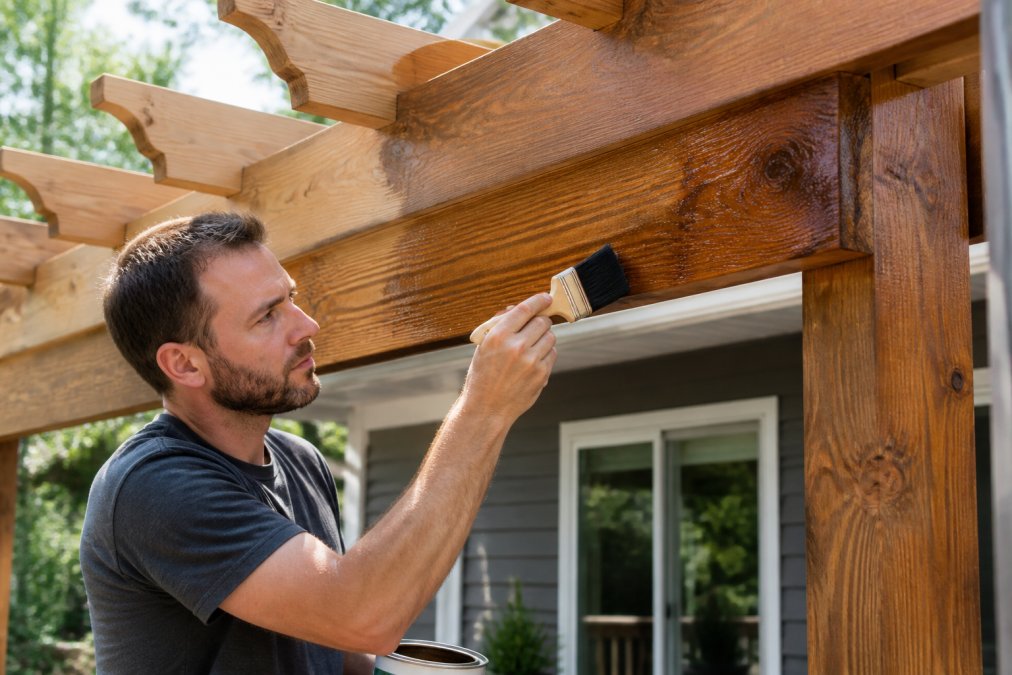
New wood should be sealed within 3-6 months of installation, before weathering begins. For cedar, use a water-based or oil-based stain designed for exterior wood. Water-based stains dry quickly and emit fewer odors, while oil-based stains penetrate deeper and often deliver richer color. Both provide UV protection when formulated for outdoor use. Pressure-treated wood requires the same approach, stain or seal within the first season after installation.
Resealing frequency depends on climate and stain type. In moderate climates, reapply stain every 2-3 years. In high-moisture regions or areas with intense sun, annual inspection and touch-up sealing may be necessary. Oil-based stains typically last longer between applications than water-based alternatives, but water-based products are easier to apply and cleaner.
The sealing process itself is straightforward. Clean the pergola surface with a pressure washer on low setting to remove dirt and mildew. Let the wood dry completely, at least 48 hours in dry conditions. Apply stain with a brush, roller, or sprayer, working in the direction of the grain. Two coats provide better protection than one. Allow adequate drying time between coats, typically 24-48 hours depending on temperature and humidity.
Regional Climate Considerations and Wood Selection
Your local climate is the primary factor determining which wood species performs best. High-moisture environments favor cedar's natural decay resistance. Dry climates allow pressure-treated wood to perform adequately. Freeze-thaw regions require species with good dimensional stability to prevent splitting.
In the Pacific Northwest and other high-rainfall areas, Western Red Cedar is a strong choice. The constant moisture would accelerate decay in pressure-treated wood, requiring frequent resealing. Cedar's natural oils handle the moisture without rotting. In the Southwest's dry climate, pressure-treated pine performs adequately because fungal decay isn't the primary threat, UV damage is. Sealing every 3-4 years protects the wood from weathering without fighting constant moisture.
Freeze-thaw cycles in northern regions create additional stress. Water enters the wood, freezes, expands, and splits the grain. This cycle repeats hundreds of times each winter. Cedar's tight grain resists this damage better than pine. If using pressure-treated pine in freeze-thaw regions, ensure proper sealing and consider species with tighter grain patterns.
Coastal environments present unique challenges. Salt spray accelerates decay and corrosion. Cedar performs better than pressure-treated wood in these conditions, but even cedar requires more frequent sealing, potentially annual, to handle salt exposure. Some homeowners in coastal regions opt for hardwoods like teak, accepting the higher cost for superior durability.
Cost-Benefit Analysis: Initial Investment vs Long-Term Durability
The cheapest pergola isn't necessarily the best value. A pressure-treated pine structure at $900-$1,200 might seem attractive compared to a cedar pergola at $1,700-$3,700. But if the pressure-treated option requires replacement after 12-15 years while the cedar lasts 20-25 years, the cedar delivers better long-term value.
Calculate total cost of ownership across 25 years. Include initial purchase, sealing materials, labor for maintenance, and eventual replacement. A cedar pergola from Backyard Comfort CO, such as our 10 Ft. W x 10 Ft. D Cedar Wood Patio Pergola at $931.86, requires sealing every 2-3 years. Sealing costs roughly $200-$400 per application depending on size and whether you hire professionals. Over 25 years, expect 8-12 sealing cycles, totaling $1,600-$4,800 in maintenance.
Pressure-treated alternatives cost less upfront but require similar maintenance. The 12 Ft. W x 10 Ft. D Solid Wood Pergola at $3,464.21 uses treated Southern Yellow Pine with superior engineering. It still requires sealing every 2-3 years. The maintenance cost is similar to cedar, but the initial investment is higher for this particular model due to its construction quality and size.
The real value proposition emerges when you factor in durability and replacement cycles. A low-cost untreated softwood pergola at $600 requires replacement every 6-8 years. Over 25 years, you'd replace it 3-4 times, totaling $1,800-$2,400 in replacement costs plus installation labor. A quality cedar or pressure-treated structure at $1,500-$2,000 lasts 20+ years, requiring only one replacement cycle or possibly none.
Consider also the intangible value of a durable structure. A pergola that remains stable and attractive for decades becomes part of your home's appeal. It supports climbing vines, provides reliable shade, and creates a permanent outdoor living space. A structure that deteriorates quickly frustrates homeowners and disrupts your outdoor plans. The best weather resistant wood for pergolas is the one that delivers reliability without constant concern about structural failure.
Choosing the right wood for your pergola means balancing initial cost, maintenance commitment, and desired lifespan. Cedar delivers natural durability and aesthetic appeal but requires regular sealing. Pressure-treated wood offers affordability and reliable protection with similar maintenance demands. Your climate, budget, and maintenance tolerance should guide your decision. At Backyard Comfort CO, our cedar pergolas are engineered for durability and come with the confidence that you're investing in a structure built to last. Browse our collection of weather-resistant pergolas and find the right fit for your outdoor space.
Frequently Asked Questions
Q: What type of wood is best for an outdoor pergola?
A: Western Red Cedar and pressure-treated pine are top choices for weather-resistant wood pergolas. Cedar offers natural rot and insect resistance through its tannins and oils, requiring less chemical treatment. Pressure-treated pine provides excellent structural strength and affordability, with chemical preservatives protecting against decay. Your choice depends on budget, climate, and maintenance tolerance. Cedar costs more upfront but needs less frequent sealing. Pressure-treated wood is budget-friendly but requires regular maintenance to prevent weathering and checking.
Q: How often do I need to seal a wooden pergola?
A: Most wooden pergolas need resealing every 2-3 years, depending on climate exposure and wood type. Cedar pergolas may extend to 3-4 years between applications due to natural oils providing some protection. Pressure-treated wood typically requires regular sealing to maintain a UV-rated finish and prevent moisture absorption. High-humidity climates and intense sun exposure accelerate the need for resealing. Check your pergola annually for fading, water beading loss, or soft spots indicating the seal has degraded.
Q: What is the most durable material for a pergola?
A: Hardwoods like ipe and cumaru offer superior durability, lasting 20-30+ years with minimal maintenance. However, they come at premium prices. For practical durability, Western Red Cedar provides 15-20 years of reliable performance when properly sealed, while pressure-treated softwood delivers 12-15 years of structural integrity. Durability depends on wood species, grain pattern quality, dimensional stability, and consistent maintenance. Cedar's natural tannins and oils provide inherent decay resistance, while pressure-treated lumber relies on chemical preservatives. Climate significantly impacts longevity, harsh UV exposure and moisture accelerate degradation regardless of species.
Q: Should I use pressure-treated wood for a pergola?
A: Pressure-treated wood is an excellent choice if budget is a priority and you're willing to maintain it regularly. It offers strong structural integrity, excellent load-bearing capacity, and proven resistance to fungal decay and termite infestation. The trade-off: it requires regular sealing and may show checking and splitting over time. Pressure-treated pine works well in moderate climates but struggles in high-humidity regions without vigilant maintenance. If you prefer lower maintenance, cedar's natural oils and tannins reduce sealing frequency. Consider pressure-treated wood if you want affordability and can commit to a maintenance cycle.
Q: How do wood grain patterns affect pergola durability?
A: Tight, consistent grain patterns indicate slower-growth, denser wood that resists warping, checking, and splitting better than wide-grain lumber. Heartwood, the inner, darker core of the tree, contains higher concentrations of natural oils and tannins that provide decay resistance and insect protection. Sapwood, the lighter outer ring, lacks these protective compounds and deteriorates faster when exposed. Quarter-sawn lumber, cut to expose vertical grain, shows superior dimensional stability and weathering resistance compared to flat-sawn cuts. When selecting pergola wood, prioritize heartwood with tight grain patterns for maximum durability and minimal maintenance needs.
Q: What sustainability and sourcing certifications should I look for?
A: Look for FSC (Forest Stewardship Council) or SFI (Sustainable Forestry Initiative) certifications when purchasing wood for pergolas. These certifications ensure responsible harvesting practices and sustainable forest management. Cedar sourced from well-managed forests in the Pacific Northwest offers both durability and environmental responsibility. Pressure-treated wood using copper-based preservatives (like ACQ or CA) has largely replaced older arsenic-based treatments, making them safer for residential use. Ask suppliers about the origin of their lumber and treatment methods. Sustainably sourced wood doesn't compromise durability, it ensures your pergola investment supports responsible forestry practices.
This article was written using GrandRanker