 comparison
Yardistry vs Custom Wood Pergolas: Full Comparison
Table of Contents
- Yardistry Structures vs Custom Wood Pergolas: Key Differences
- Prefabricated Kits vs Custom Carpentry: What You're Really Choosing
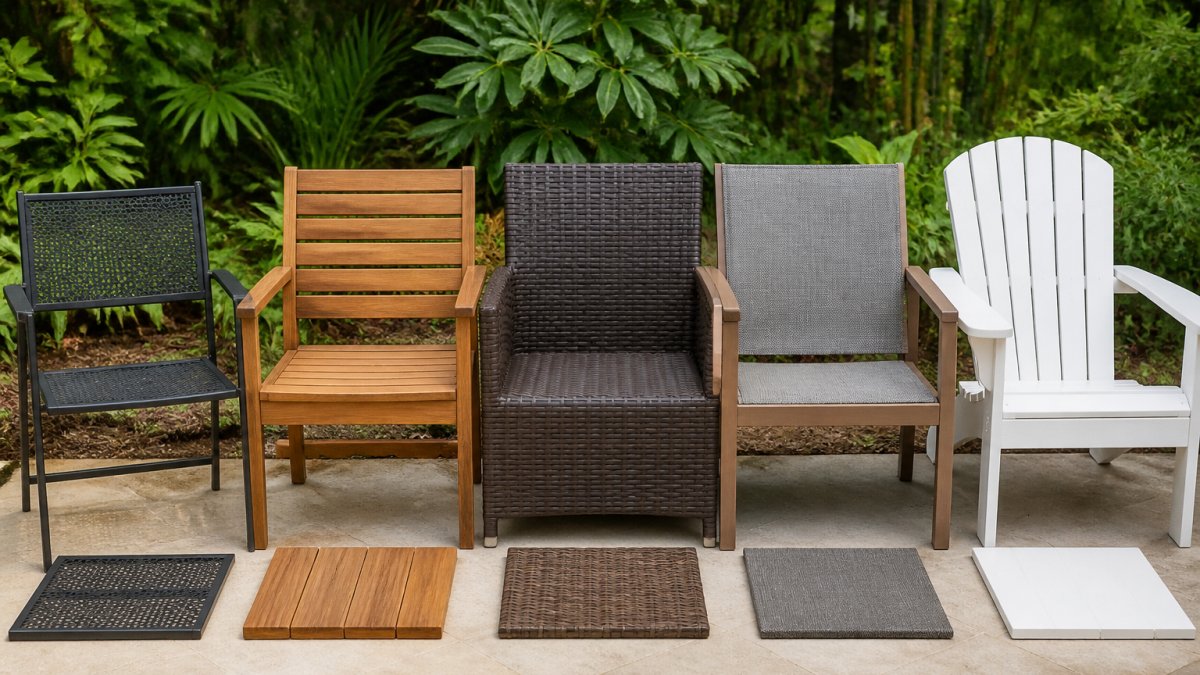
- Best Wood for Outdoor Pergolas and Material Durability
- Cost Analysis: Prefab Kits Against Custom Build Pricing
- Pergola Assembly Requirements and Installation Complexity
- Pergola Building Permits and Regulations You Need to Know
- Long-Term Maintenance Costs and Longevity Comparison
- Which Option Wins for Your Backyard
Last Updated: August 25, 2026
Yardistry Structures vs Custom Wood Pergolas: Key Differences
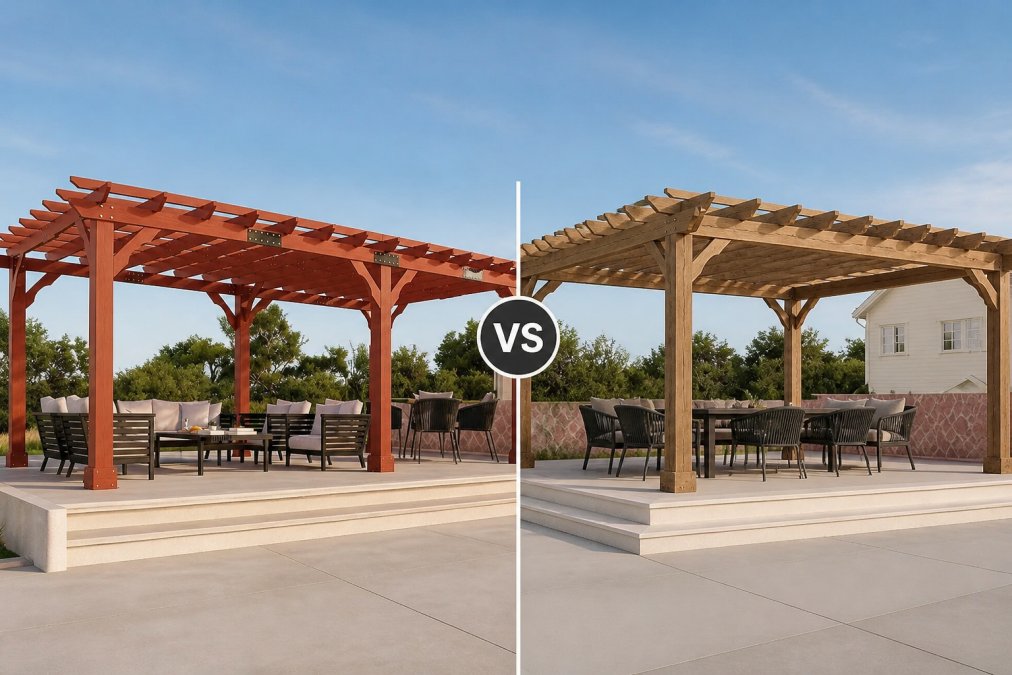
Choosing between a prefabricated pergola kit and a custom wood structure fundamentally shapes what your outdoor retreat becomes. Yardistry offers prefabricated kits with standardized dimensions and designs. Custom wood pergolas are built to your exact specifications by local contractors or carpenters. One arrives in boxes; the other takes shape on your site. The real question isn't which is objectively better, it's which aligns with your priorities, budget, timeline, and long-term vision for your backyard.
Prefabricated Kits vs Custom Carpentry: What You're Really Choosing
When you buy a prefab kit like Yardistry, you're purchasing a standardized solution with pre-cut posts, beams, joists, and hardware. Assembly follows a documented sequence and is engineered to meet building codes across most jurisdictions.
Custom wood pergolas start from scratch. Your contractor measures your site, accounts for slope and soil conditions, then designs a structure tailored to your space. Everything is cut and assembled on-site to your exact dimensions.
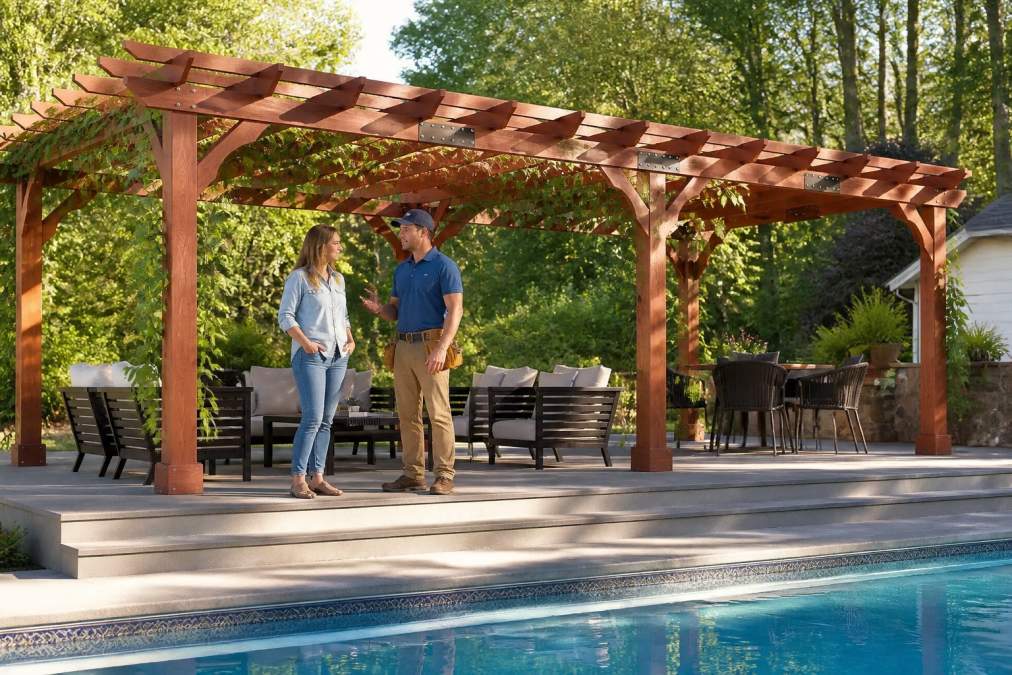
A prefab kit works well if your backyard is relatively flat, accessible, and within standard dimensions (10 feet by 10 feet to 20 feet by 12 feet). If your site has a steep slope, unusual angles, or you want a pergola connecting to an existing deck at a specific height, custom carpentry becomes necessary. Yardistry kits come with predetermined design elements; custom builds let you specify beam thickness, post diameter, roof pattern, and decorative details.
Best Wood for Outdoor Pergolas and Material Durability
Cedar is the gold standard for outdoor wood pergolas. It's naturally resistant to rot, insects, and weather damage due to its dense grain and natural oils. A cedar pergola with proper sealing can last 20-30 years or more. Backyard Comfort CO's cedar pergolas are crafted from 100% natural cedar with waterproof protective coatings that resist rain, mold, and seasonal wear.

Pressure-treated lumber is more affordable but requires more maintenance. It's chemically treated to resist rot and insects, but the treatment degrades over time. Pressure-treated pergolas typically need resealing every 2-3 years. Longevity is generally 15-20 years with consistent care.
Redwood is another premium option with similar durability to cedar but often harder to source and more expensive. Composite materials and metal structures exist as alternatives but are less common for traditional pergola aesthetics.
For yardistry structures vs custom wood pergolas, most Yardistry kits use pressure-treated lumber or cedar. Custom builders have more freedom to source premium materials, but that flexibility comes with higher cost and longer lead times.
The maintenance reality: cedar requires occasional staining or oiling to preserve color and weather resistance. Pressure-treated wood needs more frequent sealing. Composite and metal require minimal maintenance but lack the warmth and character of real wood.
Cost Analysis: Prefab Kits Against Custom Build Pricing
Prefab kits are transparent and predictable; custom builds involve more variables and require detailed quotes from contractors.
Backyard Comfort CO's cedar pergola kits range from around $932 for a 10 Ft. W X 10 Ft. D structure to $3,464 for a 12 Ft. W X 10 Ft. D solid wood pergola. A larger option like the 12X24 FT Premium Cedar Wood Pergola with Trellis Roof runs $1,732. These prices include the structure, hardware, and stakes. Shipping is free on most orders within the continental U.S.
Custom builds typically start higher and scale with complexity. A local contractor building a 12-foot by 10-foot pergola might charge $2,500 to $5,000 or more, depending on wood choice, design intricacy, and local labor rates. Site preparation, grading, or electrical work adds another $500 to $2,000.
Hidden costs in custom builds include design consultation fees, site preparation and foundation work, and permit and inspection fees (typically $100-$500).
With prefab kits, main additional costs are foundation materials if not included, assembly labor if you hire help, and permits and inspections.
The economic break-even point depends on your timeline and labor availability. If you can assemble a kit yourself, the prefab route is significantly cheaper upfront. If your site requires substantial preparation, custom and prefab costs converge.
Pergola Assembly Requirements and Installation Complexity
Yardistry kits are designed for DIY assembly. Most arrive in multiple packages (typically 3-5 boxes). The 12X24 FT Premium Cedar Wood Pergola arrives in five packages. Assembly takes 2-3 hours with 3-4 people and basic tools (drill, saw, level, measuring tape). The manufacturer provides detailed instructions with diagrams.

Custom builds eliminate assembly from your responsibility entirely. The contractor handles all fabrication and installation. You're involved in design decisions and site access, but the labor and coordination are theirs.
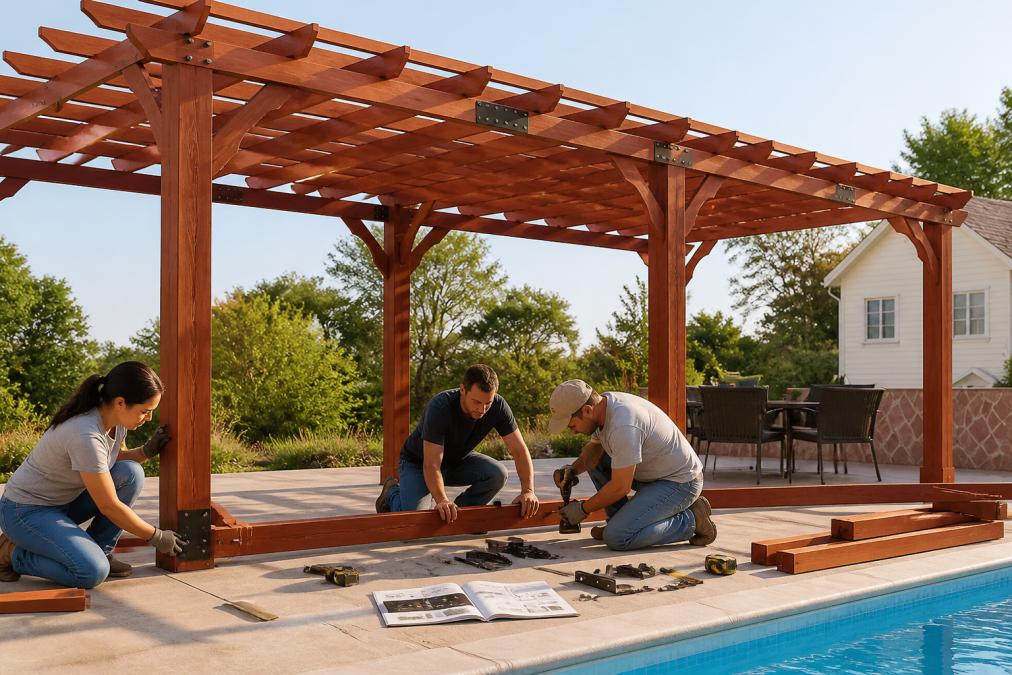
The trade-off: prefab kits demand your time and effort but save labor costs. Custom builds demand patience and contractor coordination but deliver a finished structure without your involvement.
Site preparation is non-negotiable for both. Your pergola needs a level surface or proper foundation anchoring. For concrete or wooden decks, this is straightforward. For grass or soil, you'll need to level the area, possibly add gravel or concrete pads, and ensure proper drainage.
Permits and inspections apply to both. Most jurisdictions require a building permit for permanent structures like pergolas (iccsafe.org). Permit costs and timelines vary, but expect 1-4 weeks for approval (iccsafe.org).
Long-Term Maintenance Costs and Longevity Comparison
A cedar pergola from Backyard Comfort CO, properly maintained, lasts 20-30 years or more. Maintenance involves occasional staining or oiling, perhaps every 2-3 years, to preserve color and weather resistance.
Pressure-treated pergolas need more frequent sealing, typically every 1-2 years. The cumulative maintenance cost over 20 years is higher than cedar.
Custom-built pergolas, especially those using premium materials and superior joinery, often outlast prefab kits. A well-designed custom structure can last 30+ years with minimal maintenance. The initial cost is higher, but the per-year cost drops significantly over a long lifespan.
Prefab kits typically last 15-25 years depending on material and climate. In harsh climates with intense sun, humidity, or freeze-thaw cycles, longevity may skew toward the lower end.
Consider your climate:
- Dry climates: wood lasts longer, minimal rot risk, but UV exposure may fade finishes faster
- Humid climates: rot risk is higher, more frequent sealing needed
- Freeze-thaw zones: ice and snow load can stress structures; proper foundation and roof design are critical
The 12X24 FT Premium Cedar Wood Pergola from Backyard Comfort CO is engineered to withstand winds up to 100 MPH and includes guidance on snow removal (clear snow within 24 hours using a soft broom or roof rake to prevent structural overload).

Over a 25-year lifespan, cedar and custom builds favor homeowners planning to stay long-term. For those who might move within 10 years, prefab kits offer better financial efficiency.
Which Option Wins for Your Backyard
The answer depends on five factors: timeline, budget, site complexity, design priorities, and long-term commitment.
Choose a prefab kit if:
- Your backyard is relatively flat and within standard dimensions
- You want installation within weeks, not months
- You're comfortable with DIY assembly or hiring local help
- You prioritize upfront affordability and transparent pricing
- You're willing to accept standardized design and dimensions
- You plan to stay in your home for 10-15 years
Choose a custom build if:
- Your site has unusual slopes, angles, or constraints
- You want a structure that matches specific architectural or aesthetic goals
- You're comfortable with longer timelines and contractor coordination
- You view the pergola as a permanent investment and resale value driver
- You want premium materials and superior craftsmanship
- You plan to stay long-term and want minimal maintenance burden
The Backyard Comfort CO advantage: Our cedar pergola kits use 100% natural cedar with waterproof protective coatings and weather-resistant design. You get premium material durability at prefab pricing with the option of professional installation if DIY assembly isn't your preference. The 10 Ft. W X 10 Ft. D Cedar Wood Patio Pergola offers an excellent entry point for homeowners exploring pergola options, while larger models like the 20 Ft. W X 12 Ft. D Cedar Wood Patio Pergola provide substantial coverage for full backyard transformation.
The real differentiator isn't prefab versus custom, it's material quality and design intention. A well-built prefab kit using cedar and proper joinery will outlast a poorly designed custom build using pressure-treated lumber. Conversely, a thoughtfully designed custom pergola built by a skilled carpenter will outperform a basic prefab kit in longevity and aesthetic integration.
Your decision should hinge on site fit, timeline, and whether you value design customization enough to justify the cost and coordination effort. For most homeowners, a high-quality prefab cedar kit delivers exceptional value and durability without the complexity of contractor management.
Frequently Asked Questions
Q: Is it cheaper to buy a pergola kit or build a custom wood pergola from scratch?
A: Prefab kits like those offered by Backyard Comfort CO typically cost less upfront, ranging from $931.86 for a 10x10 cedar pergola to $3,464.21 for a 12x10 solid pine model. Custom builds usually cost more due to labor and site-specific design, but can last longer with proper maintenance. The real difference emerges over time when you factor in maintenance, repairs, and replacement costs. Kits win on initial savings; custom builds may win on total cost of ownership if built with premium materials and professional installation.
Q: What are the best wood options for outdoor pergolas that resist weather and rot?
A: Cedar is the top choice for outdoor pergolas because it naturally resists rot, insects, and weather damage without heavy chemical treatment. Backyard Comfort CO's cedar pergolas include waterproof protective coatings. Pressure-treated Southern Yellow Pine is another durable option, offering excellent structural integrity and longevity when properly sealed. Both materials need periodic staining or sealing every 2-3 years to maintain weather resistance and curb appeal. Avoid untreated softwoods, which deteriorate quickly in wet climates.
Q: How long does it take to assemble a prefab pergola kit, and do I need professional help?
A: Most prefab kits, including Backyard Comfort CO's pergolas, require 2-3 hours with 3-4 people and basic tools. No special skills are needed, the pieces arrive pre-cut and pre-drilled with clear instructions. You can handle assembly yourself if you're comfortable with a drill and measuring tape. Heavier structures (like the 12x24 ft model) or uneven terrain may warrant professional installation. Custom builds take longer and always require a professional carpenter.
Q: Do I need a building permit for a pergola in my backyard?
A: Permit requirements vary by location and depend on pergola size, foundation type, and whether it's attached to your home. Most jurisdictions require permits for structures over a certain size or those with permanent foundations. Check with your local building department before purchasing, many cities require permits even for kit structures. Backyard Comfort CO recommends verifying local installation regulations before buying. Skipping permits can result in fines or being forced to remove the structure.
Q: Will a cedar wood pergola from a kit hold up as well as a custom-built one over 10+ years?
A: Quality cedar kits perform nearly as well as custom builds if maintained properly. Backyard Comfort CO's cedar pergolas are engineered for structural integrity with reinforced posts, metal connectors, and weather-resistant coatings. The main difference: custom builds allow for site-specific engineering and premium material selection, which can extend lifespan. Kit structures typically last with consistent maintenance (sealing every 2-3 years, snow removal, and hardware checks). Both require the same seasonal care. The durability gap closes significantly when kits are installed on proper foundations and maintained annually.
The choice between a prefab kit and a custom build shapes your outdoor living experience for decades. If you're prioritizing durability, weather resistance, and the peace of mind that comes with premium materials, Backyard Comfort CO's cedar pergolas deliver the longevity and structural integrity of custom builds with the accessibility and transparent pricing of prefab kits. Explore our full range of cedar pergola options and start transforming your backyard into a lasting retreat.
This article was written using GrandRanker