 comparison
Outdoor Furniture Materials: Pros and Cons for 2026
Table of Contents
- Outdoor Furniture Materials at a Glance: Comparison Table
- Teak and Hardwood Outdoor Furniture: Pros and Cons
- HDPE and Synthetic Resin: The Low-Maintenance Alternative
- Wicker and Rattan: Natural vs. All-Weather Synthetic
- Wrought Iron vs. Cast Aluminum: Metal Frame Pros and Cons
- The Most Durable Outdoor Furniture Materials for Harsh Climates
- How to Protect Patio Furniture in Winter: Material-by-Material Upkeep
- Conclusion
- Frequently Asked Questions
Last Updated: October 20, 2026
Outdoor Furniture Materials at a Glance: Comparison Table
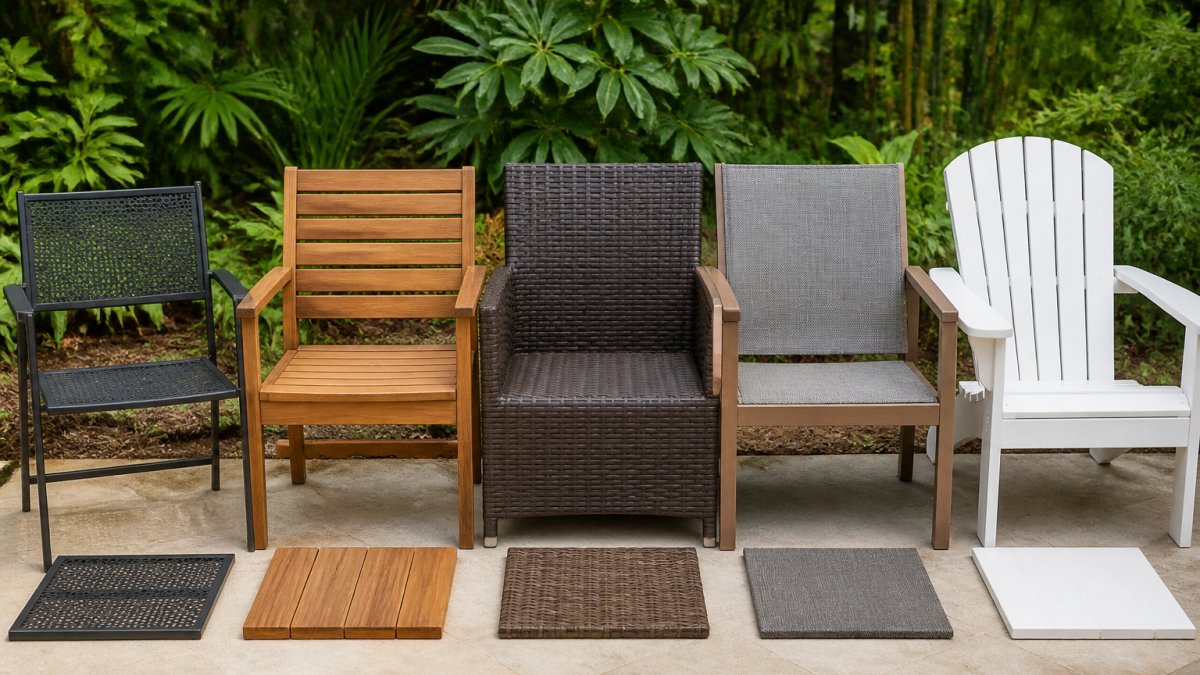
Choosing outdoor furniture materials comes down to one trade-off: how much upkeep you'll accept in exchange for a certain look. At Backyard Comfort CO, we see this decision play out every season, and the honest answer is that no material wins everywhere. Wood rewards patience with warmth and longevity. HDPE and synthetic resin ask almost nothing of you. Metal frames carry the most weight and handle wind best. Wicker decides whether your set looks natural or engineered.
Below is the comparison we'd hand a friend before they buy. Prices reflect what we stock, so you can see real costs against real materials.
| Material | Upfront Cost | Maintenance Level | Best For | Main Drawback |
|---|---|---|---|---|
| Teak / hardwood | $4,159.83 (10-piece set) | Moderate: oil or clean yearly | Long-term investors, humid climates | Price, occasional refinishing |
| HDPE / synthetic resin | $1,218.87 (7-piece set) | Minimal: soap and water | Families, busy households | Less natural feel |
| PE wicker / rattan | $509.99-$1,004.91 | Low: cover and wipe down | Covered patios, porches | Frame quality varies widely |
| Wrought iron / cast aluminum | $972.98 (metal set) | Low: wipe, touch up coating | Windy, exposed decks | Weight, coating wear |
Teak and Hardwood Outdoor Furniture: Pros and Cons
Teak earns its reputation honestly. It carries natural oils and resin that resist moisture, rot, and insects, so a well-built teak piece can stay structurally sound for decades with modest care.
The cons are real, though. Teak costs more upfront, and it's heavy. Our 10-Piece Teak Patio Furniture Set uses Grade A premium teak with all-weather, fade-resistant cushions, and the care routine is straightforward: light sanding, teak cleaner, and a protectant to feed the wood.

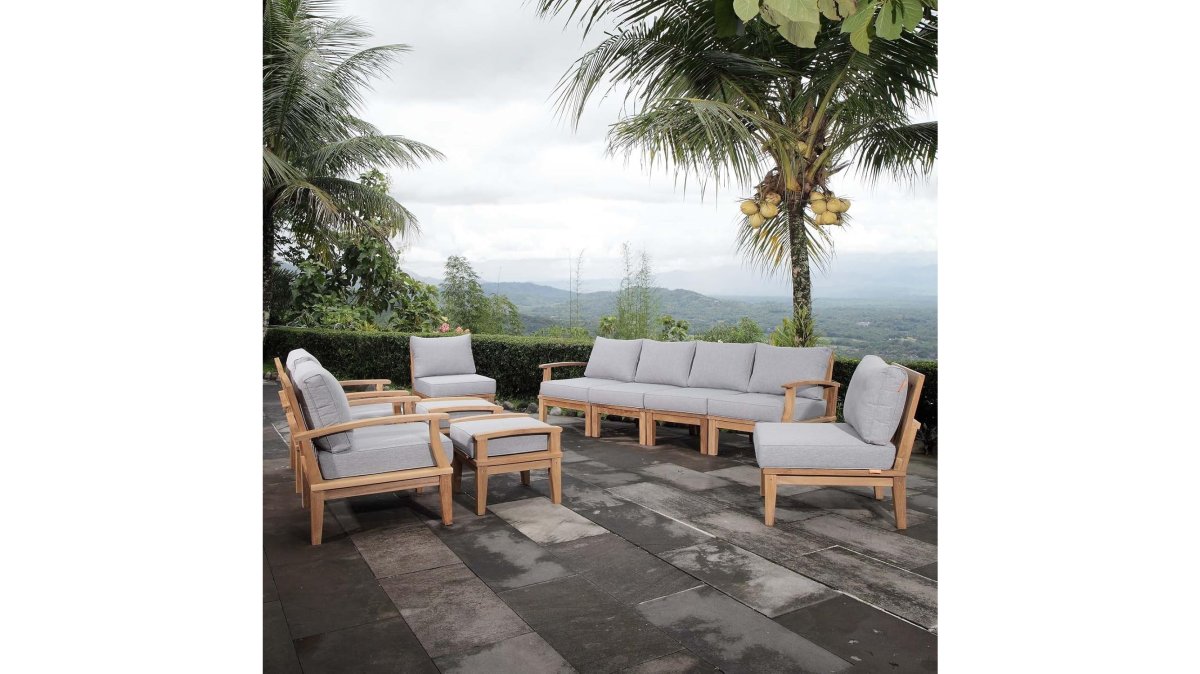
A common mistake is sealing new teak immediately. Let it settle first, then decide whether you want the golden look or the silver one.
HDPE and Synthetic Resin: The Low-Maintenance Alternative
HDPE is high-density polyethylene, a synthetic resin engineered to mimic wood grain while shrugging off everything wood fears: moisture, cracking, peeling, and fading. It's the material we recommend first to families who want a set they can hose down and forget.
The trade-offs are honest ones. HDPE feels cooler and more uniform than real timber, and cheaper resin formulations can look flat up close. Weight and rigidity matter too, since a light resin frame catches wind on an open deck.
Our 7-Piece Outdoor HDPE Dining Set shows what good resin looks like: a splinter-free surface, a wood-look finish, soap-and-water cleanup, and a 20-year frame warranty. That warranty is the number that matters. It tells you the manufacturer expects the material to outlast the patio.

Wicker and Rattan: Natural vs. All-Weather Synthetic
Wicker is a weave, not a material, and that distinction decides durability. Natural rattan looks warm and breathable but fades, dries out, and mildews under sustained moisture. All-weather synthetic wicker, usually UV-resistant PE rattan over a metal frame, keeps the woven look while resisting sun damage and rain.
Frame quality is where cheap wicker sets fail. Rust-proof steel or aluminum underneath is what holds the shape; the weave is just the skin. Our 5-Piece Wicker Patio Set pairs UV-resistant PE rattan with a rust-proof steel frame and water-resistant cushions, and the 7-Piece Rattan Sectional adds commercial-grade wicker with adjustable-height legs for uneven ground.
What most guides miss: wicker traps water in the weave. Tip chairs to drain after heavy rain, and cover them in winter.
Wrought Iron vs. Cast Aluminum: Metal Frame Pros and Cons
Metal frames win on strength and wind resistance, and the two main options split on weight and rust behavior. Wrought iron is dense and heavy, so it stays put in gusts, but it's difficult to move and its coating chips over time, leaving spots that oxidize. Cast aluminum is lighter, resists corrosion well, and handles coastal air better, though it can dent under a hard impact.
The coating is the real durability story. Powder-coated finishes bonded to the metal resist rust far better than paint, and dual-layer e-coating plus powder-coating adds a second barrier. Our Modern Metal Patio Set uses both coatings on a heavy-duty wrought iron frame rated to support 350 lbs per chair and 900 lbs on the sofa.
7-Piece Outdoor HDPE Dining Set, Teak →

The Most Durable Outdoor Furniture Materials for Harsh Climates
The most durable outdoor furniture materials are the ones matched to your specific weather, not the ones with the best marketing. Climate suitability drives longevity more than any single specification. Below is the matrix we use when a customer describes their exposure rather than their taste.
| Climate Stress | Best-Performing Materials | Materials to Avoid | Why It Matters |
|---|---|---|---|
| Salt air and coastal humidity | Cast aluminum, HDPE, powder-coated wrought iron | Untreated steel, natural rattan | Salt accelerates oxidation on bare metal and breaks down natural fibers; cast aluminum and HDPE resist corrosion at the surface. |
| Intense sun and heat | UV-resistant HDPE, synthetic PE wicker, teak | Cheap resin without UV stabilizers, natural wicker | UV degrades polymer chains and fades color; teak's natural oils slow moisture loss but need replenishing in dry heat. |
| Freezing winters and freeze-thaw | Powder-coated metal, HDPE, teak | Thin wood, natural rattan, low-grade resin | Water expands inside wood grain and weave gaps during freeze-thaw, causing cracks and splits. |
| High wind and exposed decks | Wrought iron, cast aluminum | Lightweight resin, hollow-frame wicker | Mass and frame density determine whether a gust slides or tips a set; anchoring helps but weight is the first defense. |
| Arid and desert sun | HDPE, powder-coated aluminum, teak with oiling | Unsealed hardwood, natural wicker | Low humidity dries wood and natural fibers; synthetic polymers and coated metal hold up without moisture replenishment. |
Weight versus wind resistance is the angle most buyers overlook. A heavy metal frame is your best defense on an exposed deck, while a lighter set belongs on a sheltered patio.
A second overlooked factor is material compatibility with cushions. Metal frames conduct heat and cold, which can accelerate fabric wear at contact points, while resin and wood frames are gentler on cushion backs. In humid climates, cushions on non-breathing frames need more frequent drying; in arid climates, UV-resistant fabrics matter more than water resistance.
How to Protect Patio Furniture in Winter: Material-by-Material Upkeep
Protecting patio furniture in winter starts with knowing what each material fears. Cold alone rarely ruins furniture; trapped moisture and neglect do. Here's the routine we'd follow for each type, plus what most guides leave out: what to do when the furniture reaches end of life.
- Teak and hardwood: Clean with a soft brush and mild soap, let it dry fully for several days, then oil if you want to keep the color. Cover with a breathable cover, not plastic, so moisture vapor escapes. Store indoors or under a roof if possible. Teak is biodegradable and can often be refinished or repurposed rather than discarded.
- HDPE and resin: Wash with soap and water, dry, and store or cover. It handles frost well but benefits from a clean surface. HDPE is one of the more recyclable outdoor materials; check with local recycling programs, since many accept rigid HDPE but not composite blends.
- Wicker and rattan: Tip to drain, dry completely, and cover. Bring cushions indoors to prevent mildew. Natural rattan breaks down biologically at end of life; synthetic PE wicker is harder to recycle and often ends up in landfill, so buy quality and keep it longer.
- Wrought iron and cast aluminum: Wipe down, touch up any chipped coating before winter, and keep frames off wet ground with blocks or feet. Metal is highly recyclable at scrap yards, which offsets its upfront carbon cost.
Cushions deserve their own line item. Moisture-wicking, mildew-resistant fabrics survive winter far better than cotton blends, and storing them dry is the single easiest way to extend their life.
A storage detail most guides skip: condensation forms when furniture is moved from a cold patio into a warm garage. Let pieces acclimate in an unheated space first, or wipe them down after the temperature equalizes, to avoid trapping moisture under covers.
Conclusion
Every outdoor furniture material asks something of you: teak asks for occasional oiling, resin asks for almost nothing, metal asks for coating care, and wicker asks for drainage. The homeowners who end up happiest are the ones who picked the material that matches their climate and their willingness to maintain it, rather than the one that looked best in a showroom.
At Backyard Comfort CO, we build around that idea. Our pieces use solid wood construction and weather-ready design so your patio stays a retreat through every season, backed by free shipping on most orders within the continental U.S. and a 30-day return policy. If you're tired of replacing cheap sets every few years, explore our collections and invest once in furniture built to last.
Frequently Asked Questions
What is the best material for outdoor furniture that stays outside year-round?
Teak and high-density polyethylene (HDPE) are the two strongest candidates for year-round exposure. Teak contains natural oils and silica that resist moisture, rot, and insects, and it develops a silver-gray patina instead of cracking. HDPE resists UV fading, splintering, and moisture without any oiling. Both handle freezing temperatures and summer sun. Wrought iron with powder coating also holds up but needs touch-ups if the finish chips. Avoid untreated softwoods and natural rattan, which degrade quickly when left out through winter.
How do I protect patio furniture in winter if it is made of wood?
Clean the wood with mild soap and water, let it dry fully, then apply a teak cleaner and protectant before the first freeze. Cover the pieces with a breathable cover that vents moisture rather than trapping it. Store cushions indoors. If you leave the furniture outside, elevate legs off concrete so water drains. Teak can stay out through winter in most climates; softer hardwoods benefit from being moved into a garage or shed. Re-oil in spring if you want to keep the honey tone instead of the gray patina.
Which outdoor furniture materials are most resistant to rust and fading?
HDPE and powder-coated aluminum lead on both counts. HDPE is UV-stabilized, so it resists fading and never rusts because it contains no metal. Powder-coated aluminum forms an oxide layer that stops corrosion, and the coating blocks moisture. Wrought iron is strong but rusts wherever the finish chips, so it needs periodic touch-ups. Synthetic all-weather wicker wrapped over a rust-proof steel or aluminum frame also resists fading, though cheaper PE rattan can fade after several seasons of direct sun.
Is it worth spending more on high-end outdoor furniture materials?
It usually is when you plan to keep the set for a decade or more. A Grade A teak sectional or an HDPE dining set costs more upfront than a budget resin set, but the replacement cycle for cheap furniture is often every two to three years. Over ten years, one quality purchase can cost less than three or four replacements, and it keeps waste out of landfills. The math flips only if you move frequently or want a short-term set for a rental.
How do natural wood materials compare to synthetic alternatives for patio use?
Natural teak and other hardwoods offer warmth, grain texture, and repairability: you can sand and re-oil a scratched surface. They need occasional cleaning and oiling to hold their color. Synthetics like HDPE and PE rattan need only soap and water, resist fading and moisture, and never splinter, but they cannot be sanded back to new. Wood suits homeowners who want a classic look and do not mind light upkeep; synthetics suit anyone who wants zero maintenance and consistent color year after year.