 comparison
Solid Wood vs Plastic Outdoor Furniture: 2026 Guide
Table of Contents
- How Solid Wood and Plastic Outdoor Furniture Actually Compare
- Durability, Weather Resistance, and Structural Integrity
- Solid Wood Outdoor Furniture Maintenance Guide
- Is Polywood Worth the Price? Recycled Plastic Furniture Examined
- Best Low Maintenance Outdoor Furniture: Which Material Wins?
- Aesthetic Appeal, Sustainability, and Long-Term Value
- Which Solid Wood vs Plastic Outdoor Furniture Choice Is Right for You?
- Conclusion
Last Updated: August 20, 2026
How Solid Wood and Plastic Outdoor Furniture Actually Compare
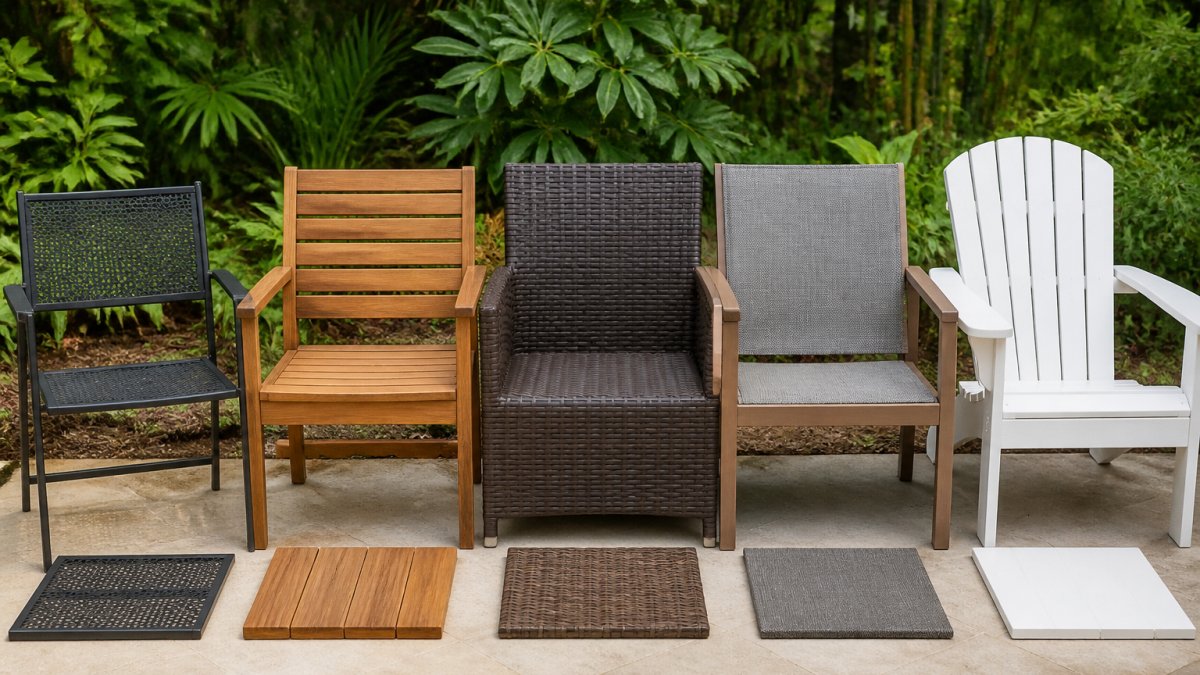
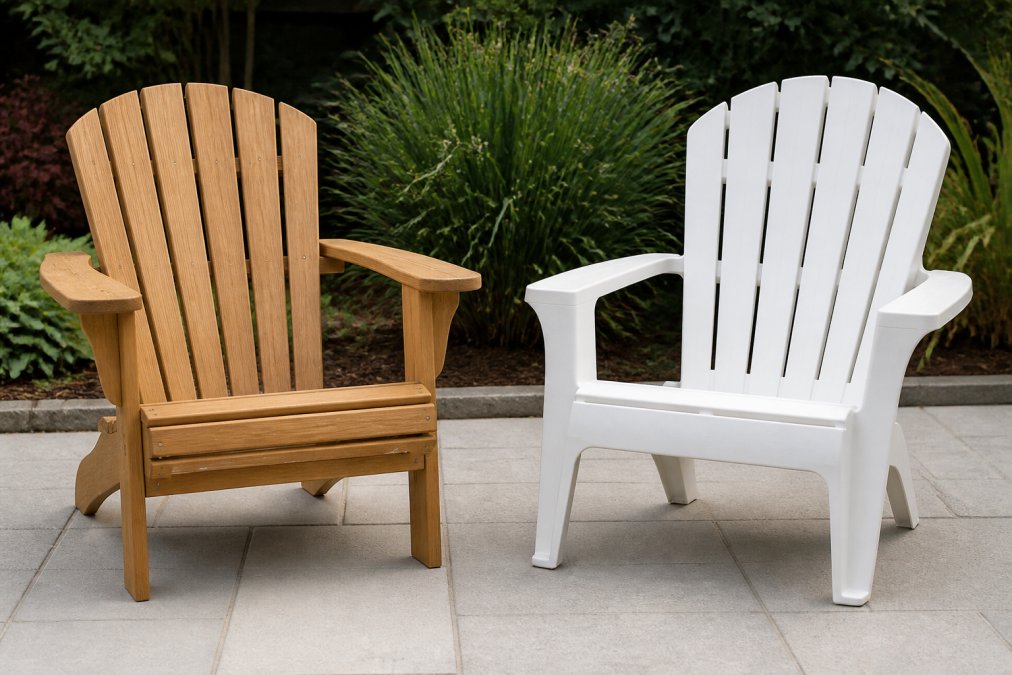
Choosing between solid wood vs plastic outdoor furniture feels simple until you're standing in your backyard comparing a weathered teak chair to a faded poly lumber rocker. At Backyard Comfort CO, we've worked through this comparison with homeowners, and the honest answer is: both materials can serve you well, but only if you match them to your climate, maintenance tolerance, and long-term goals.
Solid wood outdoor furniture, typically teak, cedar, or eucalyptus, delivers warmth and natural grain that no synthetic material has fully replicated. Recycled plastic lumber, most commonly HDPE, trades that organic beauty for near-zero maintenance and exceptional weather resistance. The real question isn't which material is objectively better, it's which is better for your specific situation.
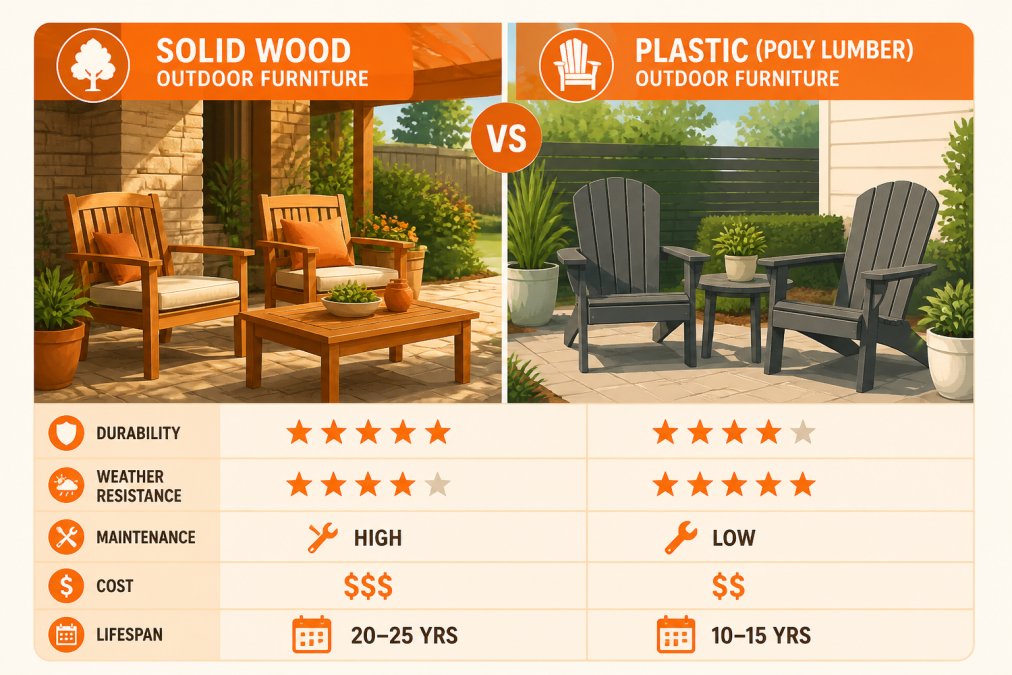
Side-by-Side Comparison Table
| Attribute | Solid Wood (Teak/Cedar) | Recycled Plastic (HDPE) |
|---|---|---|
| Durability | 15-25+ years with maintenance | 20-50 years with minimal care |
| Maintenance | Annual sealing, staining, or oiling | Soap and water only |
| Weather Resistance | Good to excellent (species-dependent) | Excellent across all climates |
| UV Performance | Grays without treatment; can be restored | UV-stabilized; resists color fading |
| Repairability | High: sand, refinish, replace boards | Low: scratches hide well; cracks are difficult to fix |
| Weight | Moderate to heavy | Heavy (HDPE is dense) |
| Environmental Impact | Sustainable if FSC-certified | Made from recycled content; non-biodegradable |
| Aesthetic Appeal | Natural grain, warm tones | Consistent color; limited texture variation |
| Best For | Design-forward patios, moderate climates | Coastal, humid, or high-maintenance-averse owners |
Durability, Weather Resistance, and Structural Integrity
Solid wood outdoor furniture is genuinely durable when properly maintained. Teak contains natural oils that resist rot, moisture, and insect damage without treatment. Cedar performs similarly in damp climates and resists termites effectively. Eucalyptus is more affordable but more prone to surface checking if it dries too quickly.
Recycled plastic lumber, particularly HDPE, is essentially impervious to moisture, rot, and termites. Corrosion is not a concern provided assembly hardware uses stainless steel fasteners rather than zinc-plated alternatives.
Climate-Specific Performance: Extreme Heat, Cold, and Humidity
Wood furniture in arid, high-UV climates without regular sealing will gray and check within a season. In humid coastal environments, even teak benefits from annual attention to prevent surface mold.
HDPE plastic lumber handles climate extremes with minimal drama. It does not warp in heat or become brittle in cold, and its UV-stabilized pigments resist fading far better than wood finishes. For homeowners in the Gulf Coast, Pacific Northwest, or freeze-thaw climates, recycled plastic furniture is the lower-risk choice.
HDPE does expand and contract with temperature changes, which is why quality manufacturers use stainless steel fasteners with appropriate tolerances.
Weight Capacity and Long-Term Structural Integrity
Solid wood furniture with proper joinery handles load-bearing stress exceptionally well. Mortise-and-tenon joints in quality teak or cedar pieces support substantial weight without flex.
HDPE poly lumber is dense and load-bearing, but not as rigid as hardwood at equivalent cross-sections. Quality manufacturers compensate with thicker profiles and reinforced joinery. Budget HDPE pieces can flex noticeably under heavier loads, while premium poly lumber performs comparably to solid hardwood.
Solid Wood Outdoor Furniture Maintenance Guide
Maintenance comes down to three tasks: cleaning, protecting, and periodic refinishing.
Annual maintenance for solid wood outdoor furniture:
- Clean surfaces with mild soap and soft brush to remove dirt, mold, and mildew
- Sand lightly with 120-grit sandpaper if the surface has grayed
- Apply teak oil, exterior wood sealer, or stain appropriate to your species
- Inspect all joinery and hardware; tighten or replace stainless steel fasteners as needed
- Cover or store cushions during extended off-season periods
Teak is the most forgiving: if you skip a season, the wood grays but does not degrade structurally. Sanding and re-oiling restores its original tone. Cedar requires more consistent attention in humid climates.
Repairability: What Happens When Things Go Wrong
Solid wood furniture is highly repairable. A scratched surface can be sanded and refinished. A cracked board can be replaced. Loose joinery can be re-glued. If a leg breaks on a quality teak chair, a skilled woodworker can restore it to full structural integrity.
HDPE recycled plastic lumber is different. Surface scratches on lighter-colored pieces can be buffed out, but a cracked or structurally compromised board is difficult to repair. Most owners replace the damaged component, which requires sourcing matching material from the original manufacturer. If the furniture line has been discontinued, replacement may not be available.
Solid wood furniture has a longer repairability window and is more forgiving of accidents. Recycled plastic furniture is more resistant to damage initially, but less recoverable when serious damage occurs.
Is Polywood Worth the Price? Recycled Plastic Furniture Examined
Recycled plastic outdoor furniture, often sold as "poly lumber" or HDPE, is worth the price for the right buyer. The best low-maintenance outdoor furniture on the market today is overwhelmingly made from this material, and manufacturers back their products with 20-year or longer warranties.
For homeowners who don't want to think about their outdoor furniture once assembled, HDPE delivers. Cleaning requires only soap and water. The material will not splinter, rot, or require refinishing. Color fading is minimal in UV-stabilized formulations.
The honest limitation: poly lumber furniture is heavy. Moving a full dining set across a patio is a two-person job. Portability is not this material's strength.
According to the Environmental Protection Agency's guidance on recycled materials and plastics, HDPE is one of the most widely recycled plastic types, and using post-consumer HDPE in furniture manufacturing reduces landfill contribution meaningfully.
Chemical Composition and Safety Considerations
HDPE (high-density polyethylene) is a thermoplastic polymer widely considered safe for outdoor use. It does not leach harmful chemicals under normal temperature conditions and is the same material used in food storage containers. Quality HDPE poly lumber does not contain BPA, phthalates, or heavy metal stabilizers.
Solid wood furniture finishes, stains, and sealers can contain VOCs that off-gas during application and curing. Once cured, most modern exterior wood finishes are stable. Look for finishes meeting low-VOC standards, particularly for semi-enclosed outdoor spaces.
Best Low Maintenance Outdoor Furniture: Which Material Wins?
Recycled plastic HDPE is the best low-maintenance outdoor furniture. For homeowners who want to spend time in their outdoor living space rather than maintaining it, poly lumber wins on every relevant metric: no sealing, no staining, no sanding, no off-season storage requirements.
"Low maintenance" does not mean "no maintenance." All outdoor furniture benefits from periodic cleaning. HDPE can develop surface oxidation over time if left completely unattended, particularly in high-UV environments. An annual wash restores its appearance in under an hour.
Where wood closes the gap is in the definition of maintenance. Many owners of quality teak furniture describe the annual oiling ritual as satisfying rather than burdensome.
| Maintenance Task | Solid Wood | Recycled Plastic | Frequency |
|---|---|---|---|
| Soap and water cleaning | Yes | Yes | 2-4x per year |
| Sanding | Yes | No | Every 2-3 years |
| Sealing or oiling | Yes | No | Annually |
| Hardware inspection | Yes | Yes | Annually |
| Refinishing | Yes | No | Every 5-10 years |
| Cover/store off-season | Recommended | Optional | Annually |
Aesthetic Appeal, Sustainability, and Long-Term Value
Solid wood wins on aesthetics. The natural grain of teak, the warm reddish tones of cedar, and the texture variation that makes each piece unique create an outdoor living space that feels premium. Solid wood also develops character over time, teak's silver-gray patina has its own quiet beauty that many owners prefer over the original honey-brown.
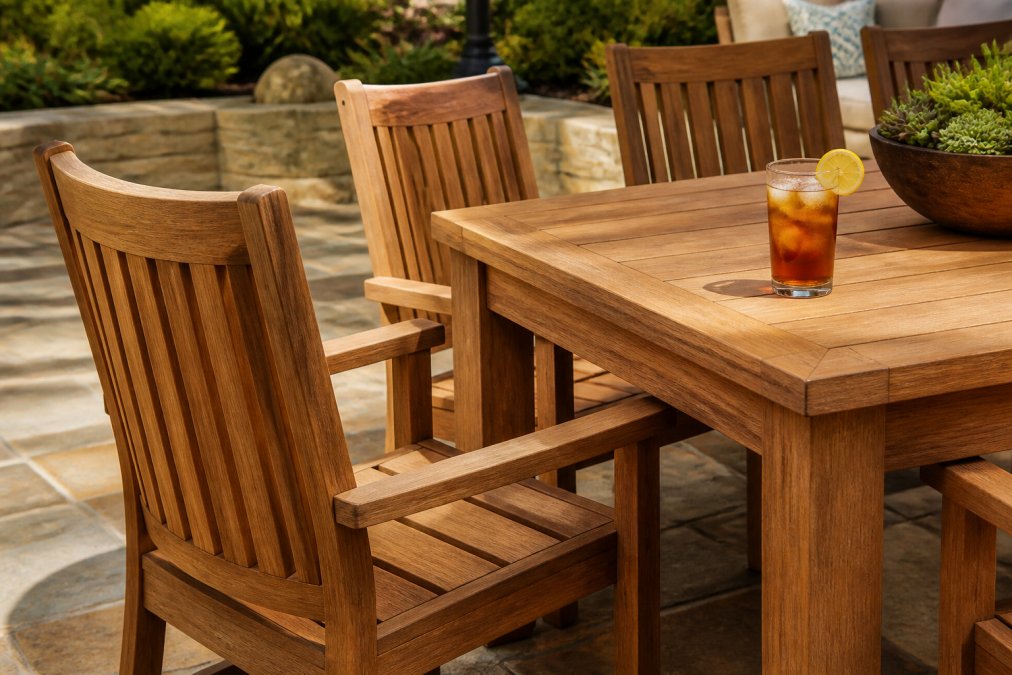
Recycled plastic furniture has improved dramatically in appearance. UV-stabilized color formulations hold their tone reliably, and some manufacturers offer wood-grain embossing that mimics natural lumber. Up close, the difference remains obvious, the surface is uniform and consistent with none of the organic variation that makes solid wood visually interesting.
On sustainability, FSC-certified solid wood from responsibly managed forests is genuinely sustainable, and solid wood is biodegradable at end of life. Recycled plastic furniture diverts post-consumer waste from landfills, which is meaningful, but the material itself is not biodegradable and has limited end-of-life recycling pathways.
Long-term value favors whichever material you will actually maintain. A teak dining set receiving annual attention can outlast several generations of poly lumber furniture. A neglected teak set will degrade faster than poly lumber left entirely alone.
Which Solid Wood vs Plastic Outdoor Furniture Choice Is Right for You?
The right choice depends on four variables: your climate, maintenance tolerance, aesthetic priorities, and budget horizon.
Choose solid wood outdoor furniture if:
- You live in a moderate climate without extreme humidity or coastal salt air
- You find furniture care satisfying rather than burdensome
- Aesthetic warmth and natural character are priorities
- You want furniture that is highly repairable and can be refinished
- You are investing in a permanent outdoor retreat where craftsmanship matters
Choose recycled plastic (HDPE) outdoor furniture if:
- You live in a coastal, high-humidity, or freeze-thaw climate
- You want genuinely maintenance-free outdoor furniture
- Portability is not a concern (poly lumber is heavy)
- You prioritize longevity without ongoing effort
- Environmental impact of using recycled content is important
For homeowners who want the warmth of solid wood with confidence it will hold up, Backyard Comfort CO's solid wood construction is engineered for weather-ready performance across all four seasons. With free shipping on most orders within the continental U.S. and a 30-day return policy, investing in lasting comfort has never been easier.
If you are in the Southeast, Gulf Coast, or Pacific Northwest, weight your decision heavily toward HDPE. If you are in the Mountain West or Midwest with lower ambient humidity, solid wood with annual maintenance is a realistic and rewarding long-term investment.
Choosing the right outdoor furniture is a long-term commitment. Backyard Comfort CO offers solid wood construction built for weather-ready performance, designed to eliminate the cycle of frequent replacements that frustrates so many homeowners. With pieces built for every season and free shipping on most orders within the continental U.S., creating a permanent, comfortable outdoor living space is straightforward. Get started with Backyard Comfort CO and invest in outdoor furniture that performs as well in year ten as it does on day one.
Frequently Asked Questions
Which outdoor furniture material lasts the longest?
Both high-quality solid wood and HDPE poly lumber can last 20 to 25 years or more when properly chosen and cared for. Teak and cedar are among the most rot-resistant wood species available. HDPE recycled plastic is termite-proof and immune to moisture absorption, giving it an edge in consistently wet climates. The deciding factor is usually how much maintenance you're willing to do, not the raw lifespan of the material itself.
What is the downside of polywood or recycled plastic furniture?
Recycled plastic poly lumber furniture is heavier than most solid wood options, making it harder to rearrange on a patio. It can also absorb significant heat in direct sun, making surfaces uncomfortable to touch on hot days. Color choices are fixed at purchase since the material cannot be refinished or restained. Scratches and gouges are difficult to repair invisibly, unlike wood, which can be sanded and refinished to look new again.
Is solid wood furniture worth the maintenance?
For homeowners who value natural beauty, repairability, and long-term curb appeal, solid wood outdoor furniture is worth the upkeep. Teak and cedar require sealing or oiling once or twice a year to prevent finish degradation and moisture absorption. The payoff is a piece that can be sanded, restained, or refinished if damaged, extending its life indefinitely. Low-maintenance plastic furniture skips that work but cannot be restored once it shows serious wear.
How does weather affect plastic versus wood outdoor furniture?
UV-stabilized HDPE poly lumber resists color fading and does not warp, crack, or splinter through freeze-thaw cycles, making it well-suited to harsh northern winters and humid southern summers. Solid wood expands and contracts with temperature swings, which can loosen assembly hardware over time and requires stainless steel fasteners to prevent corrosion. In extremely arid climates, untreated wood can dry and crack without regular sealing. Proper species selection and annual maintenance close most of that performance gap.
What kind of outdoor furniture material is best for a low-maintenance backyard?
HDPE poly lumber, often marketed under names like Polywood or poly lumber, is the closest thing to a truly maintenance-free outdoor furniture material. It needs only soap and water cleaning, never requires staining or sealing, and resists rot, corrosion, and termites. For homeowners who want natural wood aesthetics with reduced upkeep, teak is the best solid wood option since it produces its own protective oils and weathers to an attractive silver-grey without treatment.
This article was written using GrandRanker