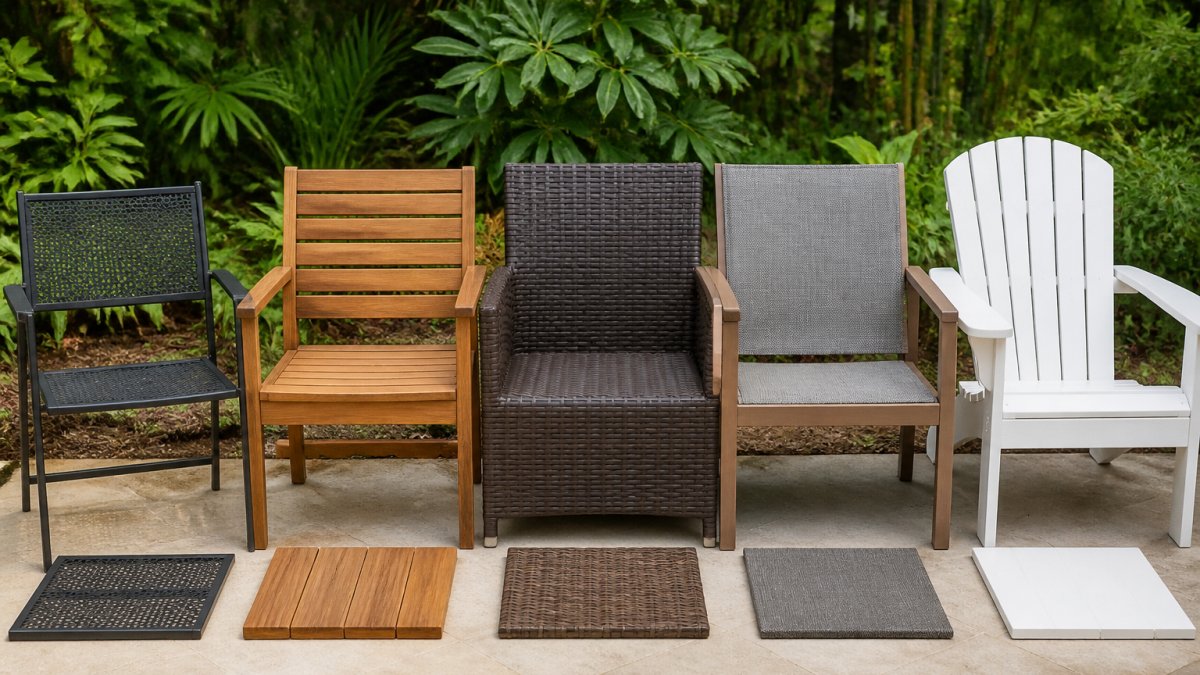
 comparison
Polywood Alternatives: Top HDPE Furniture for Wood Lovers
Table of Contents
- What Makes Polywood Alternatives Worth Considering
- HDPE vs Wood Outdoor Furniture: Material Performance Breakdown
- Top Polywood Alternatives for Durability and Aesthetics
- How to Protect Patio Furniture in Winter and Beyond
- Durability, Maintenance, and Long-Term Value
- Sustainability and Environmental Impact
- Price Comparison and Investment Value
- Conclusion
Last Updated: August 26, 2026
What Makes Polywood Alternatives Worth Considering
If you've ever watched outdoor furniture deteriorate after a single season, you understand the frustration. Traditional wood requires constant maintenance, and cheaper plastic falls apart in direct sunlight. Polywood alternatives bridge the gap between real wood aesthetics and synthetic durability.
At Backyard Comfort CO, we work with homeowners tired of replacing patio furniture every few years. They want something that looks like quality wood but performs like modern engineering. High-density polyethylene (HDPE) lumber delivers exactly that, capturing warm grain patterns and rich colors while resisting rot, splintering, and fading.
HDPE furniture eliminates the seasonal maintenance cycle (the FTC). No staining, no sealing, no refinishing. A simple wash with soap and water keeps pieces looking fresh year after year.
HDPE vs Wood Outdoor Furniture: Material Performance Breakdown
HDPE lumber is manufactured from recycled plastic, molded into boards that mimic wood grain and color. It won't rot, splinter, or attract insects. UV-inhibitors prevent the gray weathering that dulls wood. Structural integrity remains consistent through freeze-thaw cycles, heavy rain, and intense sun exposure.
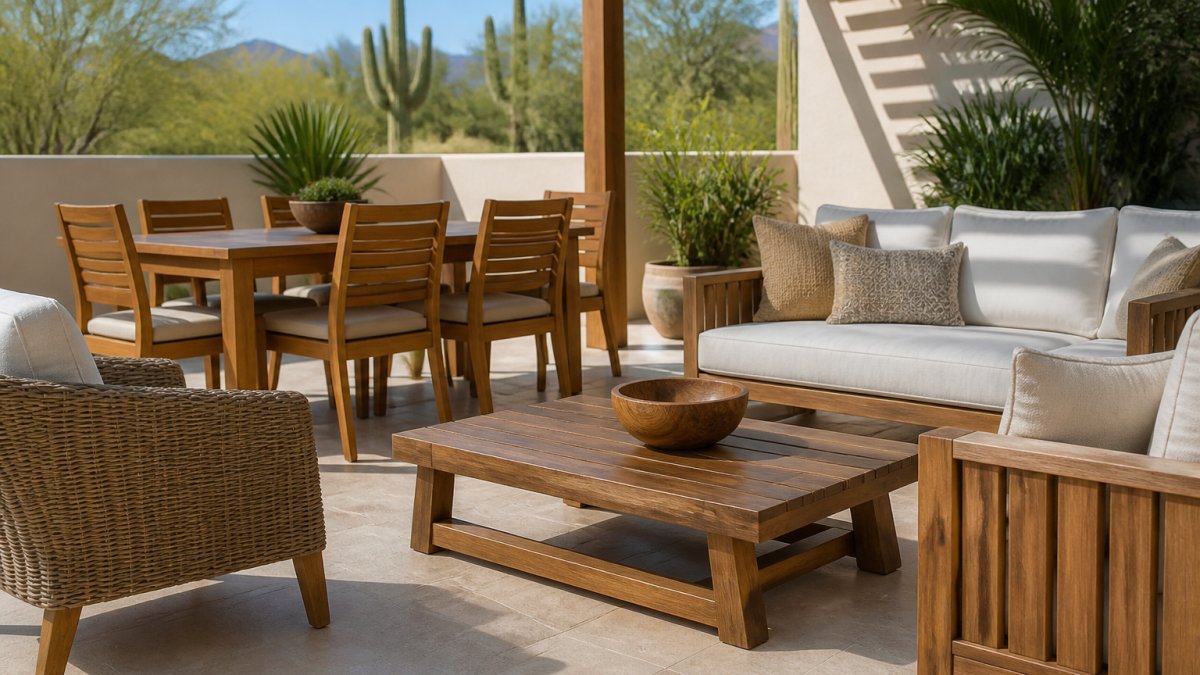
Traditional wood responds to moisture and temperature. Hardwoods like teak and cedar resist decay better than softwoods, but they still require seasonal maintenance and can warp, crack, and eventually need replacement.

If you live in a harsh climate with intense humidity, freeze-thaw cycles, or prolonged UV exposure, HDPE performs measurably better. If you prioritize authentic wood character and don't mind annual maintenance, solid wood remains valid.
| Material | Weather Resistance | Maintenance | Lifespan | Best For |
|---|---|---|---|---|
| HDPE (Polywood alternatives) | Excellent | Minimal (soap & water) | 20+ years | Low-maintenance, harsh climates |
| Solid wood (teak, cedar) | Good | High (annual staining/sealing) | 10-15 years | Authentic aesthetics, moderate climates |
| Softwood | Fair | Very high | 3-7 years | Budget-conscious, short-term use |
HDPE sacrifices some aesthetic authenticity for dramatically reduced maintenance and extended lifespan.
Top Polywood Alternatives for Durability and Aesthetics
When evaluating polywood alternatives, focus on three factors: structural integrity, color fidelity, and hardware quality.
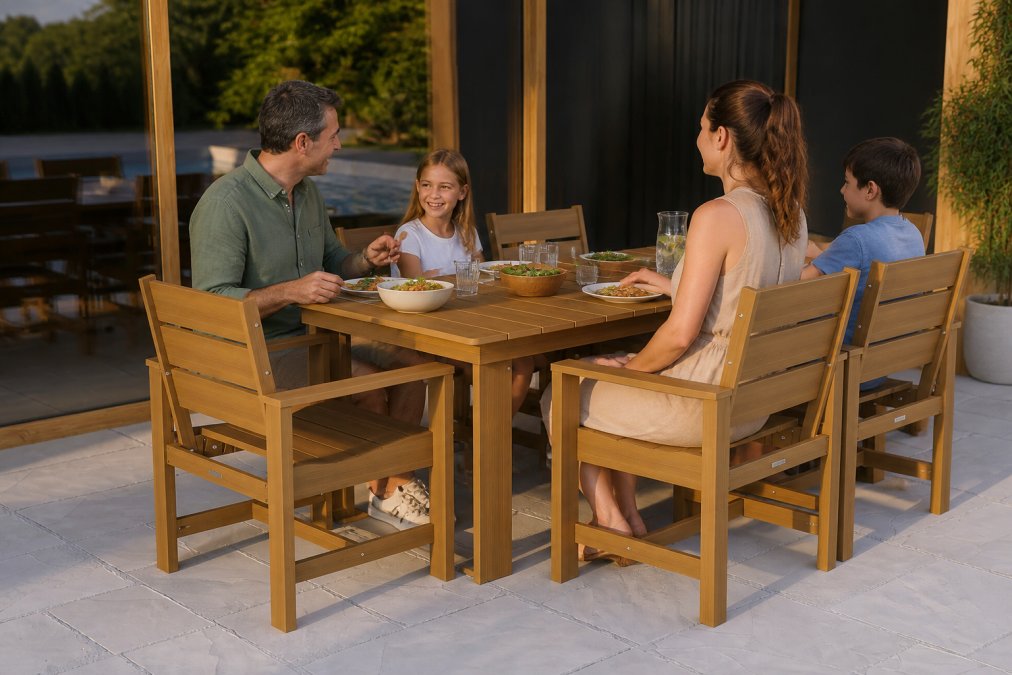
HDPE Dining Sets with Real Wood Appearance
Quality HDPE dining sets distinguish themselves through hardware. Stainless steel fasteners (typically 304 or 316-grade) resist corrosion far better than galvanized alternatives. In coastal or humid environments, fastener corrosion is a common failure point for outdoor furniture. Budget sets often use galvanized fasteners that can corrode, creating rust stains and compromising joint integrity. Premium sets often specify marine-grade stainless steel throughout, ensuring fasteners remain corrosion-free for extended periods.
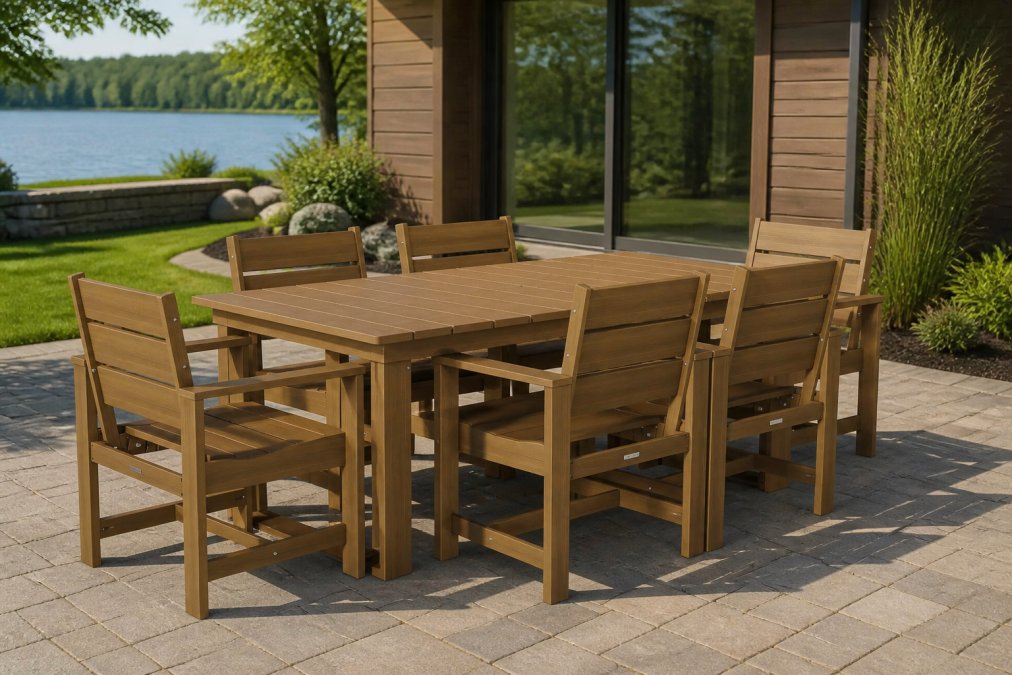
Mortise-and-tenon joinery, a traditional woodworking technique adapted for HDPE, creates structural rigidity that plastic-and-metal hybrids can't match. This joint design distributes stress across a larger surface area, reducing deflection under load.
The 7-Piece Outdoor HDPE Dining Set from Backyard Comfort CO includes one table and six matching chairs, all crafted from high-quality HDPE that captures the depth and grain variation of real teak or black wood. It carries a 20-year warranty on the frame. Assembly typically takes 2-3 hours, and properly torqued fasteners are critical to long-term performance.

The 6-Piece Outdoor HDPE Dining Set with Bench offers a similar value proposition with a different seating arrangement, one table, four chairs, and a bench. This configuration works better for rectangular patios. Quality benches often use a full-length support rail underneath rather than isolated legs, reducing deflection when multiple people sit together.
Recycled Plastic Lumber for Deck and Patio Use
Recycled plastic lumber serves as a foundational material for custom deck construction and modular patio designs. Boards manufactured from HDPE can be cut, drilled, and fastened like wood, but they won't absorb moisture or develop mold in damp environments.
HDPE is stiffer than softwood but more flexible than hardwood, and it deflects more under load than pressure-treated lumber of the same dimensions. For deck framing spanning more than 12 feet, consult structural specifications or work with a contractor experienced in composite materials. Most HDPE manufacturers publish deflection tables showing maximum span lengths for various board sizes and load conditions.
HDPE lumber is significantly heavier than wood, roughly 40-50% denser. A 2×8 HDPE board weighs approximately 12-14 pounds per linear foot, compared to 8-10 pounds for pressure-treated pine (peer-reviewed research). This density is an advantage for stability and wind resistance but requires stronger fastening hardware and more robust support structures.
The color palette for recycled plastic lumber typically includes teak, black, gray, and weathered finishes. Unlike wood that grays over time, HDPE maintains its original color saturation.
How to Protect Patio Furniture in Winter and Beyond
Even the most durable polywood alternatives benefit from seasonal protection and proper placement.
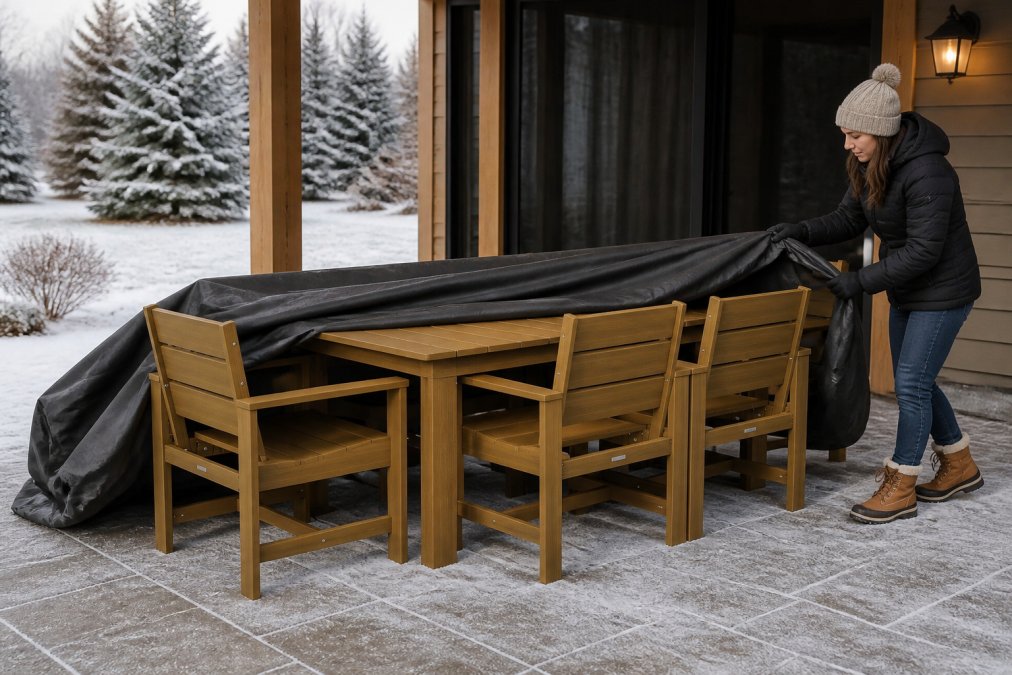
Seasonal Protection and Storage
In regions with harsh winters, remove cushions and store them indoors. HDPE itself doesn't degrade in freezing conditions, it won't crack or become brittle like some plastics do at low temperatures. However, water pooling on flat surfaces can freeze and create weight stress on joints. A breathable furniture cover prevents standing water while allowing air circulation underneath. Avoid plastic sheeting that traps moisture; use a cover rated for outdoor use with ventilation panels.
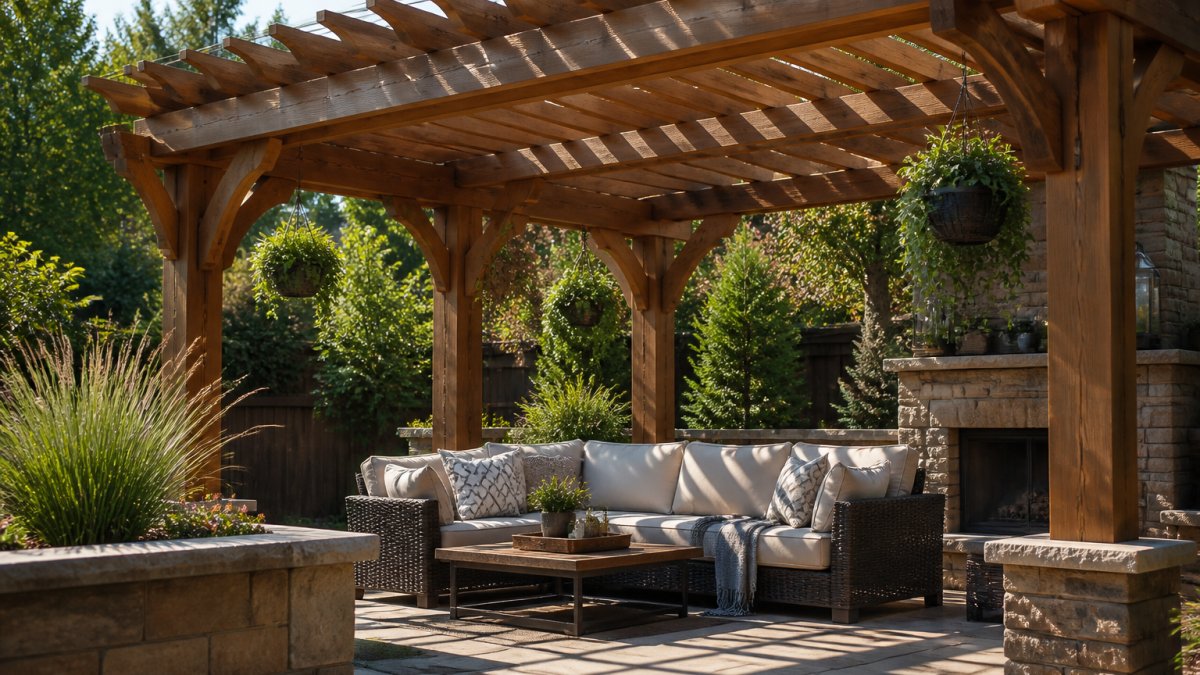
For year-round protection in high-UV climates, shade cloth or a pergola makes a measurable difference. Direct sun exposure accelerates UV degradation even in HDPE. If your patio lacks natural shade, a 30-50% shade cloth suspended above the furniture area reduces UV intensity without creating an oppressive environment.
Weight, Stability, and Wind Resistance
HDPE is roughly 40-50% denser than wood, meaning a typical HDPE dining chair weighs 8-12 pounds compared to 5-7 pounds for a wooden equivalent (astm.org). This density matters in practical use, especially in coastal regions or areas prone to wind.
Lightweight furniture can be a hazard in wind. For families with children or coastal properties, the added mass prevents furniture from becoming airborne during storms. A quality HDPE dining set typically weighs 150-200 pounds total, compared to 120-150 pounds for comparable wood. That extra mass, distributed across the pieces, keeps furniture grounded.

Cleaning and Maintenance
Cleaning is straightforward: mild soap, warm water, and a soft brush remove dirt and algae. Avoid pressure washers on HDPE, as concentrated force can damage the surface and create micro-scratches that trap dirt. For stubborn stains, a solution of one part white vinegar to three parts water works effectively.
Inspect fasteners annually, especially after winter or heavy use. Even stainless steel fasteners can loosen over time due to vibration and thermal expansion. A quick check with a wrench ensures joints remain tight. If you notice fastener corrosion, replace with marine-grade stainless steel equivalents immediately.
For stubborn algae or mildew in humid climates, a solution of one part household bleach to ten parts water can be applied with a soft brush, then rinsed thoroughly. Do not soak HDPE in bleach solution; contact should be brief (5-10 minutes).
Durability, Maintenance, and Long-Term Value
The real cost of outdoor furniture is the total cost of ownership over time. A quality HDPE dining set requires perhaps two hours of maintenance per year: an annual cleaning and inspection of fasteners. A comparable wood set demands more hours annually: cleaning, staining, sealing, and touch-up work. Over 20 years, that's a significant difference in time spent.
Structural durability is equally important. HDPE doesn't warp, crack, or check like wood does in response to temperature and humidity fluctuations. Mortise-and-tenon joints remain tight. Fasteners, if stainless steel, resist corrosion. A well-constructed HDPE dining set performs reliably for 20-25 years. A wood set typically delivers 10-15 years before significant degradation requires replacement or major restoration.
The splinter-free surface of HDPE is often overlooked but significant. Wood furniture, especially as it ages, develops splinters that catch clothing and skin. This is a minor annoyance for adults but a real concern for families with young children. HDPE eliminates this entirely.
Sustainability and Environmental Impact
The environmental argument for polywood alternatives is nuanced. HDPE is made from recycled plastic, which diverts material from landfills. However, production still requires energy, and HDPE doesn't biodegrade.
Solid wood is renewable if sourced from responsibly managed forests. Teak and cedar are harvested from sustainable plantations in many cases. Wood also sequesters carbon and biodegrades at end-of-life.
A practical middle ground: HDPE furniture is appropriate when the alternative is frequent replacement of low-quality pieces. If you'd otherwise buy a new plastic or particle-board set every 3-5 years, one durable HDPE set over 20 years reduces total plastic waste. Many producers now use post-consumer recycled plastic, meaning your furniture is partly made from old milk jugs and plastic bags, creating a genuine circular-economy benefit.
Price Comparison and Investment Value
HDPE furniture carries a higher upfront cost than budget alternatives but typically costs less than premium solid wood.
For comparison, a similar quality teak dining set from a specialty retailer might range from $1,500 to $3,000, depending on wood grade and joinery. A budget plastic set from a big-box retailer might cost $400-$600 but will likely require replacement within 3-5 years.
Free shipping on most orders within the continental U.S. from Backyard Comfort CO reduces effective cost. The 30-day return policy removes purchase risk, if the set doesn't fit your space or meet expectations, returning it is straightforward.
Conclusion
The choice between polywood alternatives and traditional wood isn't about one being objectively better. It's about matching material to your priorities and climate. HDPE delivers low-maintenance durability that wood can't match. It resists rot, splintering, and fading while maintaining authentic wood aesthetics.
At Backyard Comfort CO, we've designed our HDPE dining sets with stainless steel hardware, mortise-and-tenon joinery, and 20-year warranties because outdoor furniture should be a permanent investment, not a consumable. The 7-Piece HDPE Dining Sets in teak and black deliver that durability without compromise. Get started with Backyard Comfort CO and build an outdoor space that lasts.
Frequently Asked Questions
What is the best Polywood alternative for a natural wood look?
HDPE (high-density polyethylene) furniture offers the richest wood appearance among Polywood alternatives. HDPE is molded to replicate wood grain and color variations, creating pieces that look like real wood but resist cracking, peeling, and fading. Our 7-Piece Outdoor HDPE Dining Set in Teak ($1,218.87) delivers authentic wood aesthetics with the durability of recycled plastic, eliminating the need for staining or sealing while maintaining that warm, natural finish year-round.
Is HDPE vs wood outdoor furniture a better choice for durability?
HDPE outperforms traditional wood in harsh weather conditions. While wood requires regular maintenance, staining, and sealing to prevent rot and UV damage, HDPE resists moisture, insects, and UV fading without treatment. HDPE furniture typically carries 20-year warranties and maintains structural integrity in extreme temperature swings. However, solid wood offers superior aesthetic warmth and can be refinished if desired. The choice depends on whether you prioritize zero-maintenance durability (HDPE) or traditional beauty with maintenance commitment (wood).
How do I protect patio furniture in winter to extend its lifespan?
For HDPE furniture, basic winter protection involves clearing debris and using breathable covers to prevent moisture accumulation. Unlike wood, HDPE doesn't require sealing or refinishing before winter. Store cushions indoors and allow furniture to dry before covering. If you live in regions with heavy snow or ice, remove covers periodically to prevent moisture trapping. For wood furniture, winter protection is more intensive: clean thoroughly, apply sealant or stain, and use heavy-duty covers. HDPE alternatives eliminate this seasonal labor, making them ideal for harsh climates.
Is high-density polyethylene (HDPE) furniture worth the investment?
HDPE furniture represents a long-term investment. While initial costs are higher than mass-produced alternatives ($1,216-$1,218 for quality dining sets), the 20-year lifespan and zero maintenance requirements offset replacement cycles. Traditional outdoor furniture typically lasts 3-5 years before deterioration, meaning you'll replace cheaper sets multiple times. HDPE eliminates refinishing, sealing, and seasonal repairs. For homeowners in humid or sun-intense regions, HDPE delivers measurable savings in time and money over 10+ years, justifying the upfront cost.
[EXTERNAL_LINK: ASTM International standards for plastic lumber | astm.org]
[EXTERNAL_LINK: EPA guidance on recycled plastic products and sustainability | epa.gov]
[EXTERNAL_LINK: Consumer Reports furniture durability testing and maintenance guides | consumerreports.org]
This article was written using GrandRanker