
 how-to
Why Outdoor Wood Furniture Turns Gray: Causes & Fixes
Table of Contents
- The Science Behind Graying: UV Rays and Lignin Breakdown
- Moisture, Rain, and the Role of Environmental Variables
- Is Gray Wood a Sign of Damage or Just a Natural Patina?
- Species-Specific Weathering Timelines for Outdoor Furniture
- How to Restore Weathered Outdoor Wood Furniture
- Choosing the Best Wood Sealer for Outdoor Furniture
- Maintenance Schedule for Outdoor Wood Furniture
- Preventative Measures and Eco-Friendly Restoration Alternatives
- Frequently Asked Questions
Last Updated: September 21, 2026
The Science Behind Graying: UV Rays and Lignin Breakdown
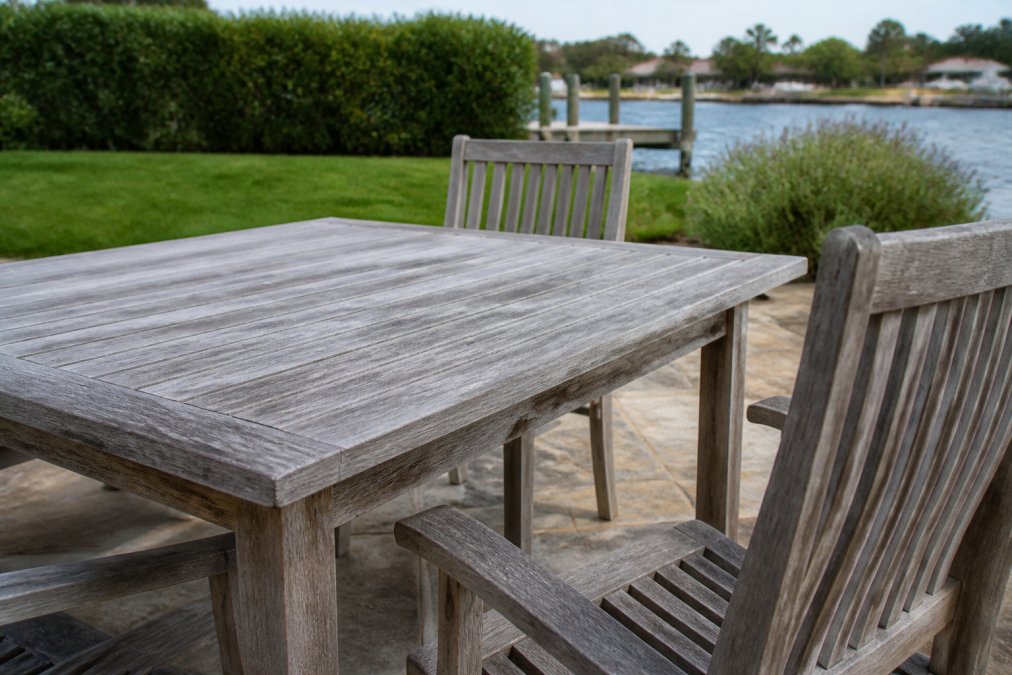
Outdoor wood furniture gray color appears because sunlight destroys lignin, the natural glue that holds wood fibers together. This process, called photochemical oxidation, breaks down the lignin at the surface while leaving behind cellulose. What remains is a silver-gray layer of weakened wood cells.
Wood is made of three main parts: cellulose, hemicellulose, and lignin. Lignin acts like mortar between bricks. It also gives wood its golden tone. When UV radiation hits the surface, it attacks the lignin first. The wood grain stays, but the color does not.
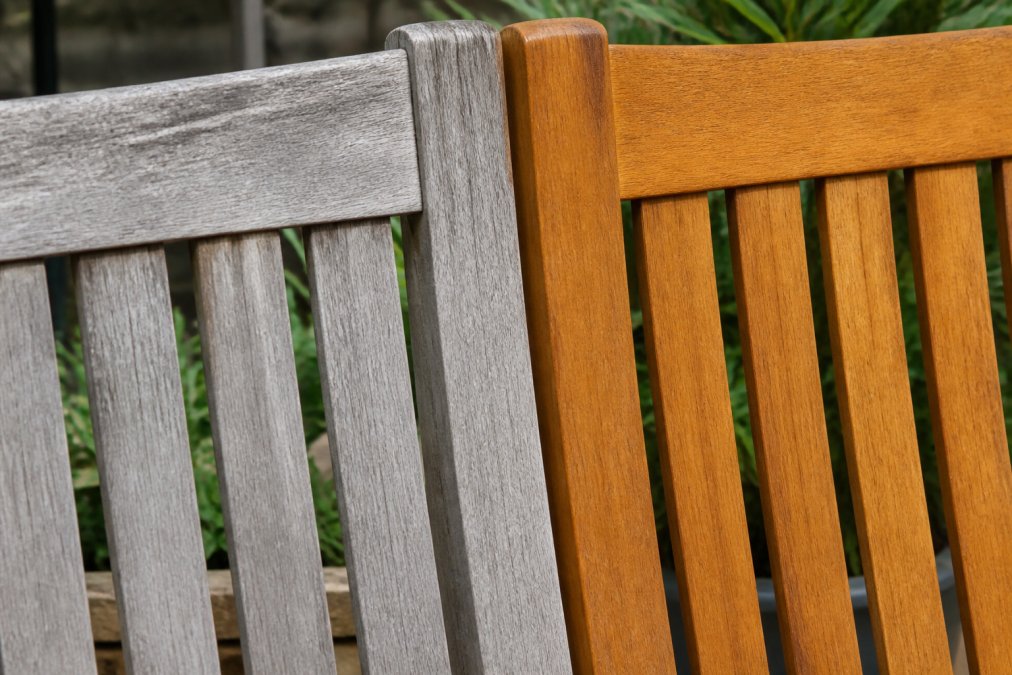
How Photochemical Oxidation Affects Wood Fibers
The reaction happens fast at first. Within weeks, a new piece of furniture can start to shift color. The surface lignin breaks apart and washes away with rain. That exposes fresh wood underneath, which then weathers too.
This is surface oxidation, not rot. The gray layer is thin, often less than a millimeter deep. Sand that layer off and you find sound wood below.
Moisture, Rain, and the Role of Environmental Variables
Rain speeds up graying, but not the way most people think. Water alone does not turn wood gray. It works with sunlight to strip away the broken lignin and expose new fibers.
Damp wood also invites mildew and fungal growth. Those leave dark streaks and a fuzzy surface. A piece that stays wet in shade will look worse than one that dries fast in open sun.
Other factors matter too:
- Humidity: Slow drying keeps the surface damp longer
- Airflow: Good air movement dries wood and slows mildew
- Salt air: Coastal air adds its own wear
- Temperature swings: Freeze-thaw cycles stress the grain
So the same teak chair can gray in one year on a sunny deck and take three years under a covered porch.
Is Gray Wood a Sign of Damage or Just a Natural Patina?
For wood furniture gray is usually just a natural patina, not damage. The color change is cosmetic. The wood underneath stays strong in most cases.
But there is a line. When graying moves past the surface, soft fibers, constant damp, and fungal growth can start to eat into the wood itself.
Here is how to tell the difference:
| What You See | What It Means | What To Do |
|---|---|---|
| Even silver-gray surface | Normal patina | Leave it or restore it |
| Gray with soft, spongy spots | Early decay | Sand and treat now |
| Black streaks or fuzz | Mildew or fungus | Clean and seal fast |
| Cracks with dark edges | Moisture has gone deep | Inspect for rot |
If a screwdriver pushes into the wood with little effort, you have damage, not patina.
Species-Specific Weathering Timelines for Outdoor Furniture
Not all wood grays at the same speed. The timeline depends on the species, its natural oils, density, and the environment it faces. Below is a practical comparison based on common outdoor furniture woods.
| Wood Species | Time to Visible Graying (Untreated) | Key Characteristics |
|---|---|---|
| Teak | 1-2 seasons (6-12 months) | High oil content, dense grain, weathers evenly to silver-gray |
| Cedar | 6-12 months | Natural oils resist rot, grays to a lighter, washed-out tone |
| Ipe | 12-18 months | Extremely dense, grays slowly, may develop surface checking |
| Mahogany | 6-12 months | Grays to a soft silver, holds color longer than softwoods |
| Pine | 3-6 months | Low oil content, grays quickly, prone to rot if untreated |
| Oak | 6-12 months | Tannins can cause dark streaks, grays unevenly |
Why the difference? Woods with higher extractive content (oils, resins, tannins) slow UV penetration. Dense grains also limit moisture uptake. Teak and ipe, for example, have natural oils that act as a built-in UV filter. Softwoods like pine lack these defenses, so lignin breaks down faster.
Environmental acceleration: A teak chair on a sunny, uncovered deck in a humid climate may gray in 6 months. The same chair under a covered porch in a dry climate might take 2 years. Salt air and freeze-thaw cycles add wear. So use the table as a baseline, then adjust for your conditions.
What this means for you: If you want to delay graying, choose a high-oil hardwood and plan to re-oil annually.
How to Restore Weathered Outdoor Wood Furniture
Restoring gray wood is a weekend job, not a rebuild. The steps below bring back the golden tone on most pieces.
Step-by-Step Cleaning and Sanding Process
- Clear the surface. Remove cushions and brush off loose dirt.
- Wash with a wood cleaner. Use a product made for outdoor wood. Rinse well.
- Apply a brightener. This evens out the gray tone before sanding.
- Sand lightly. Use fine grit and go with the grain. Do not press hard.
- Wipe away dust. A clean surface helps the finish bond.
- Apply oil or sealer. Work it in with a cloth or brush.
- Let it cure. Keep the piece dry for the time the label states.
A common mistake is sanding too deep. You only need to lift the gray layer. Stop when you see color return.
Choosing the Best Wood Sealer for Outdoor Furniture
The best wood sealer for outdoor furniture is one that blocks UV and lets the wood breathe. Oil-based finishes feed the wood and restore color. Protective coatings sit on top and form a film.
Oil-Based Finishes vs. Protective Coatings
Oil-based finishes soak in and nourish the wood. They bring back the golden tone and are easy to reapply. You will need to re-oil more often, often once or twice a year.
Maintenance Schedule for Outdoor Wood Furniture
A simple schedule keeps wood looking good. The table below is a starting point.
| Time of Year | Task | Why It Matters |
|---|---|---|
| Spring | Clean and inspect | Finds damage after winter |
| Early summer | Re-oil or seal | Blocks UV before peak sun |
| Late summer | Spot clean | Removes mildew and dirt |
| Fall | Cover or store | Cuts moisture exposure |
Preventative Measures and Eco-Friendly Restoration Alternatives
Prevention beats repair every time. A few habits add years to any wood piece.
- Use covers during long wet spells
- Move furniture to shade during peak sun hours
- Re-oil before the wood looks dry
- Keep pieces off wet ground
- Wipe up spills and standing water
Natural, Non-Toxic Cleaning Solutions
- Oxygen bleach paste: Mix oxygen bleach powder with warm water to form a paste. Apply to gray areas, let sit 15-20 minutes, then scrub with a soft brush and rinse.
- White vinegar solution: Combine equal parts white vinegar and water. Spray on mildew or dark spots, let sit 10 minutes, then wipe.
- Baking soda scrub: For stubborn stains, make a paste of baking soda and water. Gently rub with a cloth, then rinse.
- Citrus oil cleaner: Commercial plant-based cleaners with d-limonene (from orange peels) can help cut through dirt and leave a fresh scent. Look for products labeled biodegradable and non-toxic.
Why this matters: Harsh chemicals can strip natural oils and leave wood more vulnerable to UV damage. Eco-friendly methods are gentler on the wood, your skin, and the environment. They also align with the natural weathering process, helping wood age gracefully rather than fighting it.
Frequently Asked Questions
Is gray wood a sign of rot or damage?
Graying is primarily a surface-level cosmetic change caused by UV radiation breaking down lignin in the wood cells. It does not automatically mean the wood is rotting. However, gray wood that feels soft, spongy, or crumbles when probed may indicate fungal growth and moisture damage beneath the surface. Check for structural integrity by pressing a screwdriver into the wood. If it penetrates easily, the damage goes deeper than the silver-gray patina.
How long does it take for new wood furniture to turn gray?
Untreated wood typically begins showing a silver-gray patina within 6 to 12 months of outdoor exposure, depending on UV intensity and moisture levels. Teak and other high-oil hardwoods may take 12 to 18 months before noticeable graying occurs because their natural extractives slow photochemical oxidation. In arid, high-altitude regions with intense sun, the process can accelerate to just 3 to 6 months.
What is the best way to restore grayed outdoor wood?
Start by cleaning the surface with a wood brightener to remove mildew and lift the gray layer. For deeper restoration, lightly sand along the wood grain using 120 to 220 grit paper, then apply a teak cleaner and protectant. Oil-based finishes nourish the wood fibers and help restore the original golden tone. Always test a small area first to confirm the product works with your furniture's specific wood species.
Can you prevent outdoor wood furniture from turning gray?
Yes. Applying a protective coating or sealer before the wood weathers blocks UV radiation and slows lignin degradation. Reapply oil-based finishes every 3 to 6 months, or use a weather-resistant sealer annually. Furniture covers during extended wet periods also reduce moisture content fluctuations. Even with protection, some graying may occur over time, but regular maintenance keeps it minimal and preserves the wood's natural finish.
Gray wood is not a flaw. It is wood doing what wood does when the sun and rain get to it. The trick is knowing when to leave it and when to act.
Backyard Comfort CO helps homeowners skip the replace-every-few-seasons cycle. Our solid wood pieces are built for every season, with free shipping on most orders within the continental U.S. and a 30-day return policy. Get started with Backyard Comfort CO and turn your patio into a space that lasts.