
 ultimate-guide
What Is the Most Durable Type of Outdoor Furniture?
Table of Contents
- What Is the Most Durable Type of Outdoor Furniture?
- Durability by Material: High-Density Polyethylene vs. Teak vs. Aluminum
- Solid Wood vs Plastic Outdoor Furniture: Which Lasts Longer?
- Cushions, Fabrics, and Fasteners: The Parts That Fail First
- Climate, Lifecycle Cost, and Repairability: What Buyers Overlook
- Outdoor Furniture Care Tips for Every Material
- Frequently Asked Questions
Last Updated: September 18, 2026
What Is the Most Durable Type of Outdoor Furniture?
The most durable type of outdoor furniture is high-density polyethylene (HDPE) lumber, followed closely by responsibly sourced teak and powder-coated aluminum. This guide from Backyard Comfort CO breaks down how each material handles sun, rain, and freeze-thaw cycles so you can invest once instead of replacing cheap sets every few seasons.

Durability by Material: High-Density Polyethylene vs. Teak vs. Aluminum
No single material wins every category, but HDPE leads on maintenance-free longevity, teak leads on repairable beauty, and aluminum leads on lightweight strength. Here's how the three heavyweights compare on the criteria that matter most.
| Material | Lifespan | Maintenance | Best For | Watch Out For |
|---|---|---|---|---|
| HDPE | 20+ years | Soap and water | Humid, sunny, coastal | Heavier than aluminum |
| Teak | 25+ years | Annual oiling | Dry, temperate | Needs refinishing over time |
| Aluminum | 15-20 years | Occasional rinse | Small patios, balconies | Dents, scratches finish |
| Wrought iron | 20+ years | Rust touch-ups | Traditional styling | Heavy, rusts if chipped |
High-Density Polyethylene (HDPE)
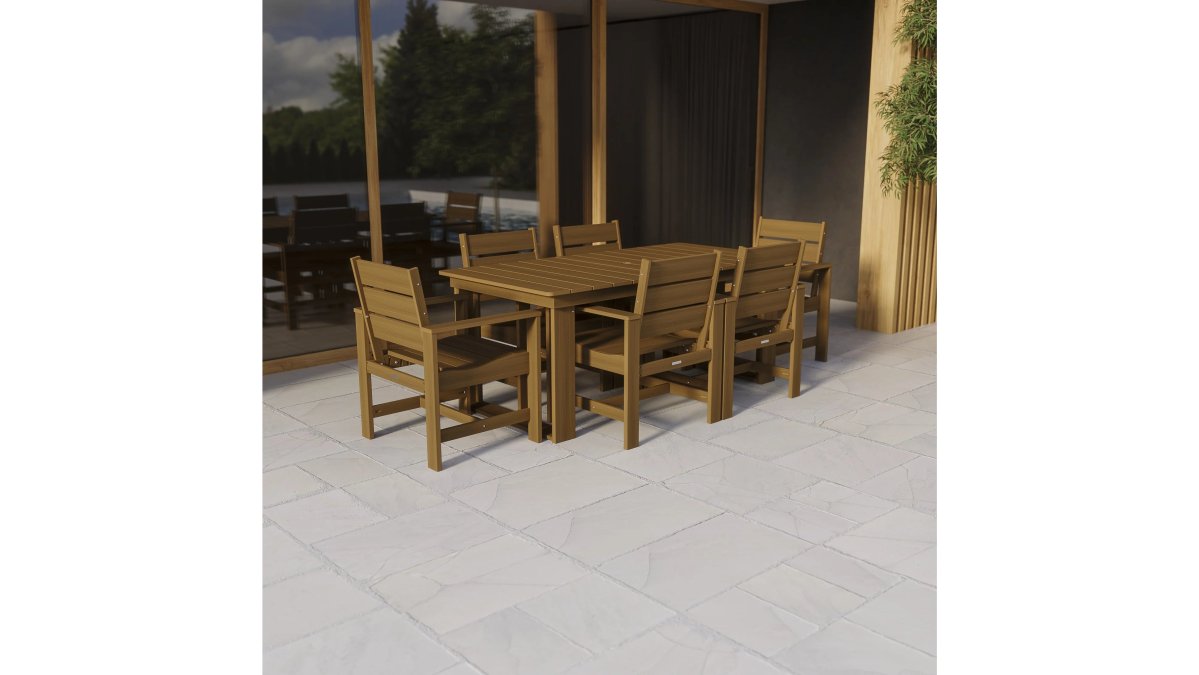
HDPE is the most maintenance-free option on the market. It's engineered to resist cracking, peeling, and fading, and a quick wash with soap and water refreshes the surface. The 7-Piece Outdoor HDPE Dining Set from Backyard Comfort CO carries a 20-year warranty on the frame, which tells you how confident the manufacturer is in the material. The trade-off: it's heavier than aluminum and costs more upfront than a big-box resin set.

Teak and Other Hardwoods
Teak earns its reputation through natural oils that repel moisture and insects, making it rot-resistant and structurally sound for decades. The catch is upkeep. Left untreated, teak weathers to a silver-gray patina that many homeowners love and others don't. Annual oiling preserves the golden tone, and skipping it won't destroy the wood, but it changes the look. A common mistake is sealing teak too early; the wood needs to breathe and dry naturally first.
Aluminum, Wrought Iron, and Steel
Powder-coated aluminum is the lightweight champion: corrosion-resistant, rust-proof when the coating stays intact, and easy to move for seasonal rearranging. Wrought iron delivers old-world styling and serious frame stability, but it's heavy and rusts wherever the finish chips. Steel sits between the two, offering tensile strength at a lower cost, though it demands the most vigilant rust inspection of the three.
Solid Wood vs Plastic Outdoor Furniture: Which Lasts Longer?
Solid wood and plastic outdoor furniture both last decades when built well, but they age in opposite directions. Wood develops character and can be sanded, oiled, and repaired indefinitely. Plastic either looks nearly new or fails suddenly at a stress point, with little middle ground. The real difference comes down to climate, repairability, and how the material behaves at the end of its life.
How Each Material Fails
Understanding the failure mode tells you more about longevity than any marketing claim. Wood fails gradually: surface graying, then checking (small cracks along the grain), then joint loosening. Each stage is addressable. Plastic fails suddenly: a leg cracks at a stress point, a slat snaps in cold weather, or UV degradation makes the surface chalky and brittle. Once HDPE cracks structurally, there is no sanding it back.
Repairability: The Hidden Longevity Multiplier
This is where most buying guides stop short. A material's lifespan isn't just how long it lasts untouched; it's how long you can keep it in service.
- Teak and hardwoods: Fully repairable. Sand out scratches, re-oil to restore color, tighten or replace joinery. A well-built teak table can be refinished multiple times over its life, effectively resetting the clock.
- HDPE: Largely non-repairable. Scratches can be lightly sanded, but structural cracks cannot be welded or patched invisibly. The trade-off is that HDPE rarely needs repair in the first place, and a 20-year frame warranty covers structural failure.
- Aluminum: Repairable at the finish level. Scratches touch up with matching paint; dents can sometimes be worked out. Welded frames can be re-welded by a fabricator, though labor often approaches replacement cost.
- Wrought iron and steel: Repairable but labor-intensive. Rust spots sand and repaint easily; structural re-welding is possible but rarely economical on budget sets.
Sustainability and End-of-Life
Disposal matters more than most buyers realize. Teak and other hardwoods are renewable and biodegradable at end of life, and responsibly sourced teak comes from managed forests. HDPE is recyclable in theory, but most curbside programs don't accept large furniture pieces, so it often ends up in a landfill after a very long service life. Aluminum is the most recyclable common furniture metal and holds scrap value.
The Decision Framework
Match the material to your situation, not to a generic ranking:
- Humid, coastal, or high-UV climate: HDPE or powder-coated aluminum. Both shrug off moisture and sun without refinishing.
- Dry, temperate climate: Teak. Its natural oils perform well, and you can refinish it indefinitely.
- You enjoy maintenance: Teak or wrought iron reward the effort with decades of service.
- You want zero maintenance: HDPE. Wash it and forget it.
- You care about end-of-life impact: Aluminum or responsibly sourced teak.
Cushions, Fabrics, and Fasteners: The Parts That Fail First
Frames rarely fail first. Cushions, fabric, and fasteners do, and they're the most overlooked line items in any outdoor furniture purchase. A premium frame paired with bargain cushions will look tired within two seasons.
7-Piece Outdoor HDPE Dining Set, Teak →
Climate, Lifecycle Cost, and Repairability: What Buyers Overlook
Climate drives material performance more than any spec sheet, and lifecycle cost exposes the real price of "cheap" furniture. Matching both to your situation is where smart buyers separate from the rest. This section gives you the decision matrix most guides skip.
Lifecycle Cost: The Cost-Per-Year Framework
A budget set that lasts three seasons and gets replaced four times over twelve years usually costs more than one durable set bought once. But the honest comparison isn't sticker price versus sticker price; it's cost-per-year over a realistic service life, plus the hidden costs of replacement.
- Estimate realistic service life for each option in your climate. A budget resin set might last 3-5 years in high-UV conditions; a quality HDPE set might last 20+.
- Add hidden costs to the cheap option: time spent re-shopping, assembly, disposal fees, and the frustration of a wobbly chair mid-BBQ.
- Divide total cost by years of service to get cost-per-year.
- Factor in maintenance costs for materials that need it. Annual teak oiling and occasional touch-up paint are real line items, though modest.
Regional Climate Matching
Where you live should drive your material choice more than any other factor. Here's how the major climate patterns map to materials:
- Hot, humid, high-UV (Southeast, Gulf Coast): HDPE and powder-coated aluminum lead. Both resist moisture, mildew, and fading without refinishing. Untreated hardwood struggles; teak survives but grays quickly.
- Coastal salt air: Powder-coated aluminum and HDPE. Salt accelerates corrosion on steel and wrought iron, and it attacks any chipped finish.
- Dry, hot, high-UV (Southwest): Teak performs well because low humidity reduces rot risk, but UV will gray it without oiling. HDPE also excels.
- Freeze-thaw cycles (Northeast, Midwest): HDPE handles freeze-thaw without cracking. Metal frames are fine if finishes stay intact. Wood can check if moisture gets into end grain.
- Mild, temperate (Pacific Northwest, Mid-Atlantic): Almost any quality material works. Teak and aluminum are both excellent.
Winter Storage: The Fastest Way to Add Years
Skipping winter storage is the fastest way to void a warranty and shorten any material's life. Even weatherproof furniture lasts longer when you cover or store cushions and inspect fasteners before the first freeze.
- Cushions and fabric: Always store indoors or in a waterproof deck box. Solution-dyed acrylic covers can handle a season outdoors, but freeze-thaw cycling degrades foam and thread.
- Frames: HDPE and aluminum can stay outside year-round in most climates. Teak can too, but a cover reduces graying. Wrought iron and steel should be covered or stored to prevent rust at chips.
- Fasteners: Inspect stainless steel hardware before winter. Even stainless can pit in coastal salt air over time.
- Space-saving storage: Stackable chairs, folding tables, and nesting designs cut storage footprint dramatically. If you lack garage space, prioritize furniture that stacks or folds.
Repairability vs. Replaceability
Teak and aluminum win on repairability. A scratched teak surface sands out; a chipped aluminum frame touches up with matching paint. HDPE is largely non-repairable but rarely needs repair, and its 20-year frame warranty covers structural failure. Wrought iron can be re-welded and re-painted, but the labor often approaches replacement cost. When you're comparing two options at similar cost-per-year, repairability is the tiebreaker: a repairable material can stay in service indefinitely, while a non-repairable one has a hard end date.
Outdoor Furniture Care Tips for Every Material
Routine care adds years to any material, and the routine differs by surface. Here are the outdoor furniture care tips that actually extend lifespan, sorted by material.
- HDPE: Wash with mild soap and water two to three times per season; avoid abrasive pads that dull the finish.
- Teak and hardwoods: Oil annually in dry climates, or let it patina naturally; clean with a soft brush to lift dirt from the grain.
- Aluminum: Rinse monthly to remove salt and pollen; touch up scratches promptly to protect the powder coat.
- Wrought iron and steel: Inspect for chips each season and re-paint bare spots before rust sets in.
- All cushions: Store or cover when not in use; wash covers per the manufacturer's instructions and dry fully before storing.
Frequently Asked Questions
Which outdoor furniture lasts the longest?
High-density polyethylene (HDPE) and high-quality teak consistently outlast other materials, often holding up for 20 years or more with basic care. HDPE resists moisture, UV fading, and insect damage without any refinishing, while teak's natural oils protect it from rot and warping. Powder-coated aluminum frames also last decades but may need touch-ups if the coating chips. The material that lasts longest for you depends on your climate and how much maintenance you are willing to do.
Is teak or HDPE plastic better for outdoor furniture?
Both are among the most durable options, but they suit different priorities. Teak offers a natural hardwood look and develops a silver-gray patina over time, though it benefits from occasional oiling to maintain its golden tone. HDPE captures the look of wood without splintering, cracking, or needing refinishing, and it cleans with just soap and water. If you want low maintenance and a 20-year frame warranty, HDPE is the stronger pick. If you prefer the warmth of real wood and do not mind seasonal care, teak is excellent.
What is the most weather-resistant material for patio furniture?
HDPE and powder-coated aluminum rank highest for weather resistance. HDPE is moisture-resistant, UV-stabilized, and will not rot, warp, or attract insects, making it ideal for humid or coastal climates. Powder-coated aluminum resists rust and corrosion and handles intense sun without fading. Teak performs well too, thanks to its natural oils, but it may need more frequent cleaning in wet regions. Avoid untreated steel and low-grade wicker, which deteriorate quickly in harsh conditions.
How do I maintain durable outdoor furniture to ensure it lasts?
Clean your furniture at the start and end of each season with mild soap and water. For HDPE, a soft brush removes dirt from textured surfaces. For teak, apply a dedicated teak oil once or twice a year if you want to preserve the golden color, or let it patina naturally. Tighten bolts and screws every few months, and store cushions indoors during heavy rain or winter. Covering furniture or moving it to a shed during off-season months prevents unnecessary wear and extends its lifespan significantly.