
 how-to
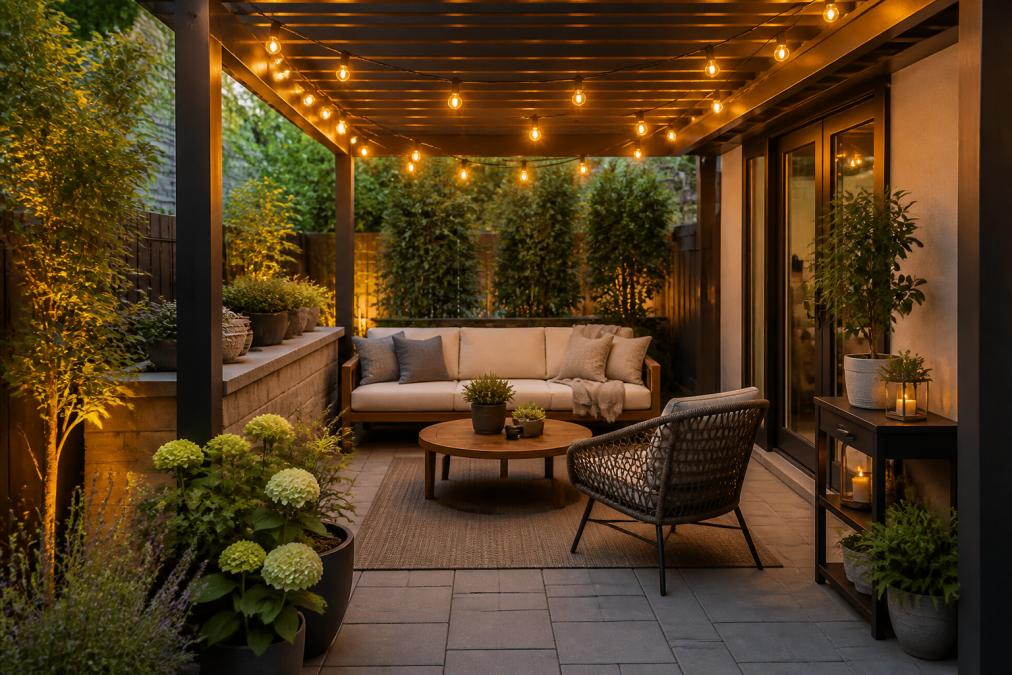
How to Design a Small Outdoor Room for Beginners
Table of Contents
- What You'll Need Before You Start
- Step 1: Measure and Sketch Your Small Outdoor Room
- Step 2: Define Zones With Smart Small Patio Layout Ideas
- Step 3: Pick the Best Outdoor Furniture for Small Spaces
- Step 4: Add Shade, Structure, and a Focal Point
- Step 5: Try Outdoor Room Lighting Ideas That Extend the Evening
- Step 6: Manage Micro-Climates and Plan for Every Season
- Common Mistakes Beginners Make
- Frequently Asked Questions
Last Updated: September 19, 2026
What You'll Need Before You Start
Designing a small outdoor room is the process of turning a cramped patio, balcony, or deck into a comfortable living space with clear zones, the right furniture, and a plan for weather. The job starts long before you buy anything.
Here's what to have ready:
- A tape measure and a notebook
- Graph paper or a free floor plan app
- Your local permit office phone number
- A budget range, split into "must have" and "later"
- Photos of your space at 9 a.m., noon, and 6 p.m.
That last item matters more than most guides admit. Sun moves. A spot that bakes at noon may be perfect at dinner.
U.S. Consumer Product Safety Commission outdoor safety guidance
Step 1: Measure and Sketch Your Small Outdoor Room
Start by measuring the full footprint, then measure every fixed object: doors, hose bibs, downspouts, and utility boxes. Write down the swing path of each door.
Next, sketch a simple floor plan on graph paper. Mark:
- Walls, railings, and fences
- Door swings and walkways
- Sun and shade at three times of day
- Wind direction in winter
- Where water pools after rain
Keep at least 36 inches of clear walking space.
Check Local Permits and HOA Rules First
Call your city or county building department before you buy a pergola, shade structure, or anything anchored to the ground. Many areas require a permit for structures over a certain height or footprint, and rules vary by jurisdiction.
HUD guidance on local building codes and permits
Step 2: Define Zones With Smart Small Patio Layout Ideas
A small outdoor room works best with two or three clear zones, not five. Pick the ones you will actually use.
The three zone types that fit small spaces:
- Conversation zone - seating for two to four people
- Dining zone - a small table, or a coffee table that doubles as one
- Quiet zone - one chair, a side table, and a plant
Small patio layout ideas that actually work:
- Run seating along the longest wall, not across it
- Use a round table instead of a rectangle in tight corners
- Float furniture away from railings to create depth
- Keep one open path from door to far edge
American Society of Landscape Architects residential design resources
Step 3: Pick the Best Outdoor Furniture for Small Spaces
The best outdoor furniture for small spaces is scaled to the room, not to the catalog. Before you open a single product page, pull out your sketch and mark the clear walking path. Then apply two sizing rules that most beginners learn too late:
- Leave at least 18 inches between a chair and the table edge so people can slide in and out.
- Leave at least 24 inches of knee space behind a dining chair so it can push back without hitting a railing.
Scale Beats Set Size
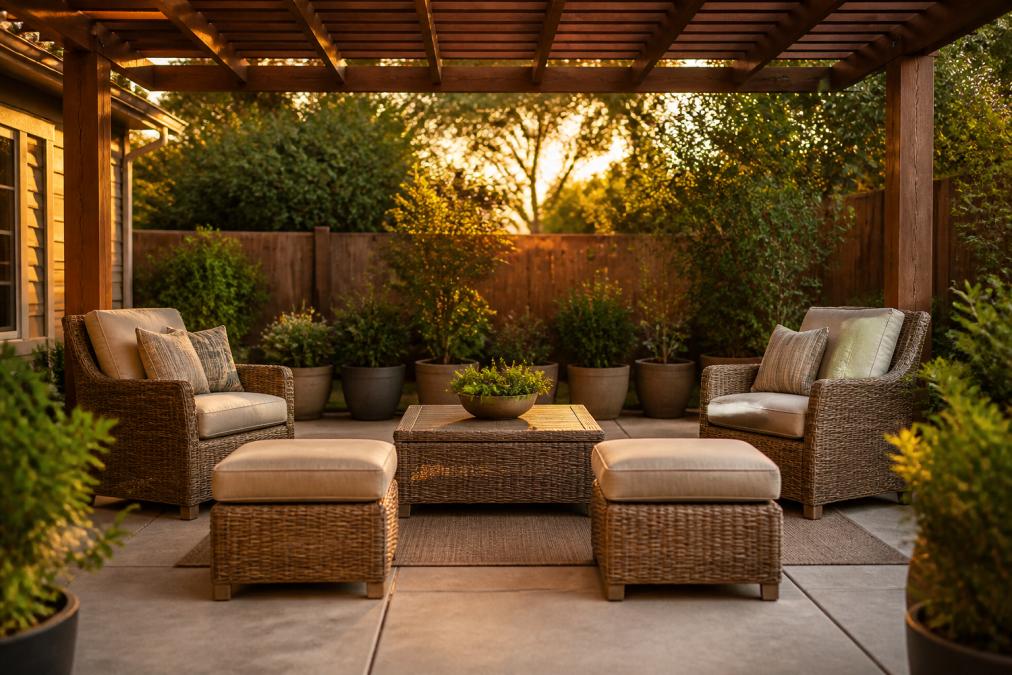
A five-piece set is often the right call for a tight patio, but only if the pieces nest, stack, or fold. The 5-Piece Wicker Patio Furniture Set with Ottomans from Backyard Comfort CO uses UV-resistant PE rattan and a rust-proof steel frame. The ottomans nest under the chairs when you need floor space back. That kind of flexibility is what small rooms demand.
Adjustable Louvered Aluminum Pergola →

Look for these traits:
- Pieces that stack, nest, or fold
- Cushions with quick-dry foam and removable, washable covers
- Frames that resist rust (powder-coated aluminum or steel, or PE rattan over metal)
- A footprint that matches your sketch, not the showroom floor
Match Materials to Your Climate
Humidity, salt air, and hard sun all shorten furniture life. The material that lasts in one region can fail in another, so match the build to your worst season:
- Humid or coastal areas: powder-coated aluminum and PE rattan resist rust and salt better than untreated steel or wrought iron.
- Dry, high-UV areas: solution-dyed fabrics and UV-stabilized resins hold color longer than standard dyed cushions.
- Freeze-thaw regions: avoid materials that trap water in joints, and choose frames that can be stored or covered before the first hard freeze.
- Windy exposures: heavier frames and low-profile seating stay put; lightweight resin chairs can tumble in a gust.
A Beginner-Friendly Buying Order
- Measure the zone and confirm the walking path.
- Choose the largest piece first (usually the seating or the table).
- Add secondary pieces only if they nest or stack.
- Confirm cushion storage before you buy, not after.
That order keeps a small room from filling up with furniture that looked smaller online than it does on the patio.
Step 4: Add Shade, Structure, and a Focal Point
Shade is what turns a patio into a room. Without it, a space gets used twice a year.
- A fire pit table at the center of the seating
- A tall planter against the back wall
- A water feature near the entry
- A single piece of garden architecture
Step 5: Try Outdoor Room Lighting Ideas That Extend the Evening
The right outdoor room lighting ideas add three or four usable hours to every day. Layer light at three heights: overhead, table level, and ground level.
Then add:
- Ambient light - string lights or a dimmable overhead fixture
- Task light - a small lamp on the side table
- Accent light - uplights at the base of a plant or wall
Step 6: Manage Micro-Climates and Plan for Every Season
A micro-climate is the small pocket of temperature, wind, and moisture unique to your yard. A patio against a south-facing brick wall can run several degrees warmer than the lawn ten feet away. Most beginner guides skip this entirely, which is why so many first-time outdoor rooms only get used in perfect weather.
Map Your Micro-Climate in One Afternoon
Walk your space at three times of day and note four things:
- Where does snow or frost sit longest in winter?
- Where does wind hit hardest, and from which direction?
- Where does the sun scorch in July, and where does shade fall at dinner time?
- Where does water pool after a storm?
Use the Findings to Place Furniture
- Hot afternoon sun: put the conversation zone in the shade of a wall, tree, or pergola, not in the open.
- Persistent wind: use a fence, planter wall, or lattice screen as a windbreak on the windward side.
- Cold morning shade: move the quiet zone to the first spot that warms up.
- Poor drainage: keep wood and upholstered furniture out of the low corner, or raise it on a deck or pavers.
Plan for All Four Seasons, Not Just Summer
A small outdoor room earns its keep when it works in fall, winter, and spring too. A simple seasonal routine keeps it functional:
- Fall: swap cushions for weather-resistant covers, add a fire pit table for warmth, and clear leaves from drains and joints.
- Winter: store cushions and textiles dry, check anchors and fasteners, and cover or move pieces that trap water.
- Spring: inspect hardware, reseal wood, and wash cushions before the first gathering.
- Summer: confirm shade coverage and airflow before the hottest weeks.
Common Mistakes Beginners Make
Most beginner mistakes come from buying before planning. Here are the ones we see most.
| Mistake | Why It Hurts | Fix |
|---|---|---|
| Buying furniture before measuring | Pieces don't fit or block walkways | Sketch the floor plan first |
| Skipping the permit check | Structure may need removal | Call the building department first |
| Too many zones in a small space | Room feels cramped and unused | Limit to two or three zones |
| One light source only | Space goes dark after sunset | Layer ambient, task, and accent light |
| Ignoring micro-climates | Furniture wears out fast | Map sun, wind, and water first |
A few more to watch:
- Choosing furniture that can't nest or stack
- Forgetting weather-resistant covers
- Placing the focal point behind the seating
- Leaving no room for seasonal storage
Frequently Asked Questions
How can I make a small outdoor room feel larger?
Keep the floor plan open and push furniture toward the edges so walkways stay clear. Use one consistent color scheme across cushions, rugs, and planters, because matching tones make a small outdoor room read as one continuous space rather than several cramped ones. Vertical elements like a pergola or wall-mounted planters draw the eye upward instead of outward. A round coffee table also helps, since it has no sharp corners eating into traffic flow.
What is the best way to define zones in a small patio layout?
You do not need walls to separate a dining spot from a lounging corner. An outdoor rug marks the seating zone, a change in hardscape material signals the transition, and a low planter or small side table acts as a soft divider. Keep traffic flow to one clear path between zones. In a small patio layout, two zones is usually the realistic maximum before the space starts to feel crowded.
How do I choose weather-ready furniture for a small patio?
Look at the frame material and cushion fabric before anything else. Powder-coated steel and UV-resistant PE rattan hold up to sun and rain, and water-resistant cushions dry faster after a storm. Measure your space first, then buy pieces sized to leave at least 18 inches of walking room. A compact set like a five-piece wicker conversation group fits tight patios without blocking the door or steps.
Can I design my own outdoor room on a budget?
Yes, and the smartest savings come from doing the planning yourself. Measure and sketch the space, shop your own house for planters and side tables, and buy one quality piece at a time instead of a full matching set at once. Prioritize the items you use daily, like seating and shade, and add lighting and decor in later seasons. This spreads the cost while still building a cohesive design.