
 listicle
Highest Quality Outdoor Furniture Brands: 2026 Review
Table of Contents
- What Separates the Highest Quality Outdoor Furniture Brands
- Durable Outdoor Furniture Construction Standards to Check
- Solid Wood vs Plastic Outdoor Furniture: Which Lasts Longer
- Top Picks From Backyard Comfort CO
- How to Maintain Outdoor Furniture for Longevity
- Lifecycle Cost: Why Cheap Sets Cost More Over Time
- Frequently Asked Questions
Last Updated: September 20, 2026
What Separates the Highest Quality Outdoor Furniture Brands
The highest quality outdoor furniture brands are separated by material grade, joinery method, and how honestly they back their products with warranties. This guide from Backyard Comfort CO examines what actually determines whether a patio set survives a decade or falls apart in three seasons.
Durable Outdoor Furniture Construction Standards to Check
Durable outdoor furniture construction standards come down to two things: what the frame is made of and how the cushions are built. Get those right and the set lasts; get them wrong and no amount of care saves it.
Frame Materials and Joinery
Powder-coated aluminum resists corrosion and stays light enough to rearrange solo. FSC-certified teak carries natural oils that repel moisture and insects without chemical treatment. HDPE (high-density polyethylene) mimics wood grain while shrugging off cracking, peeling, and fading.
Fabric and Cushion Specifications
Solution-dyed acrylic and Olefin fabrics hold color because the pigment runs through the fiber, not just on the surface. UV-resistant fabric with a high-performance textile rating resists fading through repeated summer exposure.
Solid Wood vs Plastic Outdoor Furniture: Which Lasts Longer
Solid wood and HDPE plastic both last decades when built well, but they fail differently. Wood can be sanded and refinished; plastic cannot be repaired once it cracks, though it rarely does. Wood needs occasional oiling; plastic needs only soap and water. The real decision hinges on your climate, your willingness to maintain, and how you calculate long-term value.
Climate-Specific Material Matching
Most guides treat "weather resistance" as a single trait. In practice, the material that survives best depends on your regional conditions.
| Climate Challenge | Best Material Choices | Why |
|---|---|---|
| High humidity (Gulf Coast, Southeast) | Teak, HDPE, powder-coated aluminum | Teak's natural oils resist moisture and mildew; HDPE and aluminum do not absorb water |
| Salt air (coastal areas) | Teak, HDPE, marine-grade aluminum | Salt corrodes steel and low-grade metals; teak and HDPE are unaffected |
| Harsh sun and UV (Southwest, high altitude) | HDPE, solution-dyed acrylic cushions, powder-coated aluminum | These materials resist fading and embrittlement better than untreated wood or low-grade plastic |
| Freeze-thaw cycles (Northeast, Midwest) | Teak, HDPE, powder-coated aluminum | These materials tolerate expansion and contraction without cracking; avoid brittle resins and untreated softwoods |
| Dry heat and low humidity (Intermountain West) | Teak, HDPE | Wood may need more frequent oiling in dry heat; HDPE is maintenance-free |
Lifecycle Cost Analysis: Cost Per Year of Use
Initial price is a poor predictor of value. A more useful metric is cost per year of service life. Because we cannot publish specific dollar amounts here, consider the framework:
- Divide the purchase price by expected years of service. A set that costs twice as much but lasts three times as long delivers a lower cost per year.
- Add maintenance costs. Teak requires annual cleaning and protectant; HDPE requires only soap and water. Over a decade, the maintenance gap can be significant.
- Factor in repairability. A repairable frame can have individual components replaced, extending service life. A non-repairable frame must be replaced entirely when it fails.
- Account for replacement labor and disposal. Assembling, disassembling, and disposing of a failed set carries time and potentially financial cost.
Repairability and Parts Availability
Repairability separates long-term value from disposable furniture. Before buying, ask:
- Are replacement cushions available? Cushions wear out before frames. A manufacturer that sells replacement cushions extends the set's useful life.
- Can individual components be ordered? Hardware, glides, and even frame sections should be replaceable without buying a whole new set.
- Is the joinery serviceable? Welded aluminum and reinforced wood joinery can often be repaired; stapled and glued joints cannot.
Top Picks From Backyard Comfort CO
Our top pick is the 10-Piece Teak Patio Furniture Set because Grade A premium teak and all-weather cushions deliver the longest service life of anything in the catalog. At $4,354.17, it costs more upfront and repays that in decades of use.

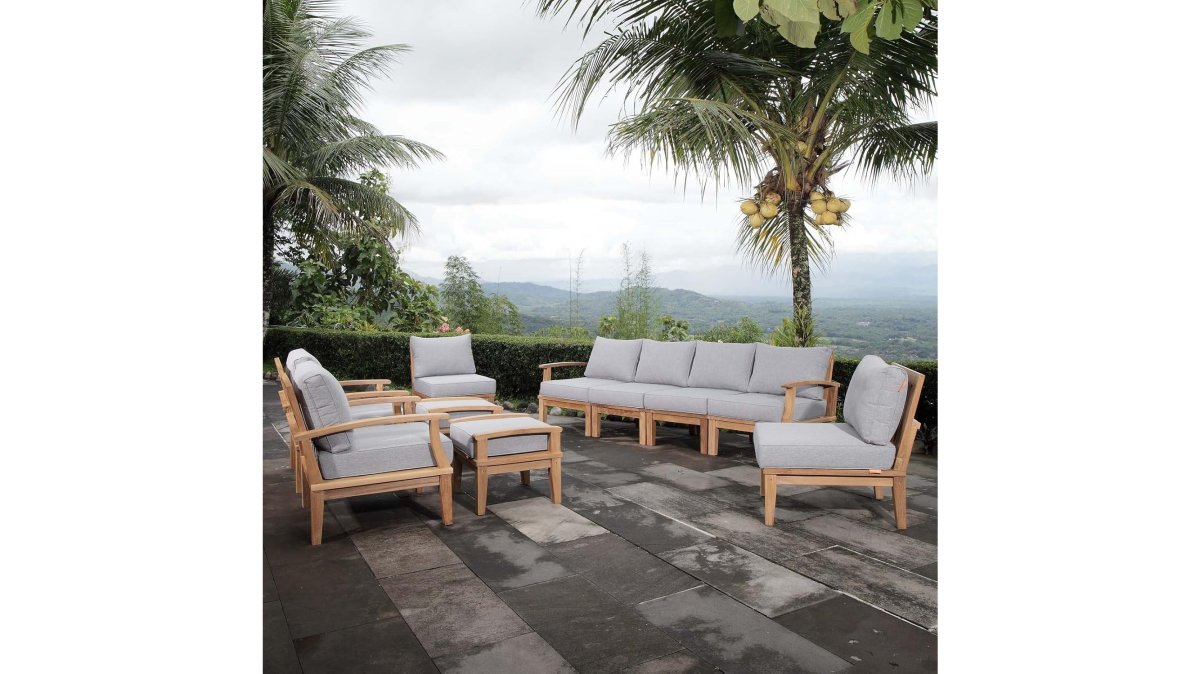
10-Piece Teak Patio Furniture Set - Natural Gray
Crafted from FSC-certified teak with textured wood grain, this set includes four armless chairs, two armchairs, two ottomans, and left and right armchairs. The all-weather cushions are stain and fade resistant and machine washable. Teak's natural resin handles extreme weather, and you can retain the rich color with occasional light sanding and a teak protectant.
Best for: Homeowners who want a permanent, repairable centerpiece.
10-Piece Teak Patio Furniture Set →
7-Piece Outdoor HDPE Dining Set, Teak
The Ezra set pairs one table with six chairs in HDPE that captures the look of real wood while resisting cracking, peeling, and fading. It refreshes with soap and water, and the frame carries a 20-year warranty. At $1,218.87, it's the value pick for everyday dining.
9-Piece Wicker Patio Conversation Set with Swivel Chairs - Beige
Handwoven all-weather wicker over a powder-coated steel frame resists rust, UV rays, and fading. Two swivel rockers with 32.67-inch backrests support 350 lbs each, and the modular layout reconfigures to fit odd spaces. At $1,303.18, it's built for conversation seating.
How to Maintain Outdoor Furniture for Longevity
Maintaining outdoor furniture for longevity takes less time than most owners expect. The routine differs by material, so match your care to the frame. But maintenance alone is not enough, how you store the set off-season and whether you can repair it determine whether it lasts five years or fifteen.
Material-Specific Care Routines
- Teak: Sand lightly and apply teak cleaner and protectant once or twice a year. The oils restore the original look. In dry climates, you may need to oil more frequently to prevent cracking.
- HDPE: Wipe with soap and water. No sealing or staining required. For stubborn marks, a mild abrasive cleaner can be used without damaging the surface.
- Wicker: Wipe down occasionally to keep it looking new. For deeper cleaning, use a soft brush and mild soap, then rinse thoroughly.
- Cushions: Remove and machine wash covers where the listing allows, then air dry fully. Never put cushions away damp, this encourages mildew.
- Hardware: Check bolts each spring and tighten anything loosened by freeze-thaw cycles. Apply a touch of lubricant to swivel mechanisms and hinges.
Off-Season Storage Logistics by Material
Skipping off-season storage is the fastest way to shorten a set's life. Even weather-resistant frames degrade faster when snow and standing water sit on them for months. But storage needs vary by material:
| Material | Storage Recommendation | Why |
|---|---|---|
| Teak | Can remain outdoors in most climates; cover if you want to minimize graying | Teak tolerates weather but will gray without protection; covers prevent debris buildup |
| HDPE | Can remain outdoors year-round; no special storage needed | HDPE is impervious to moisture and freeze-thaw damage |
| Powder-coated aluminum | Store indoors or cover if possible; avoid standing water on frames | While aluminum resists rust, standing water can degrade the powder coat over time |
| Wicker | Cover or store indoors in harsh winters | Extreme cold can make some wicker brittle; covering prevents ice damage |
| Cushions | Always store indoors or in a waterproof storage container | Cushions are the most vulnerable component; moisture leads to mildew and foam breakdown |
Repairability and Parts Availability
Maintenance extends life, but repairability determines whether a set can be kept in service indefinitely. Before you need them, identify:
- Replacement cushion sources. If the manufacturer sells replacement cushions, you can refresh the look and comfort without replacing the frame.
- Hardware kits. Bolts, glides, and connectors should be available for purchase. A set that cannot be tightened or repaired is destined for the curb.
- Frame component availability. Some manufacturers sell individual chair frames or table legs; others require buying a whole new set.
Lifecycle Cost: Why Cheap Sets Cost More Over Time
Lifecycle cost is where budget furniture loses. A cheap set replaced three times over a decade costs more than one well-built set bought once. Add the labor of assembly, disposal, and re-shopping, and the gap widens.
Frequently Asked Questions
What is the longest lasting outdoor patio furniture?
Teak and high-density polyethylene (HDPE) are among the longest lasting materials for outdoor furniture. Teak naturally resists rot, insects, and extreme weather, while HDPE resists cracking, peeling, and fading. Both offer exceptional durability when properly maintained. Look for Grade A teak or HDPE with a 20-year warranty on the frame to ensure you are investing in furniture that will last for decades.
Is solid wood or plastic better for outdoor furniture?
Solid wood like teak offers a premium look and natural weather resistance, but requires occasional cleaning and resealing to maintain its color. Plastic (HDPE) is maintenance-free and resists moisture, but may not have the same aesthetic appeal. Choose solid wood if you value craftsmanship and are willing to perform light upkeep; choose HDPE if you want zero maintenance and a wood-like appearance.
How do I identify high-quality construction in patio furniture?
Check the frame material: powder-coated aluminum or steel resists rust, while solid teak or HDPE resists rot and cracking. Look for welded joints, not just screwed. Cushions should use solution-dyed acrylic or olefin fabric for fade resistance, and foam should be high-density for comfort. Warranties of 20 years on frames signal confidence in durability. Avoid furniture with thin, hollow frames or staples visible in the joinery.
Which outdoor furniture brands offer the best weather resistance?
Brands that use Grade A teak, powder-coated aluminum, and all-weather wicker excel in weather resistance. Backyard Comfort CO offers teak sets with machine-washable, fade-resistant cushions and HDPE dining sets that resist cracking and peeling. For humid or sunny climates, look for UV-resistant fabrics and rust-proof frames. Proper storage during off-season can extend the life of any set.
How to maintain outdoor furniture for longevity?
Clean teak with a mild soap solution and a soft brush, then apply teak cleaner and protectant once or twice a year to retain its color. HDPE and wicker can be wiped down with soap and water. Cushions should be machine washed if covers are removable, or spot cleaned. Store cushions indoors during heavy rain or winter, and cover furniture to prevent debris buildup. Regular maintenance prevents costly repairs.