 listicle
Durable Outdoor Furniture for Harsh Winters: Top Picks
Table of Contents
- Quick Comparison: Durable Outdoor Furniture for Harsh Winters
- Best Outdoor Furniture for Snow: HDPE Dining Sets That Stay Put
- Weather-Resistant Patio Furniture Materials: What Survives Winter
- Outdoor Furniture That Can Stay Outside Year-Round
- Winter Patio Furniture Protection: Snow, Ice, and Storage
- Cushions, Fabrics, and Hardware: The Non-Frame Details That Fail
- How to Choose Durable Outdoor Furniture for Harsh Winters
- Conclusion: Invest Once, Enjoy for Decades
- Frequently Asked Questions
Last Updated: October 13, 2026
Quick Comparison: Durable Outdoor Furniture for Harsh Winters
The best materials for durable outdoor furniture for harsh winters are HDPE, cedar, teak, and powder-coated aluminum, because each resists moisture, freezing, and UV damage without cracking or rotting. This guide breaks down how each performs through freeze-thaw cycles, what fails first, and which pieces can stay outside all year.
| Material | Winter Strength | Main Weakness | Best For |
|---|---|---|---|
| HDPE | Resists cracking, peeling, fading | Can feel heavy to move | Dining sets left out year-round |
| Cedar | Naturally resists insects, decay | Needs occasional re-staining | Pergolas and shade structures |
| Teak | Withstands extreme weather | Higher upfront cost | Lounge and sectional seating |
| Aluminum | Rust-resistant, lightweight | Frame only, cushions separate | High-wind, wet climates |
The frame is rarely the problem. Cushions, hardware, and fasteners fail first, we cover those details below.
Best Outdoor Furniture for Snow: HDPE Dining Sets That Stay Put
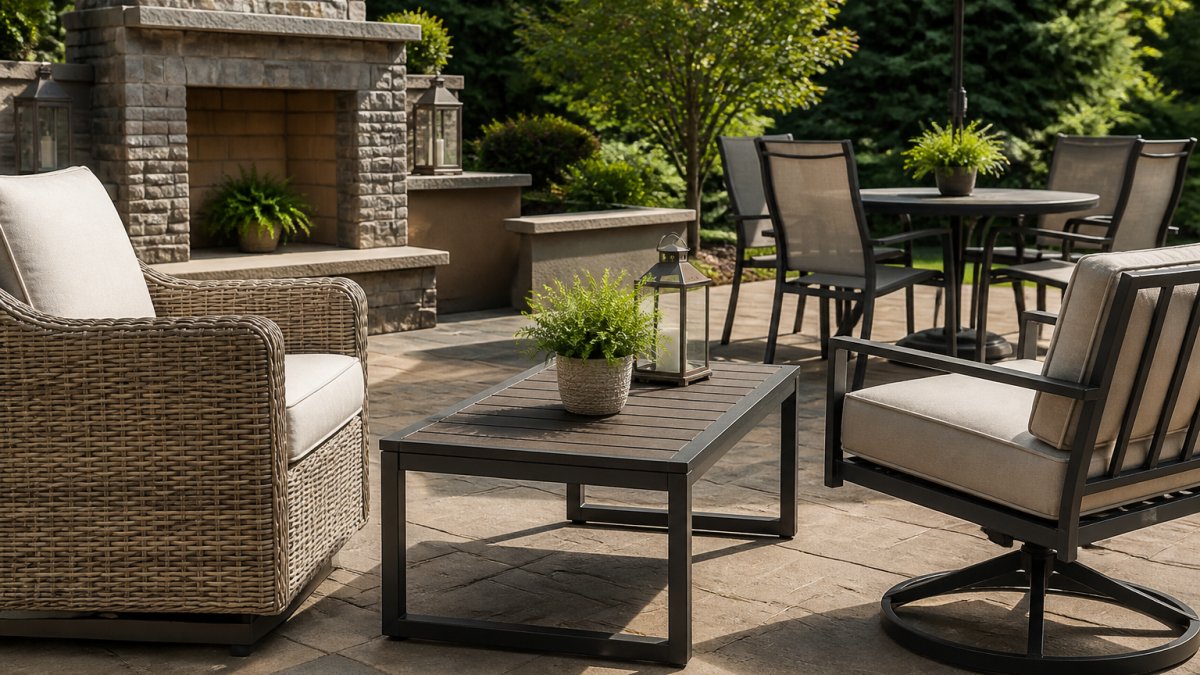
HDPE, or high-density polyethylene, is the best material for snowy climates because it does not absorb water, so it cannot rot, crack, or splinter below freezing. Our top pick is the 7-Piece Outdoor HDPE Dining Set, Teak, priced at $1,218.87.

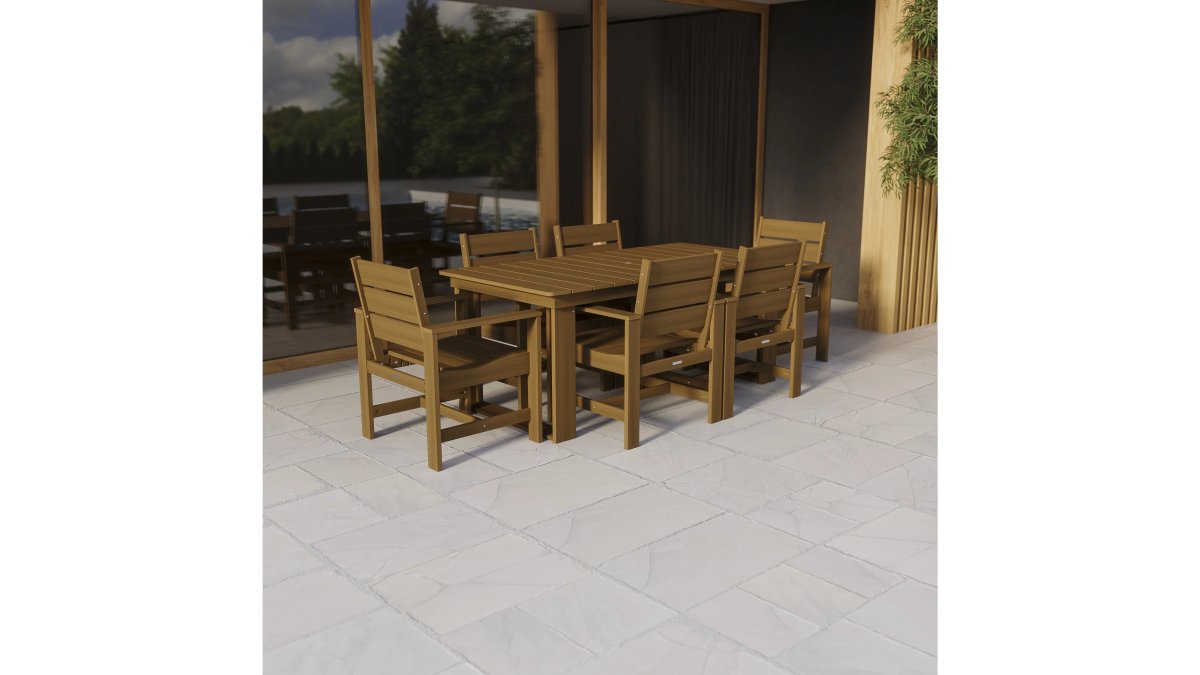
If you prefer a darker finish, the 7-Piece Outdoor HDPE Dining Set, Black uses the same frame at the same price. For smaller patios, the 6-Piece Outdoor HDPE Dining Set with Bench, Teak swaps two chairs for a bench and costs $1,216.39.


Why HDPE Handles Freeze-Thaw Cycles Better Than Wood
Freeze-thaw cycles are the quiet killer of patio furniture. Water seeps into wood grain or a hairline crack, expands as it freezes overnight, and after a few dozen cycles the wood splits along the grain. HDPE has no grain and no pores, so there is nothing for water to enter, which is why recycled plastic and poly lumber sets survive seasons that destroy untreated wood.
Weather-Resistant Patio Furniture Materials: What Survives Winter
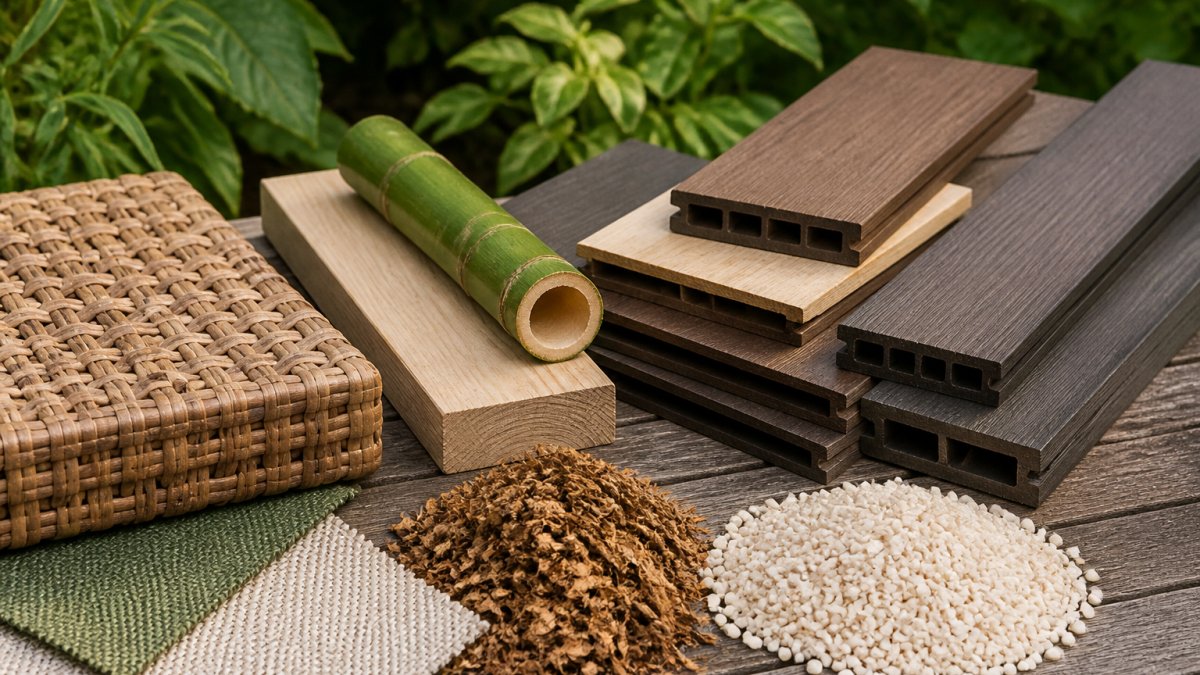
Weather-resistant patio furniture materials fall into two groups: those that resist water entirely, like HDPE and aluminum, and those that resist rot naturally, like cedar and teak. Both work. The mistake is buying a material that does neither, such as untreated softwood or mild steel.
Here is how the main options compare in practice:
- HDPE and recycled plastic: no rot, no splinters, no repainting. The trade-off is weight and a plastic feel up close.
- Aluminum: rust-resistant and light enough to move before a storm. Bare frames still need cushions for comfort.
- Powder-coated and stainless steel: strong and stable, but any chip in the coating invites corrosion.
Cedar and Teak: Natural Oils That Resist Rot and Insects
Cedar and teak carry natural oils that repel moisture and insects, which is why both have been used for outdoor structures for generations.
Our 10 Ft. X 10 Ft. Traditional All Cedar Wood Outdoor Patio Pergola Shade Structure uses 100% cedar, arrives pre-drilled, pre-cut, and pre-stained, and is tested to withstand winds up to 100 mph.
For seating, the 10-Piece Teak Patio Furniture Set - Natural Gray is built from Grade A premium teak with all-weather, machine-washable cushions.
Outdoor Furniture That Can Stay Outside Year-Round
Outdoor furniture that can stay outside year-round needs a frame that ignores water, hardware that will not rust, and a structure rated for your region's snow loads and wind gusts. HDPE, cedar, teak, and aluminum all qualify, but only if the fasteners, feet, and cushions are winter-specified too. Work through this checklist before you order:
| Criterion | What to Look For | Why It Matters in Winter |
|---|---|---|
| Water absorption | Non-porous (HDPE, aluminum) or naturally rot-resistant (cedar, teak) | Porous materials crack when trapped moisture freezes |
| Fastener material | 304 or 316 stainless steel, or coated hardware | Bare steel bolts rust, stain frames, and seize |
| UV resistance | Solution-dyed acrylic or HDPE with UV stabilizers | Prevents fading and embrittlement from winter sun |
| Weight and wind rating | Heavy enough to resist gusts, or rated for wind | Light sets tip or rack in winter storms |
| Snow-load capacity | Manufacturer guidance for roof or table load | Prevents collapse under wet, heavy snow |
| Cushion storage | Removable, machine-washable covers; quick-dry foam | Foam freezes, mildews, and fails first |
| Warranty | Frame coverage of 10-20 years | Signals expected service life |
| Repairability | Replaceable slings, cushions, glides, and bolts | Extends life without replacing the whole set |
Match the Material to Your Winter, Not Just the Catalog
A wet, windy coastal winter stresses different parts of a set than a dry, deep-freeze inland winter. Neither is harder, they just break different components.
- Coastal salt and driving rain: prioritize 316 stainless fasteners, aluminum or HDPE frames, and powder coatings that resist salt spray. Salt accelerates corrosion on any bare metal.
- Heavy wet snow and ice: prioritize structures with published snow-load ratings, and plan to clear accumulation. Wet snow can weigh far more than dry powder.
- Deep freeze with dry air: wood and any material that traps moisture are at risk. HDPE and aluminum handle repeated freeze-thaw cycles best.
Snow-Load Limits and Safe Snow Removal
Most residential patio furniture is not engineered for deep snow loads, and manufacturers rarely publish a number. Treat any accumulation over a few inches as a signal to clear it. For pergolas and shade structures, follow the manufacturer's guidance, our cedar pergola notes recommend removing snow within 24 hours of heavy snowfall. Safe removal means using a long-handled roof rake or soft broom (never a metal shovel or ice chipper), working from the ground, clearing snow before it refreezes into ice, and checking legs and feet afterward since ice can lift or shift a set.
This is where most cheap sets fail: the frame survives, the bolts rust, and the chair wobbles by the second spring. Specifying hardware and snow-load limits up front separates a set that stays out for a decade from one you replace every few seasons.
Winter Patio Furniture Protection: Snow, Ice, and Storage
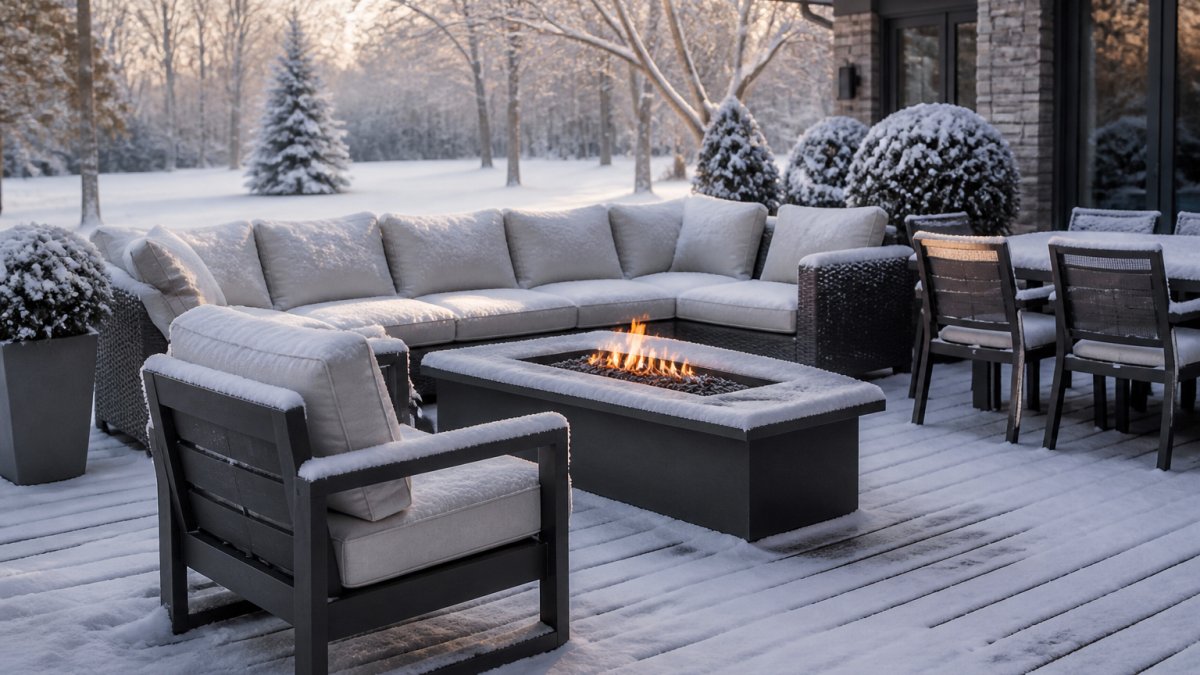
Winter patio furniture protection comes down to three moves: reduce standing water, reduce standing load, and reduce trapped moisture. You do not need to move everything indoors, but you do need to know when snow load becomes a structural risk and how to clear it without damaging the finish.
7-Piece Outdoor HDPE Dining Set, Teak →
Snow-Load Limits: When to Clear and When to Move
Most residential patio furniture is not engineered for deep snow loads, and manufacturers rarely publish a number. A common pattern is to treat any accumulation over a few inches as a signal to clear it. Wet snow is far heavier than dry powder, a few inches of wet snow can weigh as much as a foot of dry snow. For pergolas and shade structures, follow the manufacturer's guidance.
Safe Snow Removal Without Damaging Furniture
- Use a long-handled roof rake or soft broom, never a metal shovel or ice chipper.
- Work from the ground where possible; do not climb on furniture or structures.
- Clear snow before it refreezes into ice, which adds load and bonds to surfaces.
Storage and Covers by Material
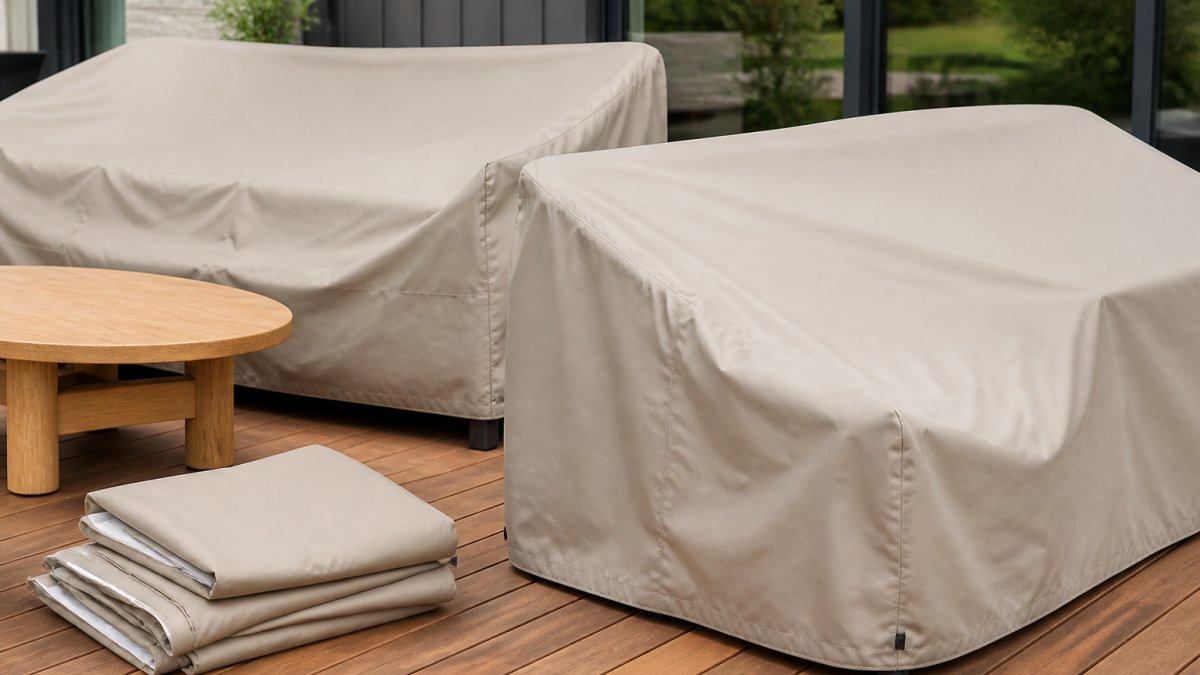
- HDPE and aluminum: can stay out; a breathable cover protects against UV and debris. Plastic tarps trap condensation and feed mold.
- Cedar and teak: can stay out; clear snow and allow airflow. If covering, use breathable fabric that does not trap moisture against the wood.
- Steel with powder coating: inspect for chips before winter; touch up bare spots to prevent rust. Store cushions separately.
Regional Differences That Change Your Winter Routine
- Coastal salt and driving rain: rinse metal hardware periodically to slow salt corrosion; prioritize 316 stainless fasteners.
- Heavy wet snow and ice: plan to clear accumulation within a day; consider moving lighter pieces.
- Deep freeze with dry air: focus on preventing trapped moisture in wood and cushions.
A routine that works in a dry, freezing climate may fail in a wet, coastal one. Match your protection plan to the winter you actually get.
Cushions, Fabrics, and Hardware: The Non-Frame Details That Fail
Cushions, fabric, and fasteners fail long before a good frame does. This is the part most buying guides skip, and where a durable set quietly turns frustrating.
- Cushion foam: open-cell foam soaks up water like a sponge. Look for quick-dry foam or plan to store cushions indoors.
- Fabric: solution-dyed acrylic holds color against UV fading far better than printed fabric.
- Zippers and seams: a hidden zipper lets you machine-wash covers, as ours do, instead of replacing the whole cushion.
If you are comparing sets and the frame specs look identical, check the hardware. It is usually the difference.
How to Choose Durable Outdoor Furniture for Harsh Winters
Choosing durable outdoor furniture for harsh winters means matching the material to your climate, not a catalog photo. Work through these criteria before you buy:
| Buying Criterion | What to Check | Why It Matters |
|---|---|---|
| Water absorption | Does the material have pores or grain? | Porous materials crack in freeze-thaw cycles |
| Fastener material | Stainless or coated hardware? | Bare steel rusts and stains |
| Cushion storage | Can covers be removed and washed? | Foam and fabric fail first |
| Wind rating | Is the structure rated for gusts? | Prevents tip-over and racking |
| Warranty length | Does it cover the frame? | Signals expected lifespan |
| Snow handling | Can you clear it safely? | Prevents overload damage |
A coastal climate with salt air and driving rain punishes metal hardware hardest, so prioritize stainless fasteners and aluminum or HDPE frames. An inland climate with deep freezes and dry air punishes wood and any material that holds trapped water. Neither is harder on furniture, they just break different parts.
Conclusion: Invest Once, Enjoy for Decades
The real cost of cheap outdoor furniture is not the price tag. It is the third replacement set, the rusted bolts, and the weekends spent hauling soggy cushions indoors.
At Backyard Comfort CO, we build exactly that: weather-ready HDPE dining sets with a 20-year warranty on the frame, solid cedar pergolas tested to withstand high winds, and premium teak seating with all-weather cushions.
Get started with Backyard Comfort CO and turn your patio into a space that survives every season.
Frequently Asked Questions
What outdoor furniture can be left outside in winter?
HDPE (high-density polyethylene) furniture, Grade A teak, and cedar are the best candidates for staying outside through winter. HDPE resists moisture, cracking, and fading, and it handles freeze-thaw cycles without splitting. Teak and cedar contain natural oils that repel rot and insects. Powder-coated aluminum and stainless steel also work if joints are sealed. Cushions should still be brought inside or stored in a dry box, since wet fabric invites mold even when the frame is fine.
What is the most durable material for outdoor furniture in cold climates?
HDPE and Grade A teak top the list for cold climates. HDPE does not absorb water, so ice expansion cannot split it, and it resists UV fading. Teak's natural resin protects it from rot, mold, and insects, and it holds up under freezing temperatures without cracking. Cedar is a strong third option because it is naturally resistant to decay. All three outperform untreated softwoods and low-grade metals in snow and ice.
Can poly lumber furniture stay outside in the snow?
Yes. Poly lumber, also called HDPE, is engineered for outdoor use and handles snow, ice, and freezing temperatures without cracking, peeling, or fading. It does not absorb moisture, so freeze-thaw cycles will not split the material. A quick wash with soap and water restores the surface each spring. The Ezra 7-Piece Outdoor HDPE Dining Set, for example, carries a 20-year warranty on the frame, which reflects how well the material holds up.
Does teak outdoor furniture withstand freezing temperatures?
Teak withstands freezing temperatures well because its natural oils keep moisture out of the wood grain. Unlike softer woods, teak does not split when water inside the fibers freezes and expands. The 10-Piece Teak Patio Furniture Set uses Grade A premium teak with all-weather, stain-resistant cushions. To keep the rich color, sand lightly and apply a teak cleaner and protectant occasionally. Left untreated, teak weathers to a silver-gray patina that is still structurally sound.
How do you protect patio furniture from snow and ice?
Clear snow off cushions and tabletops within 24 hours of a heavy snowfall using a soft broom or roof rake. Do not chip at ice with a metal tool, since that can scratch HDPE or gouge wood. Bring cushions and fabric items indoors or into a dry storage box. For pergolas, the 12x24 ft cedar model recommends removing snow from the roof within 24 hours to prevent overload. A waterproof cover helps, but only if air can still circulate underneath.