
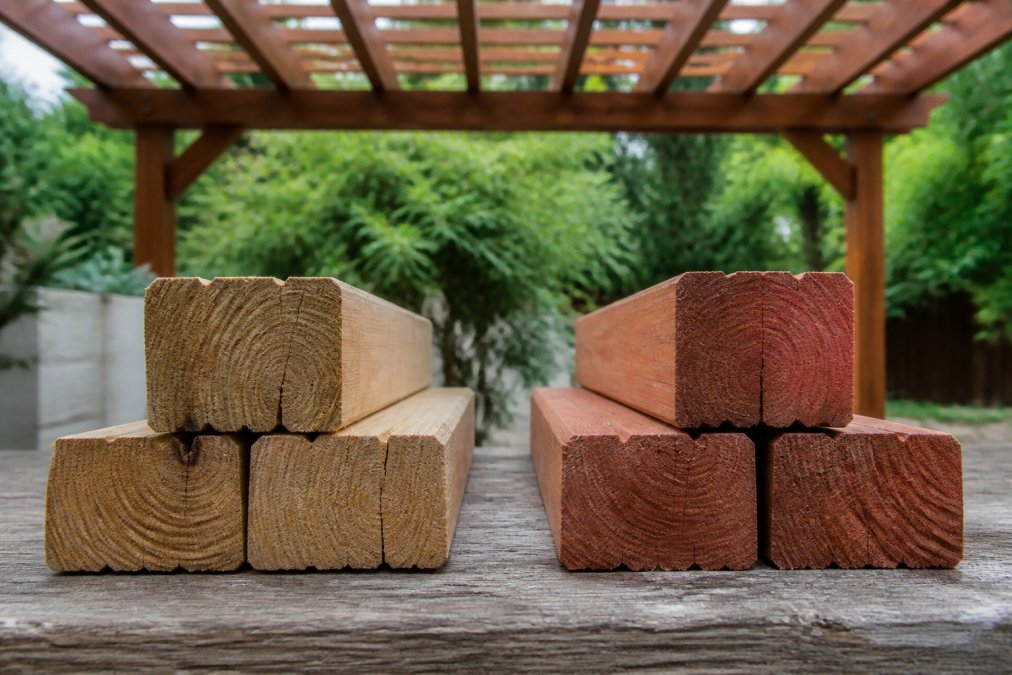
 comparison
Cedar vs Redwood Pergola Durability in Humid Climates
Table of Contents
- Quick Comparison: Cedar vs Redwood Pergola Durability
- Pergola Wood Rot Resistance: How Cedar and Redwood Compare
- Cedar vs Redwood Maintenance Requirements in Humid Climates
- How to Protect Pergola Wood from Moisture: Sealing and End-Grain Care
- Hardware Corrosion and Structural Integrity in Humid Climates
- Cost, Lifespan, and Resale Value: Cedar vs Redwood Pergolas
- Conclusion: Which Pergola Wood Wins in Humid Climates?
- Frequently Asked Questions
Last Updated: September 24, 2026
Quick Comparison: Cedar vs Redwood Pergola Durability
Cedar and redwood are the two best natural choices for pergola durability in a humid climate: cedar wins on availability and price, redwood on raw rot resistance. Both contain natural tannins that slow decay and both outlast pressure-treated pine when sealed and maintained. This guide from Backyard Comfort CO breaks down how each handles moisture, insects, and time.

| Factor | Cedar | Redwood |
|---|---|---|
| Rot resistance | High | Very high |
| Insect resistance | High | High |
| Color as it ages | Silver-gray | Deep reddish-brown to gray |
| Weight | Light | Moderate |
| Typical cost | Lower | Higher |
| Best for | Most humid climates | Coastal, high-moisture sites |
Pergola Wood Rot Resistance: How Cedar and Redwood Compare
Termite resistance follows the same logic: both woods resist insects better than softwood like pine, and cedar's natural resistance is one reason it holds up in warm, damp regions.
Cedar vs Redwood Maintenance Requirements in Humid Climates
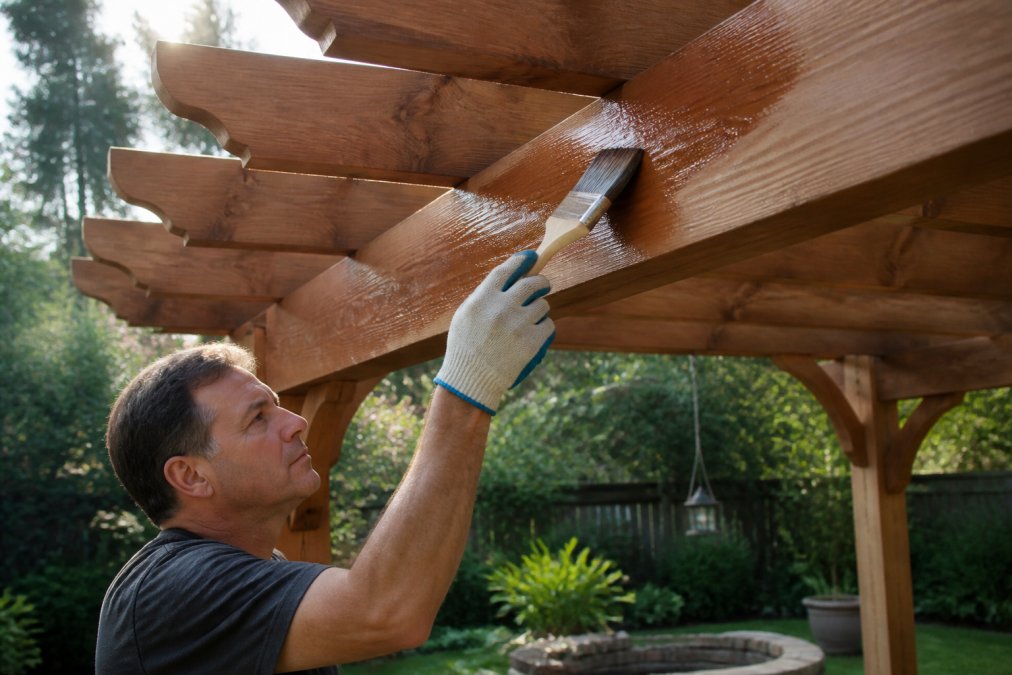
Cedar and redwood follow the same maintenance cycle in humid air, clean, inspect, reseal, but the interval between reseals is not a fixed calendar. It is driven by how many hours per day your wood stays above the dew point and how long its surface stays damp after rain.
What actually drives the reseal interval
Three variables matter more than the species label:
- Average relative humidity. Above 60% sustained, wood stays damp long enough for fungal spores to germinate. Above 75%, the window between "dry enough to seal" and "damp again" can shrink to a few hours a day.
- Dew-point spread. When overnight lows sit within a few degrees of the dew point, condensation forms on horizontal beams and post tops every morning. That daily wet-dry cycling breaks down a sealer film fastest.
- Shade and airflow. A pergola under a dense canopy or boxed in by a fence dries far more slowly than one in open sun. Two identical cedar structures a block apart can need resealing on completely different schedules.
A dew-point-driven maintenance calendar
Instead of a generic spring/fall checklist, tie your inspections to measurable triggers:
- Monthly (humid season): Check dew-point forecasts. Any stretch where the overnight low stays within 5°F of the dew point for several days is a condensation event, walk the structure afterward and look for standing water on beam tops and post bases.
- Every 8-12 weeks in sustained high humidity: Sprinkle a few drops of water on a horizontal surface. If the water beads, the film is intact. If it darkens the wood or soaks in within a minute, reseal that face.
- Twice a year minimum: Full inspection of end grain, joints, and post bases regardless of how the surface looks. These fail first and you cannot see them from standing height.
- After every named storm or multi-day rain event: Clear standing water, check for new checking (lengthwise cracks that open as wood cycles wet and dry), and touch up worn sealer at the edges of cuts.
Cedar vs redwood: how the interval differs
Redwood's tighter grain and higher extractive content mean it absorbs moisture more slowly, so it can stretch the reseal interval modestly. Cedar's more open grain dries faster after rain, which sheds surface moisture but also takes up sealer more readily, so a cedar pergola may need its first recoat sooner.
The cost of skipping it
A missed reseal does not fail immediately. It shows up as gray, fuzzy growth on the shaded face, then soft spots at the end grain, then a post base that moves when you lean on it. By the time damage is visible from the ground, the repair is no longer a weekend project.
How to Protect Pergola Wood from Moisture: Sealing and End-Grain Care
End-grain sealing is the step most guides skip. Cut ends, post tops, and drilled holes expose open wood fibers, so brush on extra sealer and let it soak in before the second coat. For posts on concrete or a deck, keep the base clear of standing water and let air move around the bottom.
Hardware Corrosion and Structural Integrity in Humid Climates
Humid air corrodes fasteners, and corroded fasteners let a sturdy pergola loosen over time. Cedar and redwood add a wrinkle most guides never mention: their heartwood is loaded with tannins and other natural extractives, and those compounds are mildly acidic. When moisture bridges the gap between wood and metal, that acidity accelerates corrosion on ordinary steel and even some coated fasteners.
The tannin-metal interaction
Tannins give cedar and redwood their decay resistance, and they are water-soluble. Every time rain or condensation wets the wood, extractives migrate to the surface and into any joint where metal touches wood. In a dry climate that moisture evaporates before much happens; in a humid climate the joint stays damp for hours and the reaction runs continuously. Visible signs: rust staining bleeding from joints, white or green corrosion product around screw heads, and fasteners that snap instead of backing out.
Fastener selection by exposure
- Post bases and anchors (ground contact): Stainless steel. These are the highest-moisture, highest-consequence connections on the structure, and they are the hardest to inspect and replace.
- Beam-to-post and rafter connections (sheltered but humid): Hot-dip galvanized or stainless. Avoid electroplated zinc and plain steel entirely.
- Decorative screws and trim (vertical, fast-drying): Hot-dip galvanized is usually adequate, but stainless removes the question.
- Anything in contact with pressure-treated lumber: Stainless only. The copper in modern pressure-treated wood is aggressively corrosive to galvanized fasteners, and mixing the two is a common and expensive mistake.
Why this matters for structural integrity
Structural integrity depends on more than the wood. Moisture absorption makes wood swell and shrink, working screws and bolts loose over time. When fasteners corrode, they lose cross-section and holding power while the wood moves against them, the two failure modes compound. A post that shifts a fraction of an inch at the base stresses every joint above it, and a loose frame in a storm-prone region becomes a safety problem, not just an eyesore.
Inspection routine
A well-built cedar pergola handles this well. Backyard Comfort CO's 10 Ft. X 10 Ft. Traditional All Cedar Wood Outdoor Patio Pergola is pre-drilled, pre-cut, and pre-stained, and it is Pro-Tect tested to withstand winds up to 100 mph.
Cost, Lifespan, and Resale Value: Cedar vs Redwood Pergolas
Cedar costs less than redwood and delivers a similar lifespan in most humid climates. Redwood's edge in rot resistance matters most on the coast or in sites that stay wet for weeks at a time.
Cost comparison comes down to a few factors:
- Upfront price: Cedar is typically the lower-cost option.
- Maintenance: Both need annual sealing.
- Replacement: A durable wood pergola avoids the replace-every-few-years cycle of cheap softwood.
- Resale value: A permanent outdoor living space adds usable square footage buyers notice.
Conclusion: Which Pergola Wood Wins in Humid Climates?
For most humid-climate backyards, cedar resists rot and insects, dries quickly after rain, costs less than redwood, and holds up for decades when you seal it and check the hardware each year. Redwood is the right call only if your site stays wet longer than most, such as a coastal yard with heavy fog.
Frequently Asked Questions
Which is better for a pergola in a humid climate, cedar or redwood?
Both woods resist rot, but redwood edges ahead in humid climates because its heartwood contains more natural tannins that fight fungal growth. Cedar offers excellent decay resistance at a lower price point. For most homeowners, cedar provides strong pergola durability when sealed properly. Redwood lasts longer in consistently damp conditions but costs more upfront. Your choice depends on budget and how much maintenance you want to do.
Does cedar or redwood resist rot better in damp climates?
Redwood heartwood has a higher concentration of natural tannins, giving it a slight edge in rot resistance in damp climates. Cedar also resists decay well thanks to its natural oils. However, sapwood on either species rots quickly if left unfinished. The real difference comes down to sealing. A well-sealed cedar pergola outperforms an unsealed redwood one in humid conditions. Check that your pergola uses heartwood, not sapwood, for the structural components.
How does humidity affect the structural integrity of wood pergolas?
Humidity causes wood to absorb moisture, leading to swelling, warping, and checking over time. Cedar and redwood both have good dimensional stability compared to softer woods, but neither is immune. In humid climates, end-grain absorbs moisture fastest, which is where rot typically starts. Sealing end-grain cuts and using corrosion-resistant fasteners prevents the structural failures that humidity triggers. Inspect joints and post bases annually for early signs of decay.
Is maintenance easier for cedar or redwood pergolas?
Cedar and redwood have similar maintenance needs. Both benefit from sealing every 12 to 18 months in humid climates. Redwood's tighter grain means it absorbs stain slightly more evenly, while cedar's open grain may need an extra coat in high-moisture areas. Neither wood requires constant refinishing if you stay ahead of weathering. A simple annual inspection and reapplication of UV protection keeps both species stable and extends lifespan.
What is the best wood for an outdoor pergola in coastal regions?
Redwood and cedar both perform well in coastal regions, but redwood's natural tannins give it an edge against salt-laden moisture. Cedar remains a strong choice when properly sealed. Whichever you pick, use stainless steel or hot-dipped galvanized fasteners to prevent corrosion. Regular sealing and end-grain protection matter more than species in coastal humidity.
Building a pergola that lasts through every humid season starts with the right wood and the right build. Backyard Comfort CO offers solid wood cedar pergolas with weather-ready design, pre-stained and pre-cut for easier assembly, and built to withstand the seasons year after year. Explore the full range of cedar pergola sizes at Backyard Comfort CO and turn your patio into a permanent outdoor retreat.