
 ultimate-guide
Built for Every Season: Outdoor Living Retail Guide
Table of Contents
- Why Outdoor Living Spaces Need Furniture Built for Every Season
- Weather-Resistant Patio Furniture Materials That Last
- Solid Wood vs Plastic Outdoor Furniture: Which Lasts Longer?
- How to Maintain Outdoor Furniture Year-Round
- Climate-Specific Durability: What Works in Humid, Sunny, and Cold Regions
- Modular Furniture Systems and Space-Saving Patio Layouts
- Sustainability and Circularity in Outdoor Living Retail
- Conclusion: Building a Backyard That Works in Every Season
- Frequently Asked Questions
Last Updated: October 2, 2026
Why Outdoor Living Spaces Need Furniture Built for Every Season
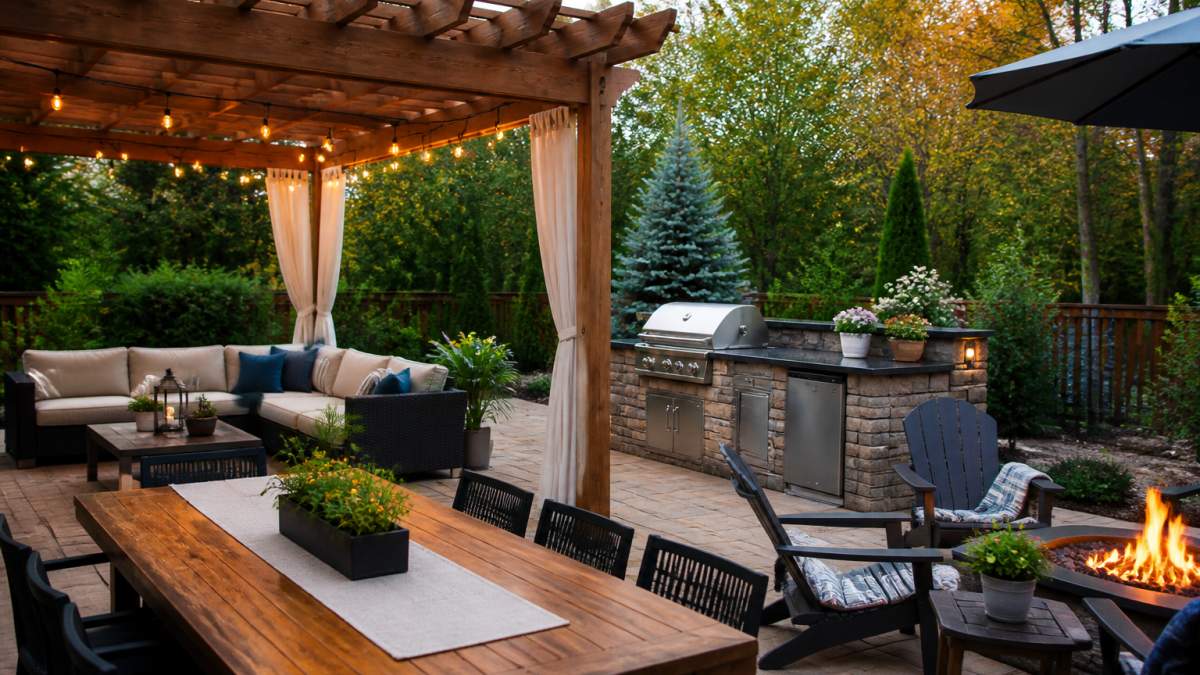
Outdoor living is the practice of treating a patio, deck, or yard as a genuine extension of the home rather than a seasonal afterthought. That shift changes what you buy. Furniture built for every season is engineered to survive July sun and January freezes without being hauled into a garage twice a year, and it is the difference between a space you use and a space you maintain.
At Backyard Comfort CO, we hear the same story from new customers: the set they bought three summers ago is already wobbly, faded, or rusting at the welds. Replacing cheap furniture every few seasons costs more than buying once, and it never feels like a real room. Below, we break down which materials actually hold up, how to maintain outdoor furniture year-round, and how to lay out a patio that works in every climate.
Weather-Resistant Patio Furniture Materials That Last
The best weather-resistant patio furniture materials are powder-coated aluminum, reinforced steel, solid teak or cedar, and high-density poly lumber. Each resists moisture and UV damage differently, and the right pick depends on your climate and how much upkeep you'll tolerate.
Aluminum and Powder-Coated Frames
Powder-coated aluminum is the default frame material for good reason. It cannot rust, it's light enough to rearrange alone, and the powder coat is a baked-on finish rather than a paint that chips. A high-strength aluminum frame with a powder-coated finish resists rust, moisture, weather damage, and UV exposure. The one weakness is weight: aluminum frames can lift in high wind unless they're anchored, so plan on expansion bolts for anything permanent.
Reinforced Steel and Hardtop Roofing
Reinforced steel adds rigidity where spans get long. Pergola roofs in particular benefit, because a sagging canopy is the first sign of a structure that won't survive a decade. Look for powder-coated aluminum frames paired with reinforced steel louvers, which hold their shape under snow load and don't warp in heat. Anchoring matters just as much as the material: a properly anchored pergola handles wind speeds up to 72 mph, and the canopy on a louvered unit can support snow accumulation up to 6 inches.
Solid Wood vs Plastic Outdoor Furniture: Which Lasts Longer?
Solid wood and poly lumber both last a long time, but they fail in different ways. Wood can be sanded and refinished indefinitely; poly lumber never needs refinishing but can't be repaired once it cracks or fades.
The Case for Solid Wood
Wood is the only outdoor material that gets better with maintenance instead of merely surviving it. A solid teak or cedar piece that's oiled annually will outlive most of its owners. The trade-off is real: in humid climates, untreated wood grows mildew, and in intense sun the surface dries and grays. A common mistake is treating wood like plastic and skipping the annual oil.
The Case for Plastic and Poly Lumber
Poly lumber, usually made from recycled HDPE, is genuinely maintenance-free. No oiling, no sealing, no splinters. It's the right answer for a rental, a beach house, or anyone who knows they won't maintain anything. What most guides miss is that poly is not repairable. A deep scratch or a cracked arm stays that way, and cheaper poly fades noticeably within a few seasons.
| Factor | Solid Wood | Poly Lumber |
|---|---|---|
| Annual upkeep | Oil or seal once a year | None |
| Repairable | Yes, sand and refinish | No |
| Feel | Warm, natural | Slightly plastic |
| Best for | Long-term investment | Zero-maintenance buyers |
How to Maintain Outdoor Furniture Year-Round
Year-round maintenance is mostly about timing and material chemistry: a light clean in spring, a mid-season rinse in summer, and real protection before the first freeze. Skip the fall step and you'll pay for it in spring. But the schedule that matters depends on what your furniture is made of, a teak table and a powder-coated aluminum frame fail for completely different reasons, so they need different care.
Match the Maintenance to the Material
Powder-coated aluminum: The finish is the vulnerable part, not the metal.
Reinforced steel: Steel's enemy is standing water at the joints.
Solid teak or cedar: Wood moves with moisture, so the goal is to slow that movement, not stop it.
Poly lumber: Genuinely low-maintenance, but not zero-maintenance. Wash with soap and water to remove pollen and grit, which can abrade the surface over time.
Cushions and textiles: Solution-dyed acrylic resists fading because the pigment runs through the fiber rather than sitting on it (Sunbrella Fabric Difference). Still, store cushions during heavy rain and bring them indoors before the first freeze. Mildew on a cushion is usually a sign of trapped moisture, not a defective fabric.
Spring and Summer Care
- Rinse frames and cushions with mild soap and a soft brush
- Tighten every bolt and anchor, especially on pergolas and gazebos
- Check drainage channels and clear any debris
- Apply a fresh coat of oil to solid wood before the heat sets in
- Inspect welds and joints for corrosion or paint chips
- Store cushions during heavy rain to extend textile durability
Fall and Winter Protection
Before the first freeze, anchor or store anything that can lift, and confirm your roof load is clear of leaves. If you have a louvered pergola, leave the louvers slightly open so snow and rain drain instead of pooling. Cushions should go indoors; even all-weather cushions last longer when they're not sitting under snow for months. In cold regions, bring in or cover anything with moving parts, swivel mechanisms and casters seize when water freezes inside them.
10' X 12' Louvered Pergola, Aluminum Frame Outdoor Pergola with Adjustable →
Climate-Specific Durability: What Works in Humid, Sunny, and Cold Regions
Climate decides which material wins. There's no universal best choice, and buying for the wrong region is the most expensive mistake in this category.

In humid, coastal regions, corrosion resistance is everything. Salt air attacks steel fast, so powder-coated aluminum and stainless hardware are non-negotiable. Wood works here too, but only with annual sealing, because constant moisture invites mildew.
Modular Furniture Systems and Space-Saving Patio Layouts
Modular systems solve the oddly shaped backyard problem. Instead of forcing a fixed set into a space it doesn't fit, you buy pieces that reconfigure: a sectional that splits into two chairs, an island that rolls and then locks.
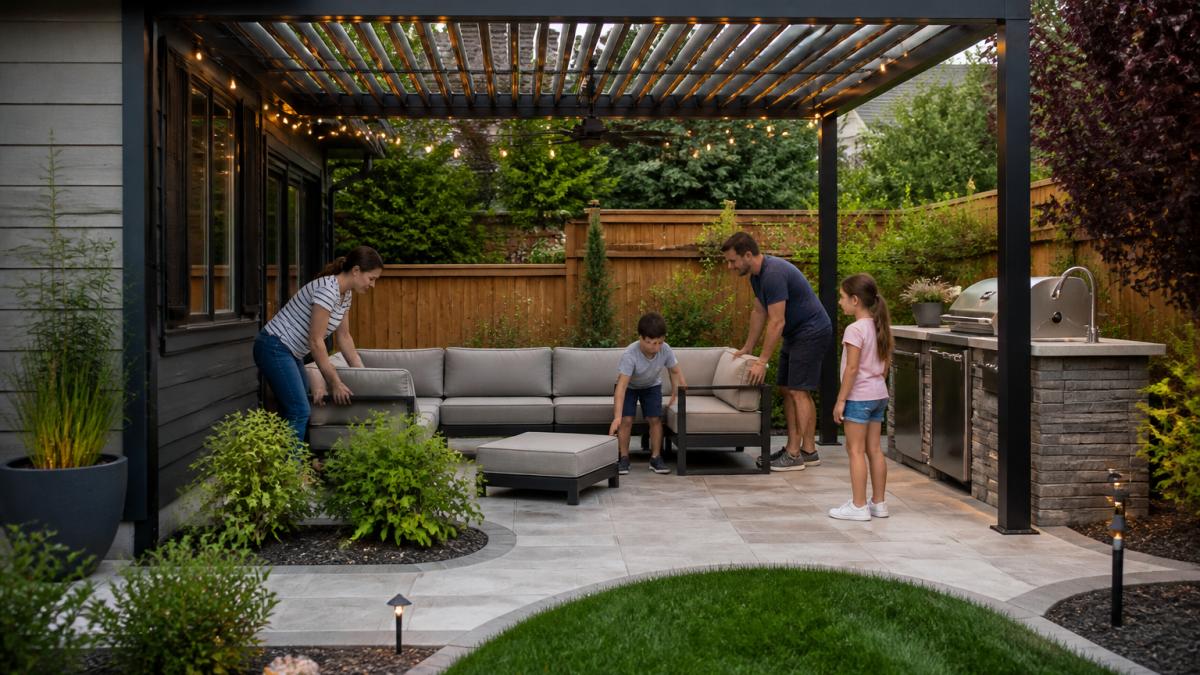
Start by defining zones rather than filling space. A dining zone, a lounge zone, and a cooking zone each need their own footprint, and modular pieces let you move the boundaries as your needs change.
Sustainability and Circularity in Outdoor Living Retail
The most sustainable piece of outdoor furniture is the one you don't replace. Circularity in this category means buying for a decade or more, choosing materials that can be maintained rather than discarded, and favoring recycled content where it doesn't compromise durability. Most guides treat sustainability as a materials label, recycled content, FSC-certified wood, but the real leverage is in repairability and refurbishment, which almost no one covers.
Repairability Is the Real Sustainability Metric
A piece that can be disassembled, re-oiled, re-welded, or re-covered stays out of the landfill far longer than one made from the most virtuous material that can't be fixed. The practical takeaway: ask how a piece is repaired, not just how it's made. If the answer is "it isn't," you're buying a consumable, not furniture.
What to look for:
- Replaceable cushions and covers. If the frame outlasts the fabric, and it usually does, you want to be able to order a new cover rather than a new set. Solution-dyed acrylic covers are the standard here.
- Bolted, not welded, joints. A bolted frame can be tightened, shimmed, or partially replaced. A fully welded frame is stronger until it fails, then it's scrap.
- Standard hardware. Metric or imperial bolts you can source at any hardware store beat proprietary fasteners that require a factory order.
- Refinishable surfaces. Solid wood can be sanded and re-oiled indefinitely. Powder-coated aluminum can be touched up. Poly lumber cannot be repaired once it cracks or fades, that's the trade-off for zero maintenance.
Material Trade-Offs, Honestly
Poly lumber made from recycled HDPE keeps plastic out of landfills and never needs chemical treatment. But it's a one-way material: once it fades or cracks, it's done. Solid wood, responsibly sourced, stores carbon for as long as the piece exists and can be refinished instead of replaced. Both beat the disposable model, but they beat it in different ways, poly wins on upfront footprint, wood wins on longevity.
Refurbishing What You Already Own
Circularity isn't only about buying new. A faded teak table can be sanded and oiled back to life in an afternoon. A wobbly aluminum chair usually needs new bolts, not a new chair. A cushion with a broken zipper can be re-covered. Before replacing anything, ask whether the frame is sound, if it is, the piece is worth saving, and the savings are usually a fraction of a new set.
Conclusion: Building a Backyard That Works in Every Season
Most people don't set out to buy disposable furniture. They buy what's available, replace it when it fails, and repeat. Breaking that cycle means choosing materials for your actual climate, maintaining them on a schedule, and laying out a space flexible enough to change with you. Backyard Comfort CO builds for exactly that: weather-ready design, solid wood construction, free shipping on most orders within the continental U.S., and a 30-day return policy if a piece isn't right.
Frequently Asked Questions
What is the most low-maintenance outdoor furniture for year-round use?
Powder-coated aluminum and reinforced steel frames need the least upkeep because they resist rust and moisture without sealing or staining. Look for hardtop pergolas with integrated drainage and all-weather cushions rated for UV exposure. A quick rinse and a seasonal cover are usually enough. Solid wood still performs well but benefits from an annual oil or sealant application to protect the finish.
Is solid wood or plastic better for long-term outdoor durability?
It depends on your climate and how much maintenance you want. Solid wood offers structural integrity and can be refinished, so it can last decades with care. Plastic and poly lumber resist rot and never need sealing, but they can fade or crack over time. In humid or sunny regions, powder-coated aluminum and steel often outlast both because they handle moisture and UV without refinishing.
How do you protect outdoor furniture from harsh winter weather?
Start by choosing pieces rated for snow and wind, such as a louvered pergola with a load capacity for snow accumulation. Before the first freeze, clean frames, apply a wood sealant if needed, and store cushions indoors. Use breathable covers on metal and wood pieces so trapped moisture does not cause rust or mildew. Check anchors and bolts in fall, since freeze-thaw cycles can loosen them.
What are the signs of high-quality, weather-resistant outdoor furniture?
Look for powder-coated finishes, stainless steel hardware, and frames that resist rust and UV exposure. High-quality pieces often list wind ratings, snow load capacity, and drainage systems. Check for reinforced joints, concealed fasteners, and materials like 304 stainless steel or heavy-duty aluminum. A clear warranty and detailed assembly instructions are also good indicators that the manufacturer stands behind the product.