
 ultimate-guide
Best Outdoor Furniture That Lasts for Cohesive Backyard Design
Table of Contents
- Why Cheap Patio Furniture Fails in Three Seasons or Less
- Solid Wood vs Plastic Outdoor Furniture: What Actually Survives the Elements
- Low Maintenance Outdoor Furniture Materials That Skip the Yearly Refinishing
- How to Build a Cohesive Backyard Design That Outlasts Trends
- Modular Furniture Systems: Rearrange Instead of Replace
- How to Protect Outdoor Furniture From Weather in Every Climate
- Frequently Asked Questions
Last Updated: October 1, 2026
Why Cheap Patio Furniture Fails in Three Seasons or Less
Most budget patio sets don't fail because of one bad storm. They fail because the materials were never engineered to sit outside year-round in the first place. At Backyard Comfort CO, we see the same pattern every spring: warped resin frames, rusted steel legs, and cushions that have turned into sponges.
The reason is predictable. Thin-gauge steel rusts from the inside out once moisture reaches a scratch. Untreated softwoods swell, crack, and split through freeze-thaw cycles. Low-density resin goes brittle under UV exposure and snaps at the joint. Each of these failures shortens the life of the set, and replacing it every few seasons costs more than buying once.
Here's the part most shoppers miss: the failure usually starts in a component you never look at, like the hardware or the weld points, not the surface finish.
Solid Wood vs Plastic Outdoor Furniture: What Actually Survives the Elements
The solid wood vs plastic outdoor furniture debate comes down to how each material handles moisture, UV, and temperature swings. Neither wins outright, but they fail in very different ways, and the failure mechanism matters more than the marketing label.
Plastic and resin are naturally water-resistant and won't rot or splinter. The trade-off is structural. Cheap plastic flexes under load, fades in strong sun, and can crack in cold snaps because the polymer chains have little resistance to UV-induced breakdown. High-density polyethylene (HDPE) solves most of that. It's UV-stabilized, rust-proof, and holds its color because the pigment is compounded through the material rather than sitting on the surface. The density is the tell: HDPE poly lumber is heavy enough that a single dining chair can weigh 30-40 pounds, while a hollow thin-resin chair often weighs under 10. That weight is a proxy for wall thickness and, therefore, for how the piece handles load and temperature cycling.
Solid wood behaves differently. Teak and other dense hardwoods contain natural oils that resist rot and insects, and they weather to a soft silver-gray if left untreated. The catch is that wood needs occasional attention to keep its original color, and lower-grade softwoods need far more. A useful rule of thumb: the denser the wood, the slower it absorbs water.
| Material | Weather Resistance | Maintenance | Lifespan | Best For |
|---|---|---|---|---|
| HDPE poly lumber | High, UV-stabilized | Soap and water | Very long | Low-maintenance households |
| Premium teak | High, natural oils | Occasional cleaning | Very long | Classic, natural look |
| Softwood | Low to moderate | Frequent sealing | Short | Covered porches only |
| Thin resin | Low | Minimal | Short | Temporary setups |
Teak and HDPE: Two Materials That Hold Their Looks
Both teak and HDPE earn their reputation, just for different reasons. Teak is prized for its structural integrity and natural resin, which is why it's a traditional choice for long-lasting outdoor furniture. HDPE captures the look of real wood while resisting cracking, peeling, and fading, and it never needs refinishing.
The Mechanism Most Buyers Miss
Failure rarely starts on the surface you see. It starts at the joint. On wood furniture, water wicks into end grain and open joinery, then expands when it freezes. On metal furniture, a scratch in the powder coat exposes bare steel, and rust creeps into the bolt threads until the frame loosens. On resin furniture, UV breaks down the polymer at the stress points, armrests, leg sockets, and back supports, and the piece snaps where it flexes most.
A Quick Comparison Framework
When you're standing in a showroom or scrolling a product page, ask three questions in this order:
- What is the frame material, and how thick is it? Thicker walls resist flex and temperature cycling better than thin ones.
- What is the hardware made of? Stainless steel or aluminum hardware outlasts painted steel every time.
- How is the color applied? Through-body color (HDPE) and natural wood color (teak) hold up better than surface paint or stain.
Low Maintenance Outdoor Furniture Materials That Skip the Yearly Refinishing
Low maintenance outdoor furniture materials share one trait: they don't absorb water. HDPE, aluminum, and premium teak all resist moisture at the core, which is what prevents the rot, rust, and swelling that drive most replacements.
How to Build a Cohesive Backyard Design That Outlasts Trends
A cohesive backyard starts with a plan, not a shopping spree. Pick your materials and color palette first, then buy pieces that repeat those choices across the whole space. That single decision is what stops a patio from looking like a collection of unrelated purchases.
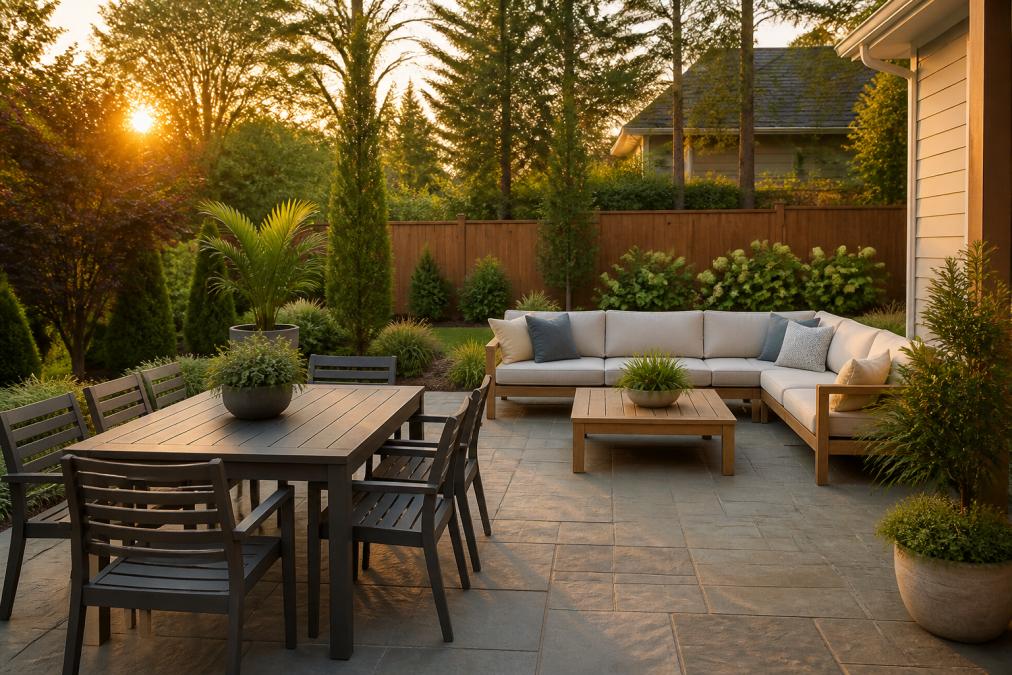
- Choose one primary material. HDPE or teak, not both, as the anchor.
- Lock a two- or three-color palette. Neutral base, one accent.
- Repeat shapes and lines. Match table and seating profiles.
- Anchor with a focal point. A fire feature, a pergola, or a single large planter.
- Layer textiles last. All-weather cushions and rugs tie the palette together.
Modular Furniture Systems: Rearrange Instead of Replace
Modular seating is the smartest answer to a changing backyard. Instead of replacing a whole set when your needs shift, you rearrange the pieces you already own.
7-Piece Outdoor HDPE Dining Set, Teak →

How to Protect Outdoor Furniture From Weather in Every Climate
Protecting outdoor furniture from weather looks different depending on where you live. Most guides give a generic checklist; the useful version matches the care routine to your actual climate and to the specific material you own. Here's how the major climate patterns change the equation.
Coastal Salt Air
Salt is the accelerant. It attacks metal hardware, hinges, and fasteners first, then works into any scratch or seam in a powder coat. The practical response is to prioritize fully rust-proof materials, HDPE, powder-coated aluminum with stainless hardware, and teak, and to rinse metal and hardware monthly during the humid season. A freshwater rinse is the cheapest corrosion control there is.
High Humidity and Intense Sun
This combination is the hardest on cushions and on any wood that isn't naturally oily. Trapped moisture under a non-vented cover does more damage than rain, because it creates a warm, dark environment where mildew thrives. Prioritize UV-resistant materials and breathable covers with vents. For wood, expect to clean more often, humidity feeds surface mold on teak and other hardwoods, even though the natural oils prevent rot.
Freeze-Thaw Winters
Ice expansion is the enemy. Water that sits in joints, frames, and end grain expands when it freezes and splits wood and cracks resin. The fix is to keep water out in the first place: tilt furniture so water drains, store cushions indoors, and use a cover that sheds rather than collects precipitation. For wood, sealing end grain before winter is the single highest-return step.
Arid Heat and Dry Sun
Dry heat won't rot wood or rust steel, but it will fade fabric, dry out wood, and degrade any surface finish that relies on oils. Teak benefits from occasional oiling to replace lost natural oils, though many owners prefer the silver-gray patina and skip it entirely. For HDPE, dry heat is the easiest climate, the material is UV-stabilized and won't dry out or crack the way wood can.
The Cover Decision
A quality cover is the single highest-return purchase for protecting an investment. Look for waterproof fabric with air vents, drawstring hems, and buckle straps, so the cover stays put in wind and doesn't trap condensation. Measure your furniture before ordering, and size up slightly for a fit that breathes. In coastal and humid climates, a breathable cover matters more than a fully waterproof one, because trapped moisture is the bigger threat.

A Climate-Matched Material Shortlist
- Coastal salt air: HDPE, powder-coated aluminum with stainless hardware, teak
- High humidity and intense sun: HDPE, teak, solution-dyed acrylic cushions
- Freeze-thaw winters: HDPE, powder-coated aluminum, sealed teak
- Arid heat and dry sun: HDPE, teak, UV-stabilized textiles
That's the practical case for buying durable materials once. A weather-resistant set paired with a proper cover protects your long-term investment and keeps the space ready to use.
Frequently Asked Questions
What is the most low-maintenance outdoor furniture material?
HDPE poly lumber and Grade A teak are the two lowest-maintenance options. HDPE never needs painting or sealing and wipes clean with soap and water, which is why the Ezra 7-Piece Outdoor HDPE Dining Set carries a 20-year frame warranty. Teak produces natural resins that protect it from rot and insects, so it can stay outside year-round with only occasional cleaning and a light sanding every few years if you want to restore the original color.
How often should you realistically replace outdoor furniture?
Budget furniture made from thin aluminum, untreated pine, or low-grade resin typically needs replacing every two to four seasons because of rust, cracking, or fading. Furniture built from HDPE poly lumber or premium teak is designed to last decades, not seasons. The upfront cost is higher, but spreading that cost across 20 years usually works out cheaper than buying three or four replacement sets.
How do I keep my backyard design looking cohesive over time?
Pick one material family and one color palette before you buy anything, then add pieces from the same collection as your budget allows. A neutral base like teak or black HDPE lets you swap cushions, rugs, and planters each season without replacing the furniture itself. This approach keeps the space looking intentional and means new additions always match what you already own.
Do I really need furniture covers if I buy weather-resistant pieces?
Covers extend the life of any furniture, even weather-resistant materials. A cover like the Bitubi Rectangular Patio Table Cover keeps rain, snow, leaves, and bird droppings off the surface and reduces how often you need to clean it. Look for 600D Oxford fabric with air vents, which prevents condensation from building up underneath. Measure your table and chairs first so the cover fits with a little room to spare.