
 blog
blog
Best Natural Wood Cleaners for Patio Furniture
Table of Contents
- Why Harsh Chemicals Damage Outdoor Wood Furniture
- Quick Comparison: Natural Wood Cleaners for Patio Furniture
- DIY Wood Furniture Cleaner Recipe You Can Make Today
- Removing Mildew From Wood Patio Furniture Without Harsh Chemicals
- How to Protect Patio Furniture Winter: Seasonal Care That Extends Wood Life
- Material-Specific Compatibility: Testing Natural Cleaners on Your Wood
- Greywater Safety and Runoff: What Happens When You Rinse
- Conclusion
- Frequently Asked Questions
Last Updated: September 26, 2026
Why Harsh Chemicals Damage Outdoor Wood Furniture
Natural wood cleaners protect the very thing harsh chemicals destroy: the wood itself. Most commercial patio cleaners rely on chlorine bleach, ammonia, or petroleum-based solvents that strip the oils and lignins holding wood fibers together. Once those oils are gone, the grain opens, moisture seeps in, and you get the familiar cycle of cracking, graying, and splintering.
Quick Comparison: Natural Wood Cleaners for Patio Furniture
The best natural wood cleaners fall into four categories, each suited to a different job. The table below adds the details most guides skip: working dilution, contact time, and the mechanism that lifts the grime.
| Cleaner Type | Best For | Working Dilution | Contact Time | How It Works | Main Trade-Off |
|---|---|---|---|---|---|
| White vinegar solution | Mildew, light grime | 1:1 with distilled water | 10 minutes | Acetic acid (typically 5% in household vinegar) lowers pH enough to break down mildew cell walls and dissolve mineral film | Acidic; can dull alkaline-sensitive finishes and etch unsealed metal hardware nearby |
| Castile soap wash | Routine cleaning | 2 tbsp per 1 cup warm water | 1-2 minutes | Plant-oil surfactants lift oily grime and pollen so it rinses away instead of redepositing | Leaves a sticky film if not rinsed; residue attracts dust |
| Baking soda paste | Stubborn stains | 3:1 baking soda to water | 5 minutes | Mild abrasion plus slight alkalinity lifts tannin stains and dried sap | Abrasive on soft woods; can raise grain if rubbed hard |
| Citrus-oil degreaser | Sap, oil, tree resin | 1 tsp per 1 cup water | 3-5 minutes | d-Limonene (the main citrus terpene) dissolves resins and oils the way a solvent would, without petroleum distillates | Can soften or lift oil-based sealants with repeated use |
How We Evaluated These Natural Cleaners
We judged each option on four criteria: how well it lifts surface grime, whether it's safe for common outdoor woods like teak, cedar, and acacia, how it affects the existing finish, and whether the runoff is safe for plants and soil.
- pH matters more than strength. Most outdoor wood finishes sit near neutral. Vinegar (roughly pH 2-3) and baking soda (roughly pH 8-9) both push away from neutral, so keep contact time short and rinse thoroughly.
- Surfactants do the lifting, not the scrubbing. Castile soap and citrus oil surround oil and dirt particles so water carries them off. If you're scrubbing hard, add contact time instead of pressure.
When a Homemade Mix Isn't Enough
There's a real line between "this needs a gentler pass" and "this needs a commercial product." Reach for a store-bought wood cleaner, ideally labeled for outdoor wood and free of chlorine bleach, when you see:
- Black mildew staining that has penetrated the grain. Surface vinegar kills spores on top; staining that survives two gentle passes has moved below the surface and usually needs an oxygen-based (not chlorine-based) cleaner.
- Failed finish. If the sealer is flaking or chalky, no cleaner will fix the look, the finish needs stripping and reapplying.
- Large surface area. A whole dining set is a different job than one chair, and a commercial concentrate mixed to label directions is more consistent than batch-mixing DIY solutions.
DIY Wood Furniture Cleaner Recipe You Can Make Today
A DIY wood furniture cleaner recipe takes about five minutes to mix and costs a fraction of a store-bought bottle. You need two formulas: a gentle all-purpose wash and a heavier scrub for set-in grime.
Three-Ingredient All-Purpose Wood Cleaner
Mix this in a spray bottle for weekly or biweekly maintenance:
- 1 cup warm water
- 2 tablespoons castile soap
- 1 tablespoon white vinegar
Heavy-Duty Scrub for Stubborn Grime
For sticky residue or dried-on stains, make a paste:
- 3 tablespoons baking soda
- 1 tablespoon water
- 2 drops citrus-based essential oil (optional, for scent)
Apply with a soft-bristle brush, work in small circles, and rinse thoroughly. Baking soda is mildly abrasive, so keep pressure light on softer woods like pine or acacia.
Removing Mildew From Wood Patio Furniture Without Harsh Chemicals
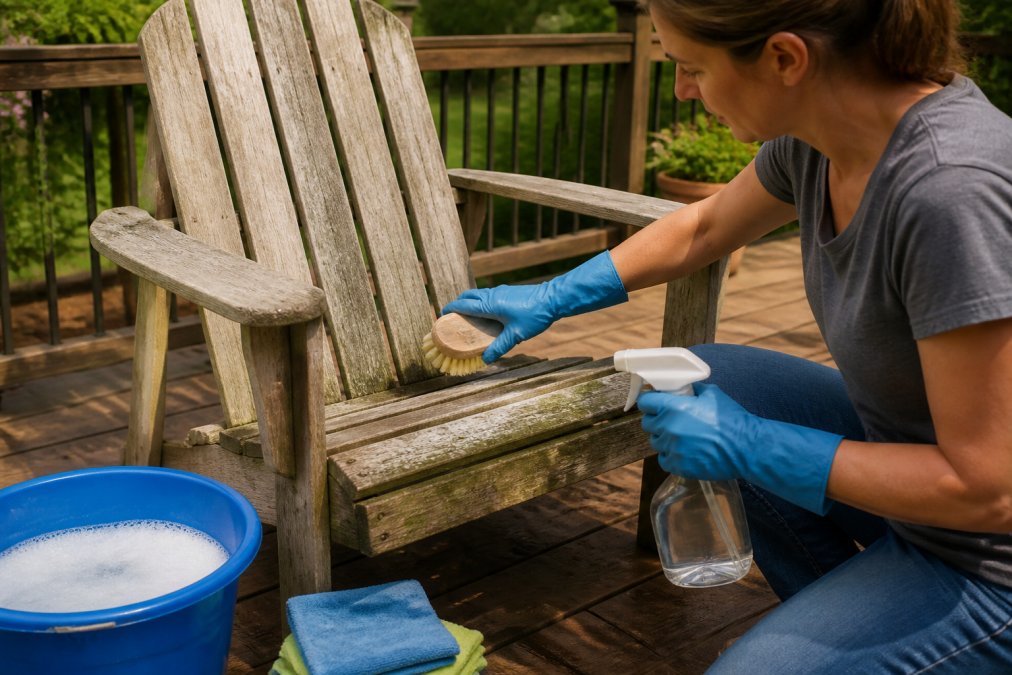
Removing mildew from wood patio furniture starts with vinegar, not bleach. White vinegar kills most surface mildew spores on contact and evaporates cleanly, leaving no toxic residue.
Step-by-Step Mildew Removal Process
- Clear the furniture and move it to a shaded area to slow evaporation.
- Brush off loose dirt and debris with a dry brush.
- Spray the vinegar and water mix onto the mildewed surface.
- Wait 10 minutes so the acid can break down the spores.
- Scrub with the grain using a soft-bristle brush.
- Wipe clean with a damp microfiber cloth.
- Dry the surface completely with a second cloth.
For deep-set mildew in the wood grain, repeat the process rather than reaching for a stronger chemical. Two gentle passes beat one harsh one.
How to Protect Patio Furniture Winter: Seasonal Care That Extends Wood Life
Knowing how to protect patio furniture winter is the difference between a piece that lasts a few seasons and one that lasts decades. Cold, moisture, and freeze-thaw cycles do more long-term damage to outdoor wood than summer sun ever will, and your summer cleaning choices determine how well the wood holds up when temperatures drop.
Why Winter Hits Wood Harder Than Summer
Wood is hygroscopic: it absorbs and releases moisture as humidity changes. In summer that movement is slow; in winter, water enters the grain during a thaw, then freezes and expands overnight. Repeated freeze-thaw cycles pry open micro-cracks and widen them, which is why a piece that looked fine in October can show splitting by March.
Pre-Winter Cleaning: Do This Before You Seal
Sealant bonds poorly to dirty or damp wood, so clean first, then seal. Use the gentlest cleaner that removes the grime, a castile soap wash for routine buildup, a vinegar solution for late-summer mildew. Rinse thoroughly and let the wood dry at least 48 hours in dry, mild weather before sealing. Wood that feels cool to the touch is still holding moisture.
Choosing a Sealant: Penetrating Oil vs. Film-Forming Sealer
| Type | How It Works | Best For | Reapplication |
|---|---|---|---|
| Penetrating oil (tung, linseed, teak oil) | Soaks into the grain and replenishes the wood's own oils from within | Oiled finishes, teak, and woods you want to keep a natural matte look | Every 3-6 months in harsh climates |
| Film-forming sealer (polyurethane, spar varnish) | Builds a protective coat on top of the wood | Painted or stained pieces, high-traffic tables | Every 1-3 years, with light sanding between coats |
Match the sealant to what's already on the wood. A film-forming sealer over an oiled finish traps moisture and causes peeling; oil over varnish does nothing because it can't reach the grain.
Storage, Airflow, and Hardware
- Move furniture under cover or into a garage if you have space.
- If it stays outside, use breathable covers, not plastic tarps that trap condensation.
- Elevate legs off concrete or pavers so they don't sit in pooled water.
- Re-tighten hardware before the first freeze, metal contracts, and loose bolts let joints work and crack.
- Inspect for finish damage in fall, while temperatures still allow a spot repair.
Material-Specific Compatibility: Testing Natural Cleaners on Your Wood
Not every natural cleaner suits every wood, and compatibility testing takes five minutes. Teak, cedar, and acacia have different oil contents and densities, so a mix that's gentle on one can dull another.
| Wood Type | Safest Cleaner | Avoid | Why |
|---|---|---|---|
| Teak | Castile soap wash | Abrasive pastes | High oil content; abrasives strip it |
| Cedar | Vinegar solution | Heavy scrubbing | Soft grain scratches easily |
| Acacia | pH-neutral soap | Citrus degreasers | Citrus oils can lift the finish |
| Eucalyptus | Baking soda paste | Strong acids | Porous surface absorbs liquids fast |
Greywater Safety and Runoff: What Happens When You Rinse
Rinse water carries whatever you just lifted off the wood, and where it lands matters. Runoff flows into soil, garden beds, or storm drains, so the ingredients you choose affect what grows nearby.
A few habits keep runoff safe:
- Rinse onto a gravel or lawn area rather than directly into storm drains.
- Avoid cleaning right before rain, which pushes runoff further than intended.
- Use the least amount of cleaner that gets the job done.
- Skip cleaners with synthetic fragrances or dyes if runoff reaches a vegetable garden.
Conclusion
Keeping outdoor wood clean without harsh chemicals comes down to three habits: match the cleaner to the wood, rinse and dry thoroughly, and seal before winter. Do those consistently and a solid wood piece will outlast several rounds of cheaper, chemically cleaned furniture.
Frequently Asked Questions
Are vinegar and water safe for cleaning outdoor wood furniture?
Yes, diluted white vinegar is safe for most sealed outdoor wood furniture when used properly. Mix equal parts white vinegar and distilled water in a spray bottle. Spray onto the surface, let it sit for a few minutes, then wipe with a microfiber cloth. Avoid soaking the wood, and never use vinegar on unsealed or bare wood because its acidity can break down natural oils. Test on a hidden spot first to confirm compatibility with your furniture's finish.
What can I use as a substitute for wood cleaner?
Castile soap mixed with warm water is an excellent substitute for commercial wood cleaners. Add a few drops of plant-based castile soap to a bucket of warm water, dip a microfiber cloth, and wipe down the surface. For tougher grime, add a tablespoon of baking soda to form a gentle paste. Both options are non-toxic, biodegradable, and safe for pH-neutral wood finishes. Rinse with clean water and dry immediately to prevent moisture damage.
How do you remove mold from wooden patio furniture without harsh chemicals?
Removing mildew from wood patio furniture naturally starts with a solution of one cup white vinegar, one cup distilled water, and a few drops of tea tree oil or lemon essential oil. Spray the affected area, let it sit for 10 to 15 minutes, then scrub gently with a soft-bristle brush along the wood grain. Rinse with clean water and dry thoroughly in direct sunlight. For deep-set mildew, apply a baking soda paste and repeat the process until the stains lift.
How often should I clean and seal outdoor wood furniture to protect it?
Clean your outdoor wood furniture every four to six weeks during active use, and apply a protective sealant at least once a year, ideally before winter. A quality wood polish or protective sealant creates a barrier against moisture, UV rays, and surface grime. If you live in a humid climate or an area with harsh weather, seal every six months. Regular seasonal cleaning and sealing prevents wood grain damage and extends the life of your furniture for years.