
 listicle
7 Best Ways to Clean Teak Outdoor Furniture
Table of Contents
- Why Teak Needs a Different Cleaning Approach
- 1. Mild Dish Soap and a Soft-Bristle Brush
- 2. White Vinegar and Baking Soda for Stubborn Grime
- 3. Removing Mold From Teak Wood Safely
- 4. Sanding and Restoring the Patina
- 5. The Best Teak Oil for Outdoor Furniture
- 6. How to Protect Patio Furniture Winter Through Spring
- 7. Climate-Specific Care and Off-Season Storage
- Frequently Asked Questions
Last Updated: September 22, 2026
Why Teak Needs a Different Cleaning Approach
Teak outdoor furniture is built to outlast almost anything else on your patio, but it does not stay handsome on its own. The 7 best ways to clean teak outdoor furniture all share one principle: work with the wood's natural oils instead of stripping them. This guide from Backyard Comfort CO walks through each method in order, from a five-minute soap wash to full sanding and re-oiling.
Teak is a dense hardwood packed with natural oils that repel water and resist rot. That oil is also why harsh cleaners backfire. A pressure washer or a bleach-based spray pulls the oil out of the surface, leaving the wood gray, fuzzy, and thirsty.
1. Mild Dish Soap and a Soft-Bristle Brush
Mild dish soap and a soft-bristle brush handle routine cleaning on teak better than anything else. Mix a few drops of dish soap into a bucket of warm water, scrub along the wood grain, then rinse with a garden hose.
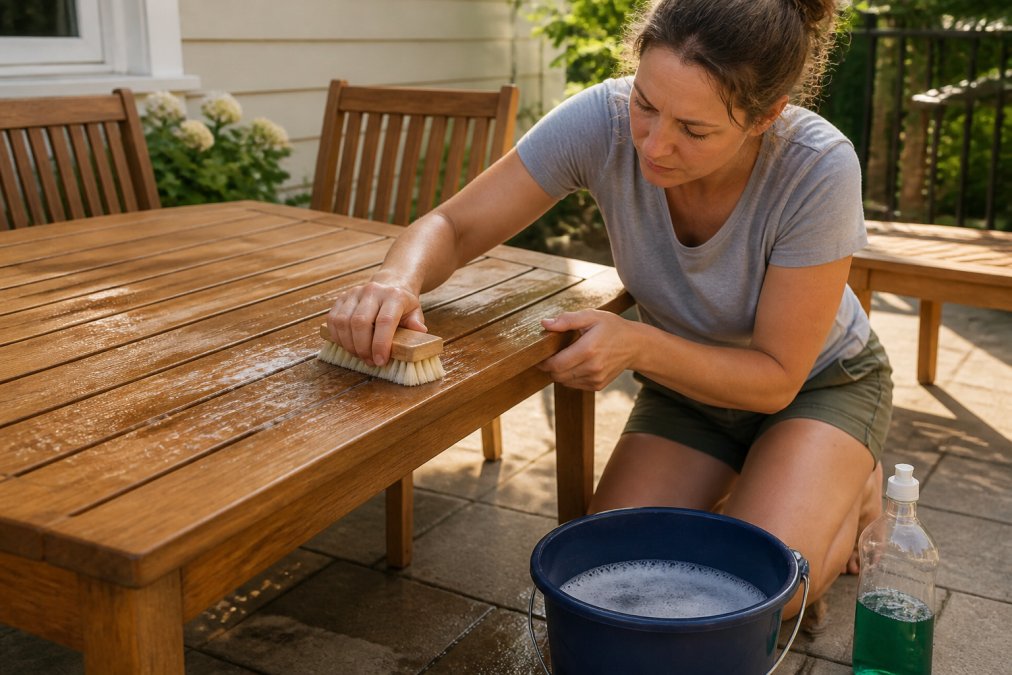
Here is the sequence that works:
- Dampen the furniture with a garden hose so soap does not dry on the surface.
- Dip a soft-bristle brush into the soapy water.
- Scrub in the direction of the wood grain, not across it.
- Rinse thoroughly until the runoff runs clear.
- Let the piece air-dry in the sun.
2. White Vinegar and Baking Soda for Stubborn Grime
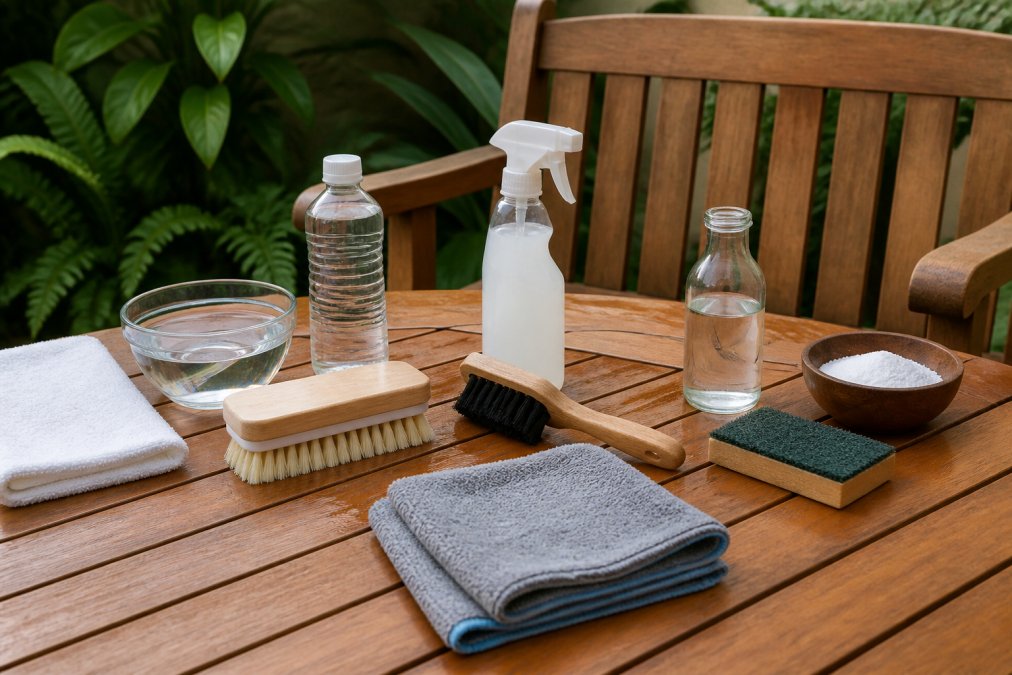
White vinegar and baking soda lift stubborn grime and light stains without touching the wood's oil content. Sprinkle baking soda over the stained area, drizzle white vinegar on top, let it fizz for a few minutes, then scrub with your soft-bristle brush and rinse.
3. Removing Mold From Teak Wood Safely
Removing mold from teak wood starts with the gentlest option that kills spores: a diluted vinegar solution or a commercial teak cleaner, applied with a soft brush and rinsed thoroughly. Mold shows up as black or green speckling, usually on the underside of tables and the shaded faces of chairs.
Work in this order:
- Wipe away loose surface mold with a damp cloth and discard the cloth.
- Apply undiluted white vinegar to the affected area and let it sit for about ten minutes.
- Scrub along the grain with a soft-bristle brush.
- Rinse and let the piece dry completely in direct sun.
- Repeat if speckling returns after drying.
When to Call It Structural Damage Instead
Surface mold and structural damage look similar from a distance but need opposite responses. Cleaning fixes discoloration on solid wood. It cannot fix soft spots, splintering, or joints that move when you lean on them.
4. Sanding and Restoring the Patina
Sanding restores the original golden tone when cleaning no longer lifts the gray. The silver-gray patina that develops on untreated teak is harmless, and plenty of people prefer it. If you want the honey color back, sanding is the only route.
Grit Progression That Works
One grit is not enough. Work through a short progression and stop as soon as the color comes back:
- 120-grit for heavily weathered or fuzzy surfaces. This cuts the dead fibers fast. Do not linger in one spot.
- 150-grit to smooth out the scratches the 120 left behind.
- 220-grit for the final pass and for light touch-ups where the wood is only mildly gray.
Technique That Protects the Piece
A random-orbit sander on a low setting works on flat table tops and wide arms. Keep it moving in overlapping passes along the grain. Do the legs, arms, and any curved or turned parts by hand with a sanding block wrapped in paper. Power sanders round off edges and flatten profiles fast, and once an edge is rounded you cannot put it back.
Dust Removal Before Oil
5. The Best Teak Oil for Outdoor Furniture
The best teak oil for outdoor furniture is a penetrating oil formulated for exterior hardwood, applied in thin coats on clean, dry wood. Oil feeds the grain and restores the water resistance that weathering wears away. What separates a good result from a streaky one is not the label on the can. It is the prep, the coat count, and the drying window.
Oil vs. Sealant: Pick One and Stay With It
These are two different mechanisms, and mixing them causes problems.
- Penetrating oil soaks into the wood, feeds the grain, and protects from the inside. It does not build a film, so it never peels. It fades gradually and needs reapplication every three to six months in full sun.
- Film-forming sealant sits on top of the wood and blocks UV and water from the outside. It lasts longer between applications but can crack, peel, and trap moisture if water gets underneath. Recoating requires sanding off the old film first.
Application Sequence
- Clean and sand the piece first. Oil over dirt seals the dirt in.
- Let the wood dry completely. Oil applied to damp wood traps moisture and turns milky.
- Apply with a lint-free cloth or a foam brush in thin coats, working along the grain.
- Let each coat soak in for about 20 minutes.
- Wipe off anything the wood has not absorbed. Excess oil that sits on the surface turns gummy and attracts dirt.
- Add a second thin coat if the surface still looks dry after the first soaks in.
Two thin coats beat one heavy coat every time. A heavy coat does not soak in faster; it just sits on top and cures unevenly.
Timing and Conditions
6. How to Protect Patio Furniture Winter Through Spring
Learning how to protect patio furniture winter through spring comes down to one habit: keep water off the wood and keep air moving around it. Teak handles cold fine. It does not handle sitting wet for months.

The maintenance calendar looks like this:
| Season | Task | Frequency |
|---|---|---|
| Spring | Deep clean, inspect joints, re-oil | Once |
| Summer | Soap wash, rinse, spot-treat stains | Monthly |
| Fall | Clean, dry fully, cover or store | Once |
| Winter | Check cover after storms, clear snow | After each storm |
7. Climate-Specific Care and Off-Season Storage
Climate-specific care and off-season storage decide whether teak lasts a generation or a decade. The cleaning routine stays the same everywhere. The schedule and the storage method do not.
Off-season storage works best when you:
- Clean and dry the furniture completely before storing it.
- Store cushions indoors, never under a cover with the frames.
- Raise pieces off concrete floors using blocks so air moves underneath.
- Choose a ventilated cover over a sealed tarp.
Frequently Asked Questions
What is the best cleaner for teak outdoor furniture?
For routine cleaning, a few drops of mild dish soap in a bucket of warm water works well. Scrub along the wood grain with a soft-bristle brush, then rinse with a garden hose. For deeper grime or mildew, a diluted white vinegar solution or a baking soda paste handles most problems without stripping the wood. Skip bleach-based or abrasive cleaners, which dry out the natural oils in the teak and leave the surface rough.
Should you pressure wash teak outdoor furniture?
No. A pressure washer forces water into the wood fibers and raises the grain, leaving a fuzzy surface that needs sanding to fix. It also strips the natural oils that protect teak from weathering. A garden hose with normal water pressure plus a soft-bristle brush does the job without damage. If you already pressure washed a piece, let it dry completely, sand lightly with fine-grit paper, and apply teak oil to restore the finish.
How often should you clean teak outdoor furniture?
Clean teak two to three times during the outdoor season, and more often in humid or coastal climates where mold and mildew appear faster. A quick rinse and scrub every few weeks keeps pollen and dust from settling into the grain. If you want to protect patio furniture winter, do a full clean and oil application in late fall before covering or storing it. Pieces left untreated through winter tend to develop heavier mildew by spring.
How do you make weathered teak furniture look new again?
Start with a mild soap wash and let the wood dry. If the surface is gray and rough, sand lightly along the grain with 120-grit, then 220-grit sandpaper. Wipe off the dust and apply a thin coat of the best teak oil for outdoor furniture, letting it soak in for 20 to 30 minutes before wiping off the excess. One or two coats bring back the warm golden tone. Heavily checked or split boards need repair, not just cleaning.
Teak rewards a little attention each season, and the payoff is furniture you never have to replace. If your current set is on its last legs, or you want pieces built to handle every season from the start, Backyard Comfort CO offers solid wood construction and weather-ready design, backed by free shipping on most orders and a 30-day return policy. Get started with Backyard Comfort CO and build a patio that stays inviting year after year.